Long-Term Experiment Reveals Climate Impact on Rocky Mountain Meadows
Every summer, visitors flock to the wildflower capital of Colorado to witness grasslands adorned with corn lilies, aspen sunflowers, and sub-alpine larkspur. In January 1991, scientists initiated a pioneering experiment in these Rocky Mountain meadows, aiming to understand how climate change might affect this ecosystem over time.
Initially, it was hypothesized that rising temperatures would result in longer, more luxuriant grasses. Contrary to expectations, the grasses and wildflowers began to vanish, supplanted by sagebrush. The experimental meadows gradually transformed into desert-like scrublands, with even soil fungi communities altered by the increased heat.
This experiment offers a glimpse into the future: if global warming reaches 2C above preindustrial levels, these meadows are likely to disappear within decades, according to research published in the Proceedings of the National Academy of Sciences. The implications extend beyond Colorado, signaling a global trend of "shrubification" in mountain ecosystems.
The Experiment Setup
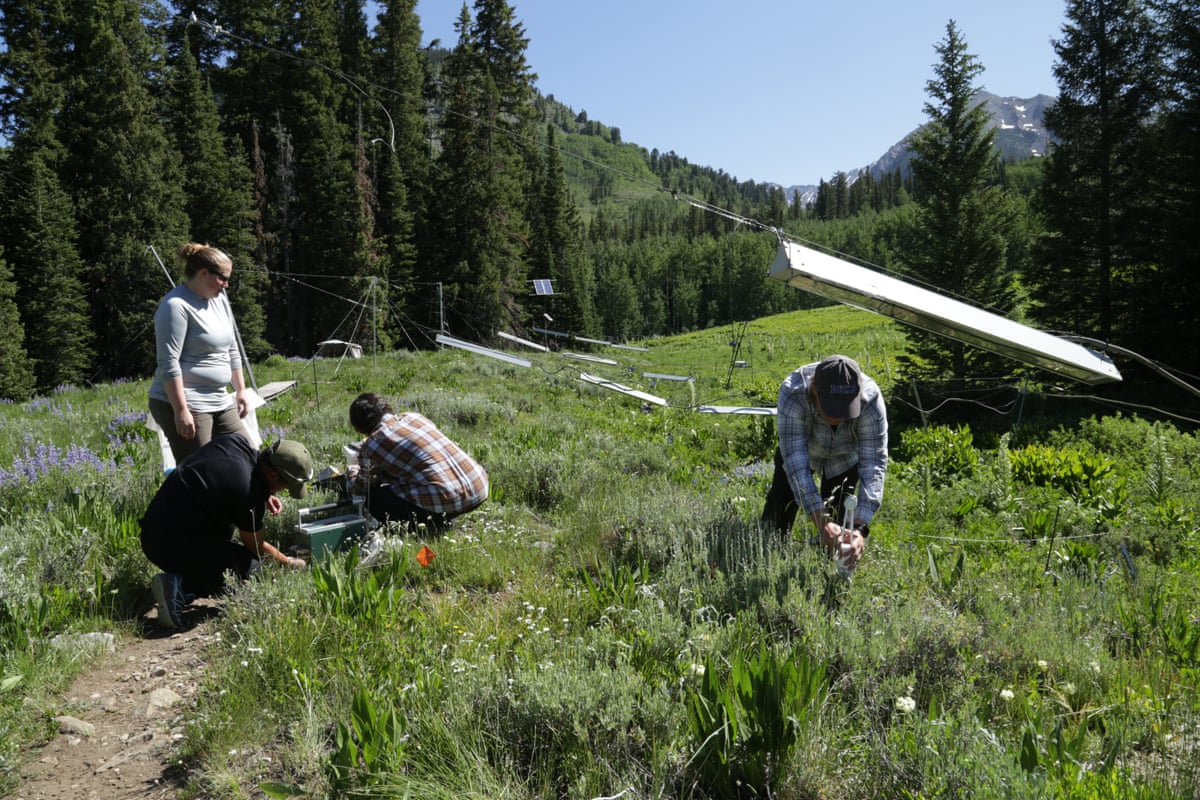
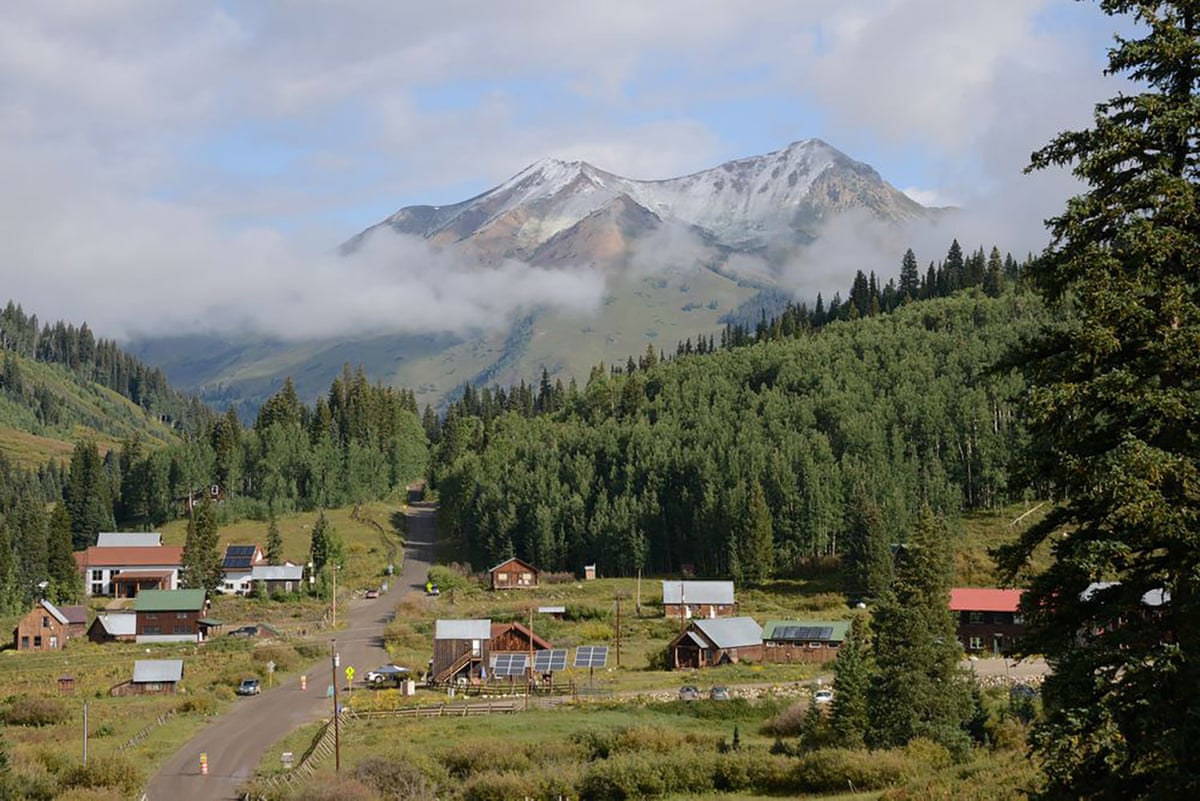
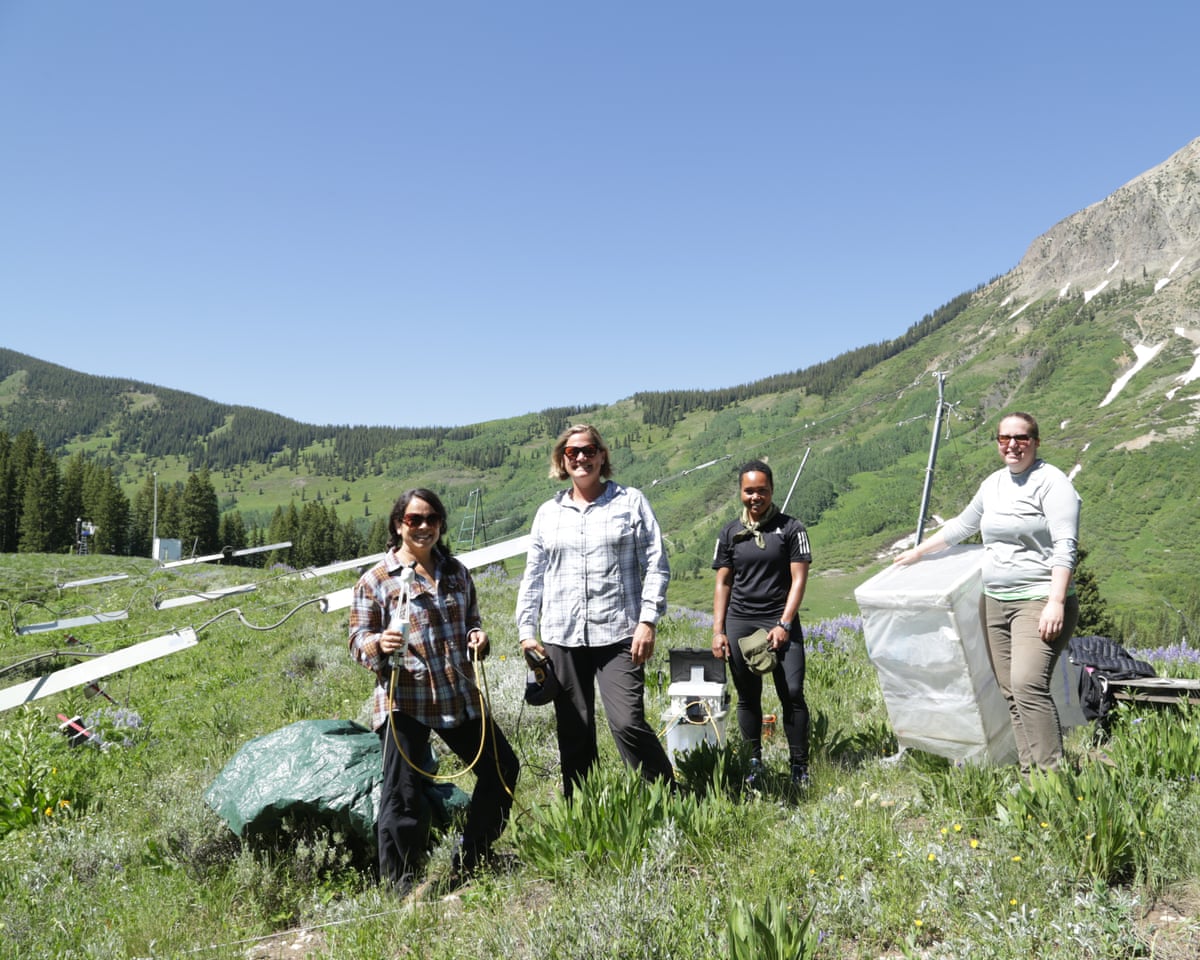
The Rocky Mountain Biological Laboratory, located in the former ghost town of Gothic—abandoned after the closure of its silver mines—serves as the site for this research. During winter, the area is covered by snow, and in early spring, researchers access the experimental plots at 10,000 feet altitude by skiing across the terrain.
Five experimental plots, each measuring 30 square meters, were equipped with electric infrared radiators that operated year-round. These head-height heaters maintained a temperature 2C above ambient conditions continuously, resulting in an annual electricity cost of $6,000 (£4,450). The heating targeted the top six inches of soil, while allowing animals to graze freely to preserve the natural system as much as possible.
Over 29 years, data showed that shrub coverage increased by 150% in warmed plots compared to control plots without heating. Soil surface moisture decreased by up to 20%, placing stress on shallow-rooted plants. Some wildflower species became extinct within the heated plots.
“It’s a sign of things to come,”said lead researcher Lara Souza from the University of Oklahoma.
Significant changes were also observed in soil fungi and microbial communities. Unlike grasses, shrubs and sagebrush have different fungal associations. Researchers noted a decline in fungi that assist plants in nutrient uptake and an increase in fungi responsible for decomposing organic matter.
“This highlights that when you have a big change above ground, you’ve likely got a big change below ground,”Souza explained.
“Turning back is very unlikely.”
Alpine grasslands, often overlooked for their biodiversity, are crucial habitats. Europe’s alpine grasslands, for example, cover just 3% of the land but host many unique plant species. Dr. Patrick Möhl from Lancaster University, who studies pristine alpine grasslands in Austria, emphasized their importance and vulnerability.
“They’ve been here for thousands of years,”he said.
He warned of significant biodiversity loss, predicting that these diverse grasslands will be replaced by forests similar to those found at lower elevations.
“It is very species diverse, we will lose so much of that. It will just be forest, the same kind of forest we have lower down,”Möhl stated.

Möhl has also observed tree species, often pine, migrating uphill as temperatures rise.
“It’s a profound change in the ecosystem – the life form is changing, from grassland to a woody ecosystem,”he added.
Arctic Shrubification
Similar ecological shifts are occurring beyond mountain environments. The Arctic is experiencing one of its most significant landscape transformations, known as shrubification, with polar "greening" trends detectable via satellite imagery. Rising summer temperatures are the primary driver. In the western Canadian Arctic, shrub cover expanded by 2.2% per decade between 1984 and 2020.
In cold regions, plants typically remain small due to environmental stresses such as wind, cold exposure, snow weight, and short growing seasons. As these stresses lessen with warming, shrubs and trees are able to establish themselves.
Sarah Dalrymple, a conservation ecologist at Liverpool John Moores University studying Icelandic ecosystems, explained:
“Global heating is lifting some of the restrictions to plant growth that were associated with cold conditions in high latitude and high-altitude ecosystems.”She described the transition from grasslands or heath to shrubs and eventually trees.
Grass and soil ecosystems that have maintained delicate balances for millennia are at risk of irreversible change. Dalrymple noted:
“Shrubification in itself isn’t necessarily a problem, but the fact we are losing Arctic ecosystems is a problem.”
While some welcome shrubs and trees for the shelter they provide to wildlife, livestock, and people, there are broader concerns.
“At a global level, the afforestation of cold environments is worrying because it is associated with permafrost melting and the acceleration of subsequent carbon emissions,”Dalrymple added.
She expressed alarm at the rapid pace of shrubification and its cascading effects on the carbon cycle.
“It’s not just about whether the individual tree is good or bad. What is ‘bad’ is our inability to control our own carbon emissions. Shrubification is a symptom of this, not the cause, and we need to treat it as such.”
Dalrymple emphasized that human management of the planet is based on the assumption of environmental stability, which is no longer valid.
“These changes are global, not localised to Colorado. It’s all happening so much faster than the projections would have said,”she said.
Souza remains captivated by the insect-rich meadows near the research center, which she has visited since 2012.
“It’s like flowers on steroids,”she remarked.
“It’s surreal to me, every time I come.”However, this admiration is tempered by concern for the future of these fragile landscapes, which, like many worldwide, face profound change.
Find more environmental news, and follow the biodiversity reporters in app for ongoing nature coverage.