

UN Weather Agency Highlights Historic Climate Imbalance
The Earth's climate is currently more out of balance than at any point in recorded history, according to a warning from the United Nations' weather agency.
The World Meteorological Organization (WMO) reports that the planet is absorbing significantly more heat energy than it can emit, a condition driven by emissions of greenhouse gases such as carbon dioxide.
This unprecedented "energy imbalance" led to record ocean temperatures last year and ongoing melting of the planet's ice caps.
Scientists express concern that the anticipated onset of a natural warming phase known as El Niño later this year could further elevate global temperature records.
In response to the findings, UN Secretary General António Guterres emphasized the urgent need for nations to transition from fossil fuels to renewable energy sources to ensure climate, energy, and national security.
"Planet Earth is being pushed beyond its limits. Every key climate indicator is flashing red," he stated in a direct video address.
Recent Temperature Trends and Historical Context
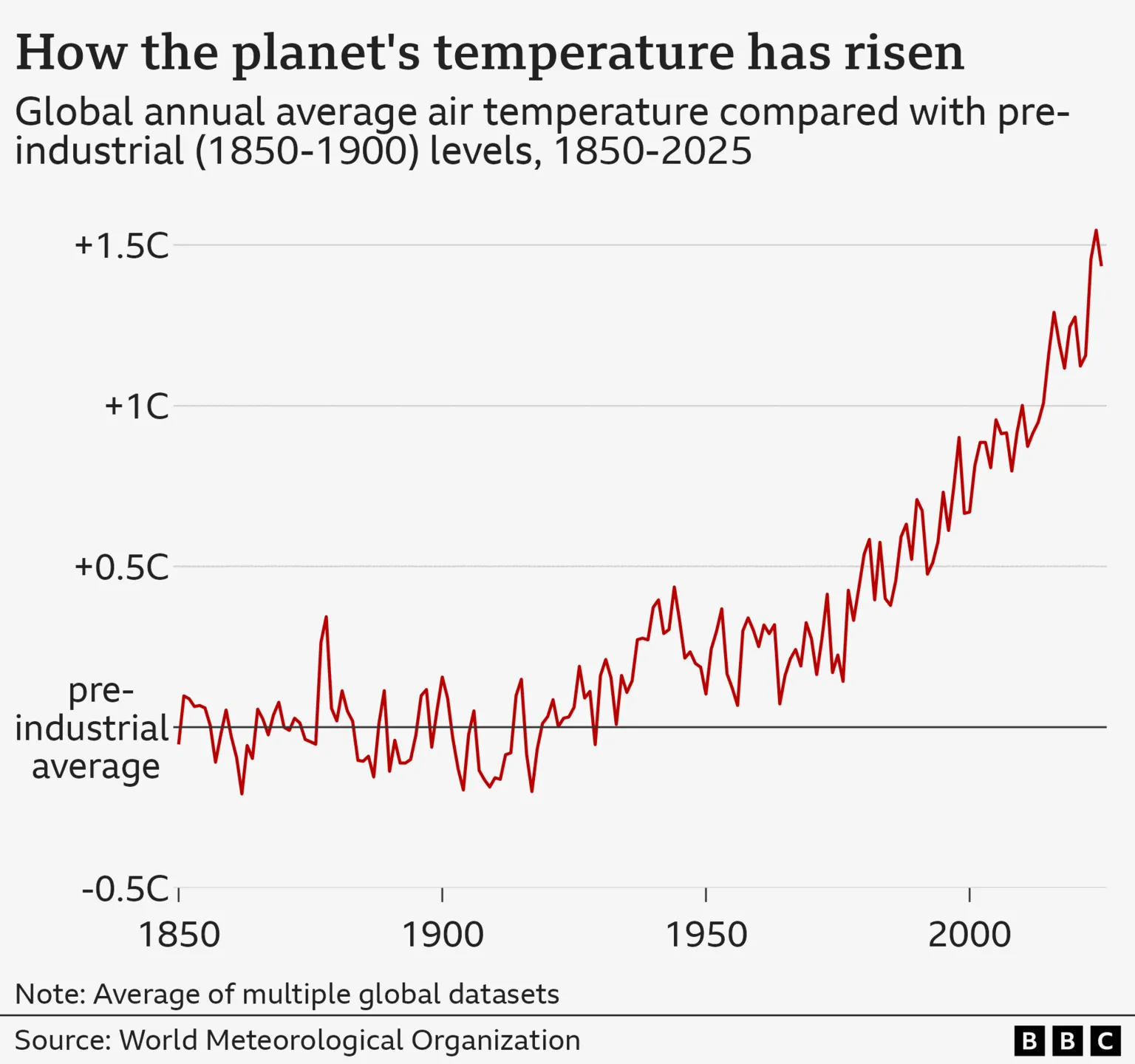
The WMO notes that the last 11 years have been the warmest since records began in 1850.
In 2025, global average air temperatures were approximately 1.43°C above pre-industrial levels, defined as the period before significant human fossil fuel combustion.
A temporary cooling effect from the La Niña weather pattern meant that 2025 was slightly cooler than 2024, which experienced warming influenced by the El Niño phase.
Nevertheless, 2025 ranked among the three warmest years on record. Many scientists now believe that the rate of warming is accelerating, though temperatures remain generally within long-term projections.
The WMO highlights extensive evidence indicating that climate change is occurring at an unprecedented pace.
Understanding Earth's Energy Imbalance
One of the most comprehensive indicators is the excess heat energy absorbed by the Earth, which directly drives climate change and reached a new peak last year.

While the precise reasons for the accumulation of this excess heat over the past decade are still under study, scientists agree that greenhouse gases, particularly carbon dioxide (CO2), are the primary cause.
Atmospheric CO2 concentrations are at their highest levels in at least two million years, largely due to human activities such as fossil fuel burning.
Some of this trapped energy warms the atmosphere and land, while also contributing to the melting of ice.
Provisional data indicates that the world's glaciers experienced one of their five worst years in 2024/25, and sea ice at both poles remained at or near record lows throughout most of 2025.
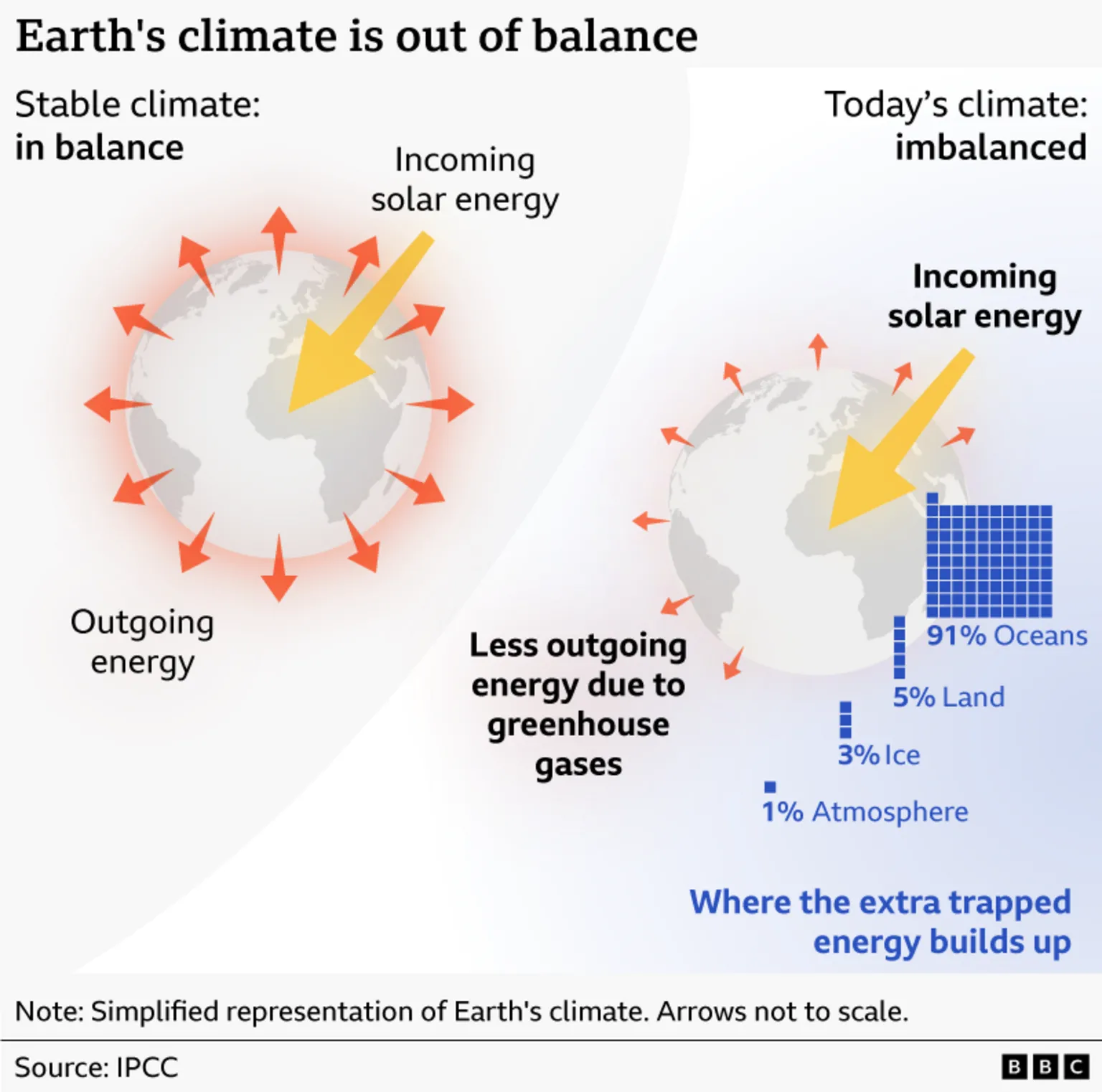
More than 90% of the Earth's excess energy is absorbed by the oceans, which negatively impacts marine ecosystems, intensifies storms, and contributes to rising sea levels.
The heat content in the upper 2 kilometers (1.2 miles) of the global ocean reached a new record last year, with warming over the past two decades occurring more than twice as fast as during the late 20th century.
"Human activities are increasingly disrupting the natural equilibrium and we will live with these consequences for hundreds and thousands of years," said Professor Celeste Saulo, secretary general of the WMO.
Current Impacts and Extreme Weather Events
The report outlines present-day effects of rising temperatures, including the intensification of various extreme weather events and the spread of diseases such as dengue fever.
Currently, the southwestern United States is experiencing a record-breaking early-season heatwave, with temperatures exceeding 40°C in some areas over recent days—approximately 10-15°C above average.
Rapid analysis by the World Weather Attribution group concluded on Friday that the intensity of this heatwave would have been "virtually impossible" without human-induced climate change.
El Niño Outlook and Future Temperature Projections
Researchers are closely monitoring the Pacific Ocean, where long-term forecasts strongly indicate the development of a warming El Niño phase in the latter half of 2026.
The combination of El Niño and the ongoing human-driven warming trend could push global temperatures to new highs into 2027.
"If we transition to El Niño we will see an increase in global temperature again, and potentially to new records," said Dr. John Kennedy of the WMO.

Readers are encouraged to to the Future Earth newsletter to stay informed on the latest climate and environmental news with the BBC's Justin Rowlatt. International readers can for the global edition.


