

The European Broadcasting Union has amended its rules so that a country actively involved in armed conflict cannot host the Eurovision Song Contest even if it wins the competition. The change, approved by the contest's governing body after feedback from participating broadcasters following Eurovision 2026 in Vienna, also allows disqualification from hosting duties if a country is affected by a "sensitive geopolitical situation" that threatens regional stability.
Under the new provision, hosting rights will be withheld from a winning nation if the situation impacts what organisers describe as the "security, safety or stability of their state or immediate region." The move is widely being read as a direct response to Israel's continued involvement in the contest amid sustained criticism over its military conduct in Gaza and across the Middle East.
In November 2025, after an attempt to have Israel suspended from the competition failed, five broadcasters confirmed they would boycott the contest, among them Eurovision heavyweights Spain and Ireland. According to a report from the Jerusalem Post, Iceland subsequently joined Spain, Slovenia, the Netherlands and Ireland in pulling out of Eurovision 2026 over the same issue.
Despite the boycotts, Israel's representative Noam Bettan finished in second place with his entry "Michelle." It was the second consecutive year that Israel had claimed the runner-up position, and several participating broadcasters have privately raised concerns about the safety implications of staging the contest in Jerusalem or Tel Aviv should Israel eventually win outright.
How does this affect Ukraine?
Although Israel is likely to be viewed as the primary target of the rule change, the amendment also applies to Ukraine, which has remained at war since Russia's invasion in 2022. Ukrainian act Kalush Orchestra won the contest that year, a result widely seen as a symbolic gesture of international solidarity.
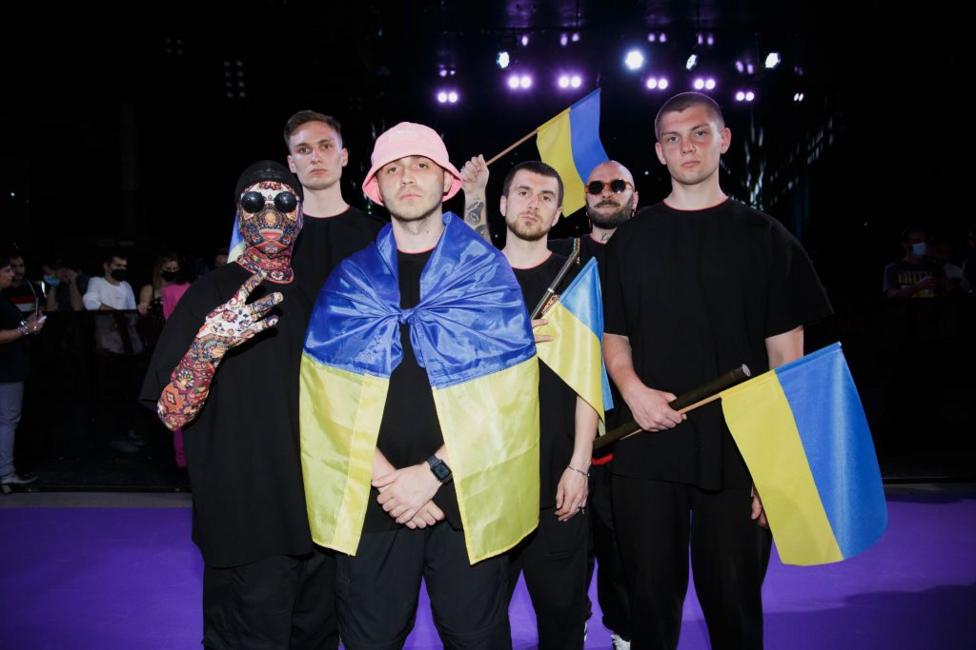
Following that victory, Eurovision organisers carried out what they called a "full assessment and feasibility study" to establish whether the 2023 contest could realistically be held in Kyiv. Ultimately they judged the security risks too severe, and the United Kingdom stepped in to host on Ukraine's behalf in Liverpool.
The newly formalised process reflects that precedent. As the EBU explained:
"Where deemed necessary, the EBU may commission an independent security assessment of the winner's region. Following that assessment, the EBU will consult the Reference Group to determine whether the winning member is able to safely host the Contest."
If a winning broadcaster is judged unable to host, the EBU will now select an alternative host itself. Notably, that replacement broadcaster "will not be required to stage the event on behalf of another member" — a shift from 2023, when the BBC worked alongside its Ukrainian counterpart to incorporate Ukrainian heritage into the Liverpool show.

What other rule changes were announced?
Alongside the hosting reform, organisers raised the minimum age for competing artists from 16 to 18 and tightened regulations governing the use of backing tracks. Live instrumentation has effectively been prohibited since 1999, with only the lead vocalist permitted to perform live on stage.
From the next edition of the contest onward, backing tracks will not be allowed to "unduly assist" performers — for instance, through a pre-recorded vocal track doubling the main melody to reinforce a live performance. The EBU said the clarification is "intended to protect the integrity of each performance and to ensure the audience always hears the lead vocals on each song performed live."
Eurovision director Martin Green framed the overall package as a matter of fairness and safety:
"These changes are about giving everyone involved greater clarity, protecting artists and ensuring the Contest continues to provide a safe and welcoming environment, while preserving the spirit and integrity that make the Eurovision Song Contest so special."
These hosting and performance rules arrive on top of a separate reform package the EBU adopted for the 2026 edition, which, according to the BBC, cut the number of public votes allowed per payment method from 20 to 10 and placed new restrictions on promotional campaigns run by governments or other third parties.
How did broadcasters vote on Israel's participation?
According to the Times of Israel, the EBU's December 2025 vote on the broader reform package passed 738 to 264 with 120 abstentions, while only 11 member countries supported holding a direct vote on Israel's participation. The EBU had originally planned a separate vote on Israel's status in late 2025 but cancelled it after a ceasefire took hold in Gaza, opting instead to push through the wider reforms, per the BBC's reporting.
Spain's broadcaster RTVE had reportedly pushed for a stricter measure that would have barred any country currently engaged in an international conflict from competing at all, according to Eurovoix. That proposal was not adopted in full, though the EBU's new security-assessment power for winning countries echoes some of its underlying concerns.
The contest's existing rules already bar Eurovision from being used as a platform for political expression, activism or external causes, a provision organisers have repeatedly cited amid the ongoing disputes over participation.
What happens before Eurovision 2027?
Under the new framework, whether the 2027 host country stages the event on home soil will hinge on whether the winning broadcaster's region clears an EBU-commissioned security assessment and whether the Reference Group concludes hosting can proceed safely, according to Eurovoix's coverage of the rule update.
Next year's contest is set to take place in Bulgaria, after Dara won the 2026 edition in Vienna with her club anthem "Bangaranga." As detailed in our earlier coverage, Canada will make its Eurovision debut there in 2027 after its broadcaster CBC secured full EBU membership, giving the country a formal route into a competition it has long been linked to through performers such as Céline Dion.
Background on the broader 2026 contest, including its Vienna staging and the controversies surrounding Israel's participation, is available in our earlier report on the semi-finals and grand final.


