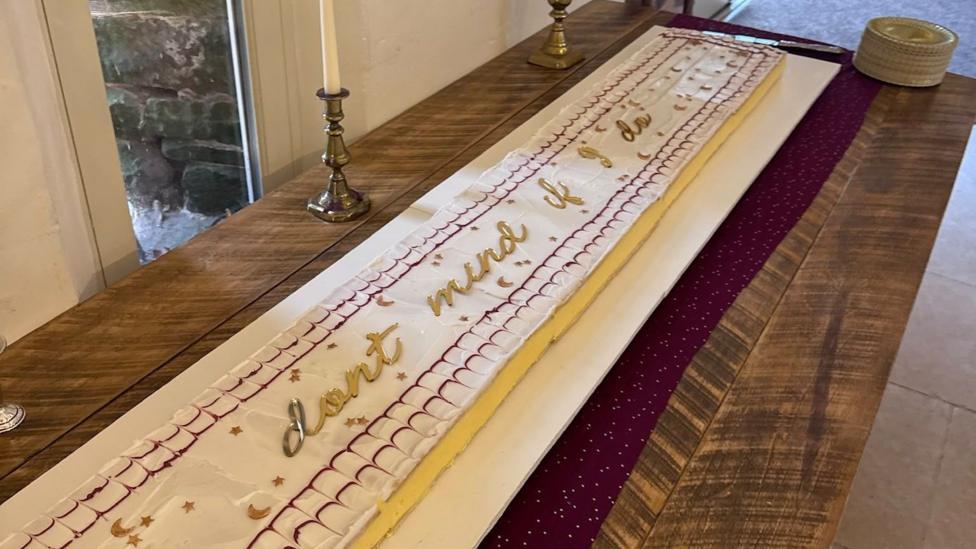
BBC News reports that as Grand Theft Auto VI prepares for its launch on 19 November 2026, the franchise's roots remain firmly planted in Scotland. The original game emerged from a small team of developers working in Dundee nearly three decades ago, establishing what would become one of entertainment's most successful franchises. Today, Scotland's gaming industry has evolved far beyond that single studio, growing into a diverse ecosystem of companies ranging from global giants to innovative independent developers.
The original GTA was created by Scottish studio DMA Design, which later became Rockstar North and relocated to Edinburgh, eventually employing more than 1,000 people. According to Xbox, the upcoming title will be playable through Xbox Cloud Gaming on day one, including on Xbox One, starting at 1 a.m. ET on 19 November 2026. Rockstar's official page indicates that pre-loading began on 10 November 2026 for PlayStation 5 and Xbox Series X|S versions.
Brian Baglow, who worked as a writer on the original game, recalls the challenges the team faced in bringing their vision to life.
It was entirely the work of a Scottish team, all novices, we had no games design degrees at that point,he explains.
The only people who believed in it were DMA Design. The publisher wanted to kill it.
How did Scotland become a gaming hub?
Scotland's transformation into a recognised gaming centre happened gradually, driven by both industry pioneers and institutional support. Chris van der Kuyl, who co-founded VIS Entertainment in the early 1990s, witnessed the sector's evolution firsthand.
When we started out, people didn't think about Scotland at all,he recalls.
There were a few people dotted around, but the main people were DMA in Dundee.
A pivotal moment came in 1997 when Abertay University in Dundee launched the world's first computer games degree, establishing a formal educational pathway into the industry. Van der Kuyl emphasises the importance of this development:
Without a talent pipeline and new people coming into the industry, there would be no industry.This educational foundation proved crucial to sustaining growth beyond the initial wave of self-taught developers.

In 2005, van der Kuyl co-founded 4J Studios in Dundee, which achieved significant commercial success by adapting Minecraft for consoles including Xbox and PlayStation. He estimates those console editions have sold approximately 70 million copies.
There's no way you'd ever be able to predict that level of success for anything,he says.
To be part of it was amazing.
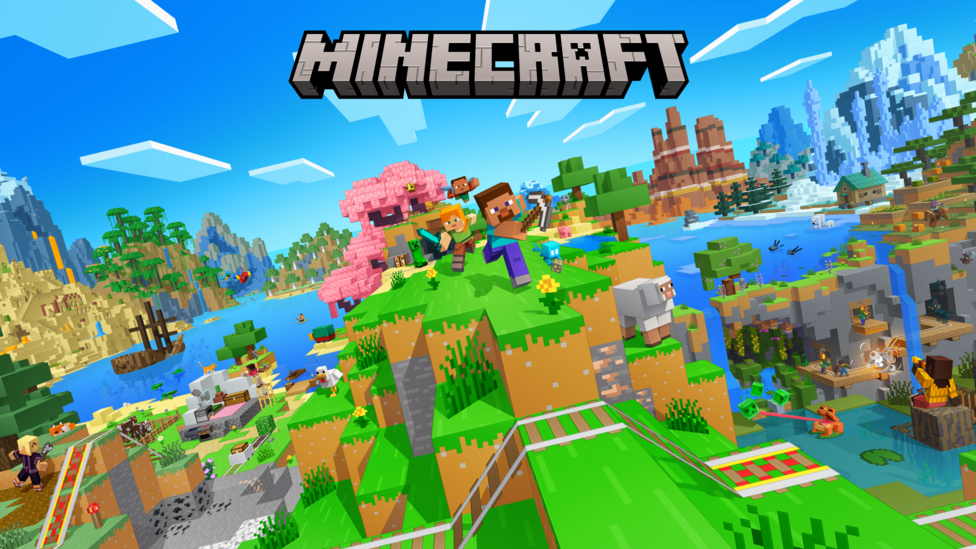
Today, 4J Studios employs 57 people, making it one of Scotland's largest independent games firms. Beyond these major players, numerous smaller studios contribute meaningfully to the sector's reputation. Van der Kuyl notes:
You've got companies that are only two or three people doing quite interesting stuff as indie developers.
The growth metrics tell a striking story. Scottish government figures show the number of games companies operating in Scotland reached approximately 130 in 2024, compared to just 15 in 2010. Over the same period, industry turnover expanded from £38.1 million to £339.7 million. Van der Kuyl believes Scotland now ranks among the world's leading game development destinations, comparable to established hubs such as Sweden and the west coast of the United States.
What are Scotland's emerging success stories?
Beyond Rockstar's dominance, Glasgow-based Screen Burn represents the new generation of Scottish gaming talent. Formerly operating under the name No Code, the studio earned a BAFTA for Best British Game in 2020 with Observation, a science fiction mystery where players control a space station's artificial intelligence. The studio recently gained international recognition for Silent Hill: Townfall, a new entry in one of the world's most popular horror franchises.
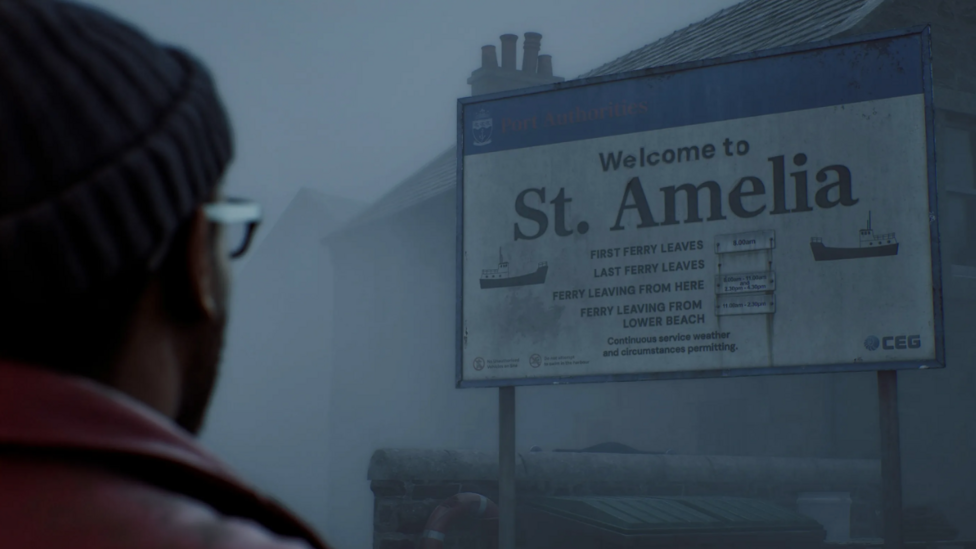
Screen Burn's involvement with Silent Hill: Townfall proved particularly significant because the studio pitched its own original story rather than simply executing a pre-existing concept. The game is set in St Amelia, a fictional Scottish village inspired by St Monans in Fife. Jon McKellan, Screen Burn's co-founder, describes the creative freedom the project afforded:
This is our pitch, this was our story, we really put our stamp on it.
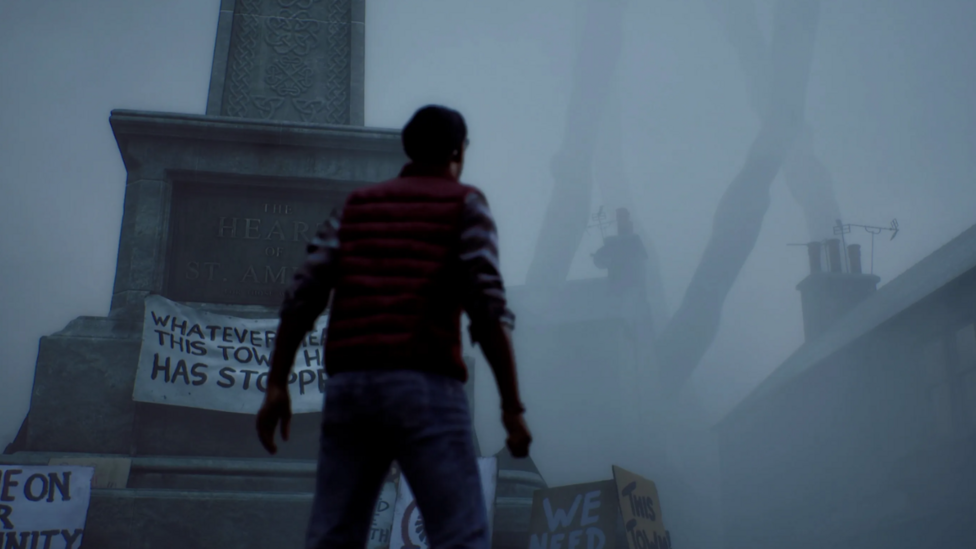
For McKellan, Screen Burn's achievements demonstrate the increasing diversity within Scotland's gaming landscape, which now encompasses both multinational corporations and creative independent studios. However, he acknowledges that Rockstar North's prominence creates challenges for smaller competitors. McKellan characterises Rockstar as
a massive, immovable objectwithin Scotland's games sector, adding:
It's kind of like if you spend all your water on the one plant, you'll have one great tree and the rest of it will die out.
McKellan's own career trajectory illustrates these difficulties. After the Dundee studio where he began his career collapsed, he found limited alternatives within Scotland.
There were no other opportunities in Scotland at the time, it was either Rockstar or move down south,he recalls. He spent five years working in England before returning to establish Screen Burn.
What obstacles does the industry face?
Sustaining a games studio presents distinct challenges compared to other creative sectors. Unlike film and television production, which typically organises work around individual projects with flexible staffing, games companies must maintain permanent teams throughout extended development cycles that can span several years. McKellan explains:
We have people on salary that work year in, year out, whereas film tends to be short bursts of work.
The most pressing challenge, according to McKellan, involves creating sufficient employment opportunities to retain and expand studios within Scotland. Many graduates struggle to secure positions in the sector, and smaller studios cannot absorb the talent pipeline emerging from educational institutions.
We're maybe hiring one or two people a year, we can't absorb every graduate that's coming out,he notes.
Brian Baglow, the original GTA writer, identifies a different but equally significant challenge facing contemporary developers.
The challenges facing developers is not making video games, it's now user acquisition, as in finding players,he states. As development tools have become more accessible, the barrier to creating games has lowered substantially, but competition for audience attention has intensified correspondingly.
That need for a breakout consumer hit, and if you don't get it, it kills your studio,Baglow warns.
What opportunities exist beyond traditional gaming?
Baglow suggests that expertise developed within games studios extends far beyond entertainment. The skills cultivated in user engagement, digital design, and three-dimensional visualisation have applications across numerous sectors.
Any sector that is struggling either to build engagement with a user, a consumer, a player, or needs to teach its staff and train its staff up, there's a role for video games in all of that,he explains. Healthcare, education, and financial services represent potential growth areas where gaming methodologies could enhance outcomes.
Scotland's gaming heritage extends deeper than many realise. Dundee's Timex factory, which according to the Scottish Games Network assembled Sinclair ZX Spectrum computers, contributed to the local computing culture that preceded the city's emergence as a games development centre. Today, Dundee remains home to multiple studios including Rockstar Dundee, 4J Studios, and Outplay.
What does the future hold for Scotland's gaming sector?
For Baglow, the continued production of Grand Theft Auto in Scotland represents a remarkable achievement worthy of celebration.
The fact that not only has it achieved the success it has, but it's still being made here in Scotland, should be seen and championed as our biggest cultural export ever,he states.
The immediate future includes significant milestones for the franchise. Rockstar has confirmed that GTA VI will release at midnight local time on 19 November 2026 for PlayStation 5 and Xbox Series X|S.
Beyond the immediate launch, Scotland's gaming community is planning to document and celebrate its heritage. The HELM youth collective has begun crowdfunding efforts to establish a Dundee games museum. According to the Scottish Games Network, HELM plans to commence developing models and conducting oral-history interviews in February 2027, with an interactive exhibition scheduled for June 2027. This initiative reflects growing recognition of Dundee's pivotal role in gaming history.
Baglow emphasises that Scotland's primary challenge is no longer demonstrating its capacity to create successful games.
Scotland's challenge is no longer proving it can create successful games, it is ensuring the industry has the investment and support needed to build on that success.McKellan echoes this sentiment, noting that Scotland possesses the creative talent to compete internationally but requires more opportunities to retain developers.
There's some really great talent in Scotland. If they're given the right opportunities, they can create a bit of a wave of cool content that people aren't expecting,he concludes.
Key Facts
- The original Grand Theft Auto was developed by Scottish studio DMA Design in Dundee, which later became Rockstar North and now employs over 1,000 people in Edinburgh
- Scotland's games industry grew from 15 companies in 2010 to approximately 130 in 2024, with turnover increasing from £38.1 million to £339.7 million
- Abertay University in Dundee launched the world's first computer games degree in 1997, establishing a formal talent pipeline for the industry
- 4J Studios' Minecraft console adaptations have sold approximately 70 million copies, demonstrating the commercial potential of Scottish game development
- Screen Burn's work on Silent Hill: Townfall shows how smaller Scottish studios can achieve international recognition when given creative opportunities