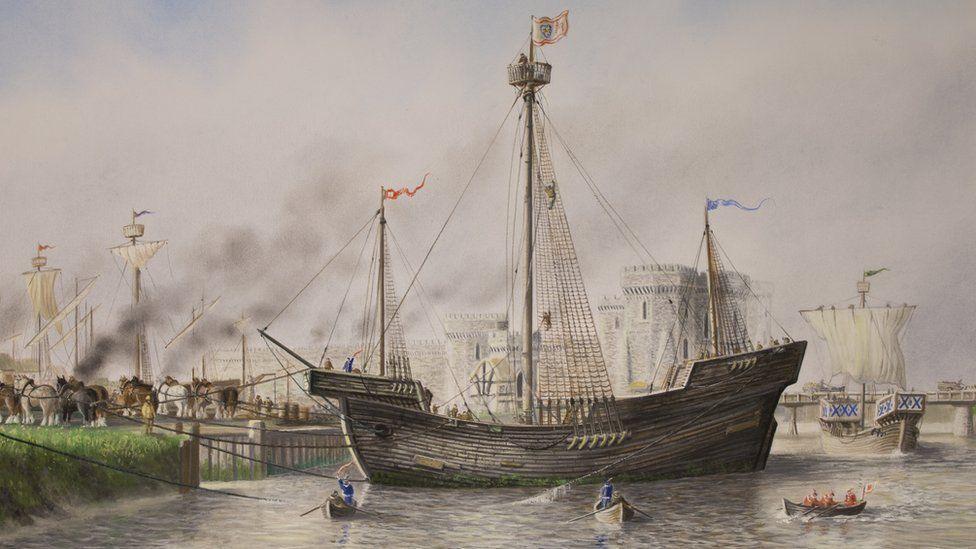
Campaigners and opposition councillors have expressed anger at the decision to keep a 15th-century merchant vessel in storage indefinitely, nearly a quarter-century after its discovery in south Wales. According to BBC News, the Newport Ship will remain in a storage facility for the foreseeable future, with the council citing the prohibitive £27.5 million cost of constructing a permanent exhibition venue and the scarcity of suitable sites in the city.
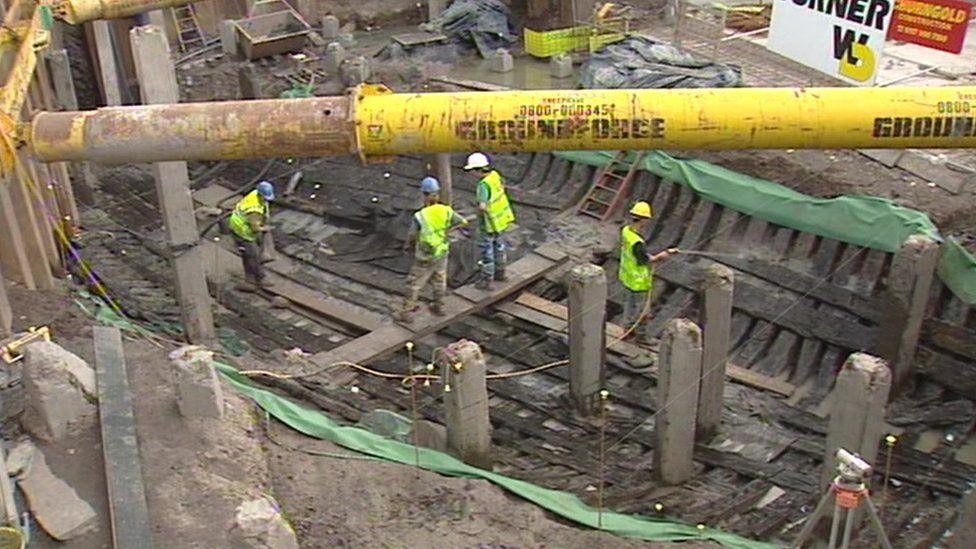
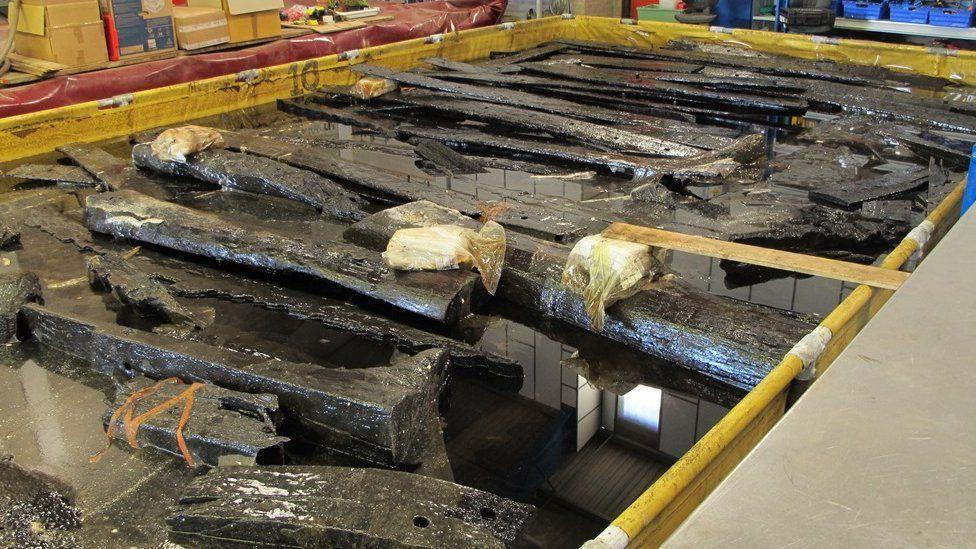
The vessel was uncovered in 2002 during construction of the Riverfront Theatre on the banks of the River Usk in Newport's city centre. After excavation, its timbers were disassembled and underwent extensive restoration work, with the 2,500 individual components eventually returned to a storage facility in the city. The ship itself represents a significant historical find: it was built around 1457 in the Basque Country, featured three masts, and could carry approximately 200 tons of cargo, likely sailing trade routes between Lisbon and Bristol.
A report prepared for Newport City Council's cabinet, scheduled for discussion on 11 November 2026, recommends maintaining the current storage arrangements, which cost £115,000 annually. The council acknowledged that the ship qualifies as a heritage asset of national and international significance, and that a permanent exhibition would generate additional operating costs that might necessitate charging visitors for admission. The report noted that no existing facility could accommodate the vessel and that transferring it to a custodian outside Newport for display and preservation was not under consideration.
Why has the ship remained in storage so long?
The council has struggled to identify a viable pathway to permanent display. The report stated:
While the council's long-term ambition remains to enhance public interpretation of the ship, there is no proposal at the moment that is fully developed, funded and capable of delivery within a sustainable operating model.Officials cited the "very limited availability" of appropriate sites in Newport as a key constraint, though they maintained that enhancing public access to the vessel remained a long-term objective.
The vessel is the most complete fifteenth-century clinker-built merchant ship discovered in the United Kingdom, constructed using a Northern European, keel-first shell-based tradition. Its historical significance has made the decision to keep it in storage particularly contentious among heritage advocates and local politicians.
What are campaigners demanding?
Charles Ferris, chair of Friends of the Newport Ship, has drawn comparisons to the Mary Rose, the Tudor-era warship displayed in Portsmouth, which attracts hundreds of thousands of visitors annually.
She's a wonderful find from the time of the great voyages of exploration, where Europe reached out to the other continents,Ferris said.
It's like somebody finding, say, the Space Shuttle in 600 years' time. She's not a warship, she's a trader and that's a wonderful thing to me because that's the heart of Newport.
Campaigners have long sought to see the ship fully reassembled to its original 30-metre (98.4 feet) length and displayed in a purpose-built facility within Newport. Ferris emphasised the urgency of action:
A lot of money has been spent on that ship, so we're really on the last stretch as it were, we don't want to see it fizzle out now. I think it would be a tragedy if it was ever taken anywhere else. That would be a terrible indictment on us, and after all it was the will of the Newport people that saved it.

What are opposition politicians saying?
Matthew Evans, leader of the council's Conservative group, criticised the administration's lack of progress.
We've been talking about this for a decade now. I'm very disappointed at the lack of action, the lack of ambition. We're talking about a world-class opportunity here for tourism. The Mary Rose has hundreds of thousands of visitors, and we've just sat on our backsides and done nothing at all, kicked it into long grass. I'm angry and frustrated at the lack of progress.
Evans rejected claims that Newport lacked suitable locations for a display facility, arguing that the council should have engaged with private developers about riverfront sites.
You find a site, then you look at private investors, and then you build that from there. The council needs to be driving this - I'm tired of all these excuses, no action.
Peredur Owen Griffiths, a Plaid Cymru Member of the Senedd representing the area, suggested that the ship could anchor a broader heritage tourism strategy alongside the Transporter Bridge and the Roman settlement at Caerleon.
There's an opportunity there to, in conjunction with the Transporter Bridge and maybe Caerleon, [for] a package of historical tourism, if you like. For the city, it could well be an excellent way of looking at how to invest in new facilities for the ship. And I think I'm a little bit disappointed in Newport council that their ambition is to put this into further storage for another few years, rather than look at the opportunities that might be available.
What options were considered?
The council's report outlined several alternatives to indefinite storage, including a trial reassembly project and construction of a permanent display facility. However, officials determined that none of these options could proceed without substantial external funding and a clearly defined operational model. The estimated £27.5 million cost of building a dedicated exhibition venue has proven the primary obstacle, alongside uncertainty about long-term visitor numbers and admission revenue.
What happens next?
Newport City Council's cabinet was scheduled to discuss the ship's future on 11 November 2026, though the available reporting does not confirm the outcome of that meeting. The council's recommendation to maintain current storage arrangements suggests that the vessel will remain in its facility for several more years unless new funding sources or partnership opportunities emerge. Campaigners and opposition councillors have signalled their intention to continue pressing for a permanent home, arguing that the delay represents a missed opportunity for both heritage preservation and economic development through tourism.