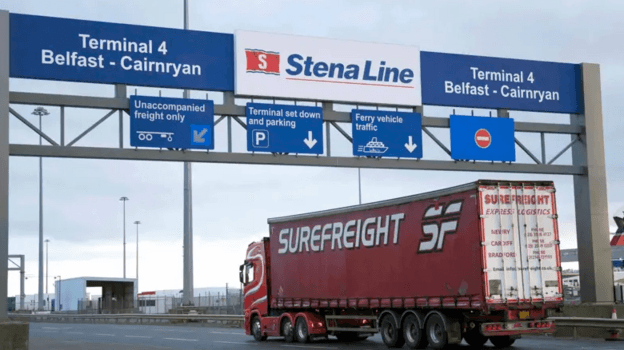
Two independent studies commissioned by Stormont's Department for the Economy have revealed that Northern Ireland's trading environment remains hampered by regulatory confusion, administrative burdens and supply-chain disruptions, despite the Windsor Framework's intention to streamline operations following Brexit. According to BBC News, the framework agreed between the UK and EU in 2023 has delivered greater predictability for businesses but has not yet translated into the simplicity that was promised.
The Windsor Framework was designed to manage the consequences of Northern Ireland remaining within the EU's single market for goods after Brexit—a status chosen to prevent a hard border with the Republic of Ireland. This arrangement created a new trade frontier for goods entering Northern Ireland from the rest of the UK, requiring customs declarations and extensive paperwork. A government spokesperson stated that the framework "protects the Good Friday Agreement" and maintains Northern Ireland's "unique" dual access to both the UK and EU markets while "ensuring there is no hard border with the Republic of Ireland."
Economist Maureen O'Reilly's report concludes that although the framework has brought greater stability, this improvement has not yet simplified the trading landscape. She found that businesses describe their environment as more predictable than before but still characterised by mounting regulatory and compliance obligations.
"Supply-chain pressures remain among the most significant constraints. GB suppliers continue to raise minimum orders, add administrative surcharges or withdraw from supplying Northern Ireland entirely."This situation has prompted many firms to redirect their sourcing towards Ireland or the wider EU, though often at considerably higher costs.
The second report, produced by trade consultancy Fortior Insight, reinforces concerns about the ongoing challenges with Great Britain suppliers. It found that "in many cases" suppliers have exited the Northern Ireland market before fully grasping the trade simplifications that are available to them. Manufacturing NI chief executive Stephen Kelly emphasised that trading arrangements must become simpler, less costly and more predictable for businesses to realise the benefits of dual market access.
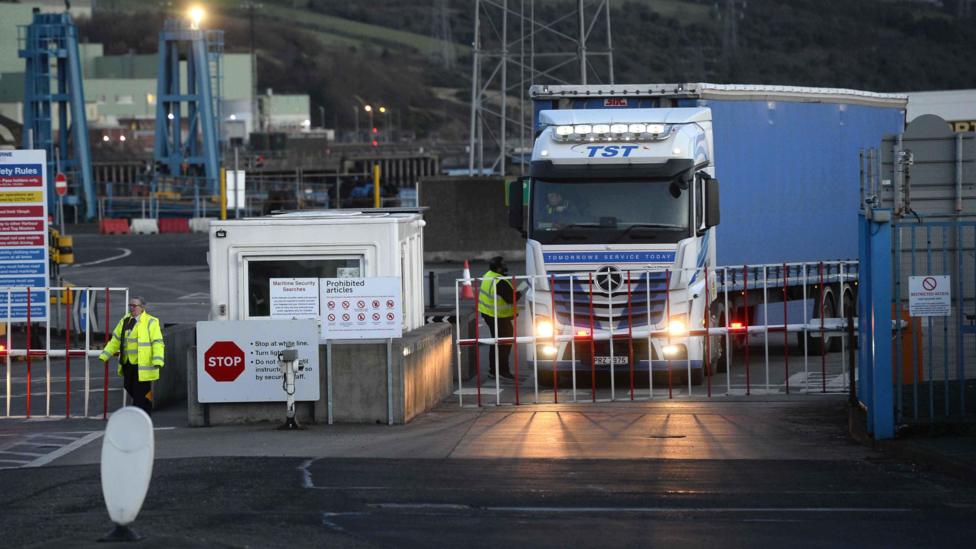
What does "at risk" mean and why is it causing confusion?
The Fortior Insight report highlights persistent misunderstanding surrounding the concept of "at risk," which is central to how the framework operates. An "at risk" classification applies to a product moved from Great Britain into Northern Ireland that could subsequently be transferred across the border to be sold in the Republic. If a product carries this designation, it may be liable for EU tariffs, but this does not indicate that the goods are substandard or non-compliant. Fortior said that "public messaging" has failed to clarify that the "at risk" classification concerns tariffs alone and "does not denote compliance failure."
"Stakeholder evidence suggests that messaging… has unintentionally created the perception that 'at risk' is undesirable."In reality, many legitimate commercial models depend on "at risk" declarations as part of how supply chains are structured, including where goods are intended to support onward movement consistent with EU market requirements.
Are businesses benefiting from dual market access?
Both reports examined whether Northern Ireland businesses are capitalising on their unique position of having access to both the UK market and the EU single market. When former Prime Minister Rishi Sunak signed the Windsor Framework, he described Northern Ireland as "the world's most exciting economic zone" because of this dual access. O'Reilly found that some firms are beginning to exploit the advantages of frictionless access to both markets. However, she noted that
"the overwhelming feedback is that the benefits are heavily constrained by administrative realities. Many businesses reliant on supply chains originating in Great Britain find the administrative hurdles dampen the practical value of dual access."The Department for the Economy has identified regulatory divergence, smaller firms' capacity to respond to changing requirements, logistics and parcel systems, and subsidy-control clarity as areas needing attention.
What support is being offered to businesses?
The government has announced that £16.6 million will be allocated to a new service designed to provide "simpler, tailored support" to businesses moving goods to Northern Ireland. Additionally, plans are in place to sign an agri-food and drink deal with the EU at the UK-EU Summit later in November, which officials say will "slash the costly red tape that has hindered GB-NI trade and pushed up food prices." This agreement builds on earlier progress: the UK and EU have reached a draft deal on food and plant products that would eliminate most post-Brexit checks on Northern Ireland trade, though the customs border would remain in place.
Fortior Insight's recommendations are structured into short-, medium- and longer-term measures, including clearer guidance, addressing cost distortions and improving system integration. These proposals aim to address the practical obstacles that continue to prevent businesses from fully realising the potential of the framework.
What happens next?
The UK government has indicated it will shortly submit explanatory memoranda to Parliament on two Windsor Framework decisions, setting out its assessment of their effects on Northern Ireland. Additionally, the UK and EU are scheduled to consider adding the EU Forced Labour Regulation to the Windsor Framework at the Withdrawal Agreement Joint Committee meeting on 10 November 2026. These developments suggest ongoing efforts to refine and expand the framework's scope, though businesses remain focused on achieving the administrative simplification they say is essential for the arrangement to deliver its intended benefits.