

At Magnum's research and development centre near Bedford in the UK, scientists are refining existing recipes and inventing new ones for the world's biggest publicly listed ice-cream maker. Among the more unusual results on display is a glow-in-the-dark ice lolly launched in Ibiza, designed for clubbers and festival-goers and containing vitamin B2, a naturally luminescent ingredient that reacts under UV lighting. The product illustrates how, even in a category built on decades-old favourites, constant innovation has become essential to staying competitive.
The Magnum Ice Cream Company faces intense competition from rivals including Häagen-Dazs owner Froneri and Baskin-Robbins, the world's largest chain of specialist ice-cream shops, as well as a growing number of smaller artisan producers. All of them are navigating a volatile market shaped by swings in commodity and energy prices, leaving little room for complacency.
Why has ice-cream pricing become so unpredictable?
Pricing instability has become a defining feature of the industry over the past five years, driven by a succession of global shocks. Georgia Rose, principal analyst at global market research company Kantar Retail IQ, said the sector has had little respite from disruption.
"We've had five years of price volatility impacted by war in Ukraine, Covid, the cost of living crisis. We've now got the Strait of Hormuz. We've just been in this constant state of instability when it comes to pricing," says Georgia Rose, principal analyst at global market research company, Kantar Retail IQ.
According to Rose, these price fluctuations ripple through every stage of production, from raw ingredients to storage.
"Manufacturers have been hit by higher prices for dairy, cream, eggs; the ingredients that make ice-cream bases. And then you've got the flavours; vanilla, chocolate, sugar, fruit. And something that often gets forgotten is the cold-chain energy costs and storage," she says.
How is Magnum trying to control costs?
Rising input costs are a central challenge for The Magnum Ice Cream Company, which was spun off from parent company Unilever and owns brands including Cornetto, Twister, Solero and its namesake Magnum. According to , the ice-cream business was formally separated from Unilever and listed independently in December 2025, following plans first reported in 2024 for the split to be completed by the end of that year, as noted at the time by a national broadcaster's report. By 8 December 2025, according to FoodNavigator, Magnum, Wall's and Ben & Jerry's all sat under the newly formed Magnum Ice Cream Company.
As the largest stock market-listed ice-cream company in the world, with a market capitalisation of roughly £8bn, the firm has the financial resources to invest heavily in innovation. Refrigeration is one focus area: Magnum owns around three million fridges worldwide, built by third-party manufacturers, some of which are fitted with cameras that upload images to data centres. Artificial intelligence then identifies each product and estimates, through depth-recognition, how many units have been sold and when a fridge needs restocking, reducing empty shelf space and improving supply targeting.
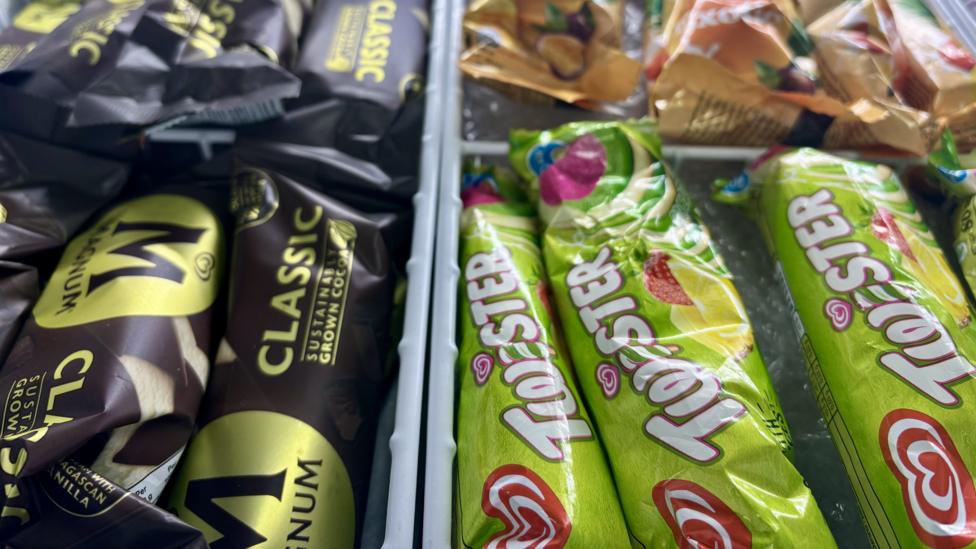
The fridges themselves have also become significantly more energy efficient. Zbigniew Lewicki, Magnum's chief research, design and innovation officer, said such improvements are not simply nice extras but central to the company's financial resilience.
"If you look at the freezers we had in 2010, the ones we have now are 40% more efficient. Will we ever be able to absorb every shock? I can't say, but it's definitely one way of making the business long-term resilient."
The company's financial performance in the first half of 2026 suggests the strategy is paying off to some degree. According to Confectionery Production, Magnum reported H1 2026 revenue of €4.6bn, up 4.2%, in results published on 30 July 2026, a date confirmed on the company's own newsroom page.
Where is ice-cream innovation happening fastest?
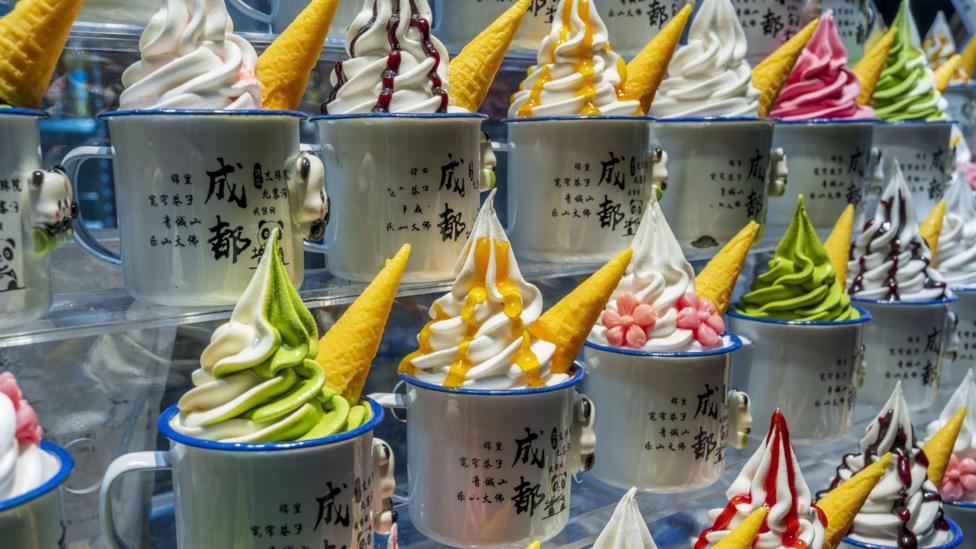
While fridge technology is largely invisible to shoppers, new flavours and formats are where innovation becomes most visible on supermarket shelves. Lewicki said much of the current inspiration is coming from Asia.
"The inspiration and trends come from the East. There's an incredible intensity of innovation in places like Japan, Korea and China and the markets are growing and expanding in a phenomenal way."

One product shaped by Lewicki's travels is Volcanics, now launched across the UK and Europe, featuring a chocolate shell, biscuit pieces, chocolate and vanilla ice-cream layers and a caramel centre he describes as "four dimensional".
Shanghai-based Neil Yan, a researcher of market trends for consumer and sensory specialists MMR, agrees that Asia has become the centre of gravity for ice-cream innovation, pointing to deeper cultural shifts behind the trend.
"In China, ice cream is no longer a niche story. It's not just for Instagram. It's not just a summer treat. It's a new centre of gravity, representing a part of Chinese people's lifestyle."
Yan said this cultural shift is reshaping the wider market.
"[We are in] an era where everyone is experimenting with the flavours and the format, and blending it with what China, or the border term, Asian nationality, represents."
That experimentation extends to some unconventional flavour combinations.
"We have ham, pickled garlic, tahini, and stinky tofu and liquor. Just below my office is a shop whose speciality is vodka, foie gras and apple in one scoop," says Yan.
"The reason why people are so excited and so experimental is basically the ability to think beyond just the flavours that have been offered by the Western market for the past two or three decades."
Is health-focused ice cream becoming more mainstream?
Innovation is not confined to flavour alone. Honorata Jarocka, associate director at market intelligence company Mintel, said products with an added health dimension are gaining ground, with protein content being a particularly notable trend after appearing first in cereal bars and milkshakes.
"It's not only about building your muscles, it's more about satiety because with the GLP1 user movement, [incorporating weight loss drugs such as Ozempic and Mounjaro], people are drawn to products that are more filling. Protein is really an important factor and ice-cream is a great place to use that."
Protein-enriched ice cream, however, tends to carry a premium price. David bars made by US company David Protein, each containing 20g of protein, cost $39.99 (£30) for a 12-pack, more than double the price of Magnum's Yasso frozen yoghurt bars. Jarocka said such products have nonetheless found strong demand.
"high quality, smaller portions, and are able to maybe pay a bit more for products with extra benefits because they are spending less on grocery items overall."
What else is Magnum launching this year?
Beyond the products already on shelves, Magnum's 2026 innovation push extends across several new launches. The company introduced Twister Frrreeze for the 2026 season, a 66-calorie product aimed at Gen Z shoppers and sold through grocery and wholesale channels at a recommended retail price of £2.75, according to Food and Drink Technology. Magnum has also rolled out its Signature Range across Europe, including La Pistache and La Pêche variants featuring shells made from pistachio paste or dried peach juice, according to the company's own newsroom announcement.
According to DairyReporter, The Magnum Ice Cream Company's broader 2026 innovation agenda includes snacking formats, portion-controlled Magnum Bonbons, hydration ices, high-protein propositions and faster new product development cycles. The same report noted that Magnum Dubai took just six months from concept to shelf, an example the company has cited to highlight its accelerated development model. Separately, according to Novedades y Noticias, the company's 2026 season includes 14 new products alongside the return of several classic lines within its premium portfolio.
The broader appeal of frozen treats during warmer months is not limited to ice cream. As covered in our earlier look at summer chocolate treats, fridge-friendly nougat, malty ice-cream bars and chocolate-brownie bars from Pump Street have also been gaining attention as consumers seek indulgent options suited to hot weather.
What happens next for Magnum?
Magnum's newsroom and investor pages point to continued coverage of its performance following the half-year results published on 30 July 2026, though no further scheduled announcement date was confirmed in the material reviewed, according to the company's results page. Similarly, the company's investor relations site does not list a confirmed upcoming launch date, hearing or decision beyond the product and results announcements already made this year.
Back at the Bedford facility, researchers continue fine-tuning the classic Magnum bar itself, aided by a robot named Eric, which is tasked with continuously gathering data on chocolate viscosity in pursuit of the ideal crunch — a task, researchers note, that would be impossible for even the most dedicated human ice-cream taster to sustain around the clock.
Key Facts
- Magnum's R&D centre near Bedford, UK, develops new recipes and production processes, including a glow-in-the-dark lolly launched in Ibiza.
- Magnum owns roughly three million fridges globally, now up to 40% more energy efficient than 2010 models, according to chief research, design and innovation officer Zbigniew Lewicki.
- Magnum reported H1 2026 revenue of €4.6bn, up 4.2%, in results published on 30 July 2026, according to Confectionery Production.
- New 2026 launches include Twister Frrreeze, the Signature Range (La Pistache and La Pêche), and 14 new products alongside returning classics.
- Protein-enriched ice cream, such as David Protein bars with 20g of protein, is growing in popularity despite carrying a significant price premium.


