At least half a dozen prestigious British public schools have established campuses across India in recent years, capitalising on a growing market of wealthy families seeking international education and driven partly by regulatory challenges in China and new tax pressures at home. According to BBC News, the expansion represents a significant shift in how Britain's oldest educational institutions are pursuing growth overseas.
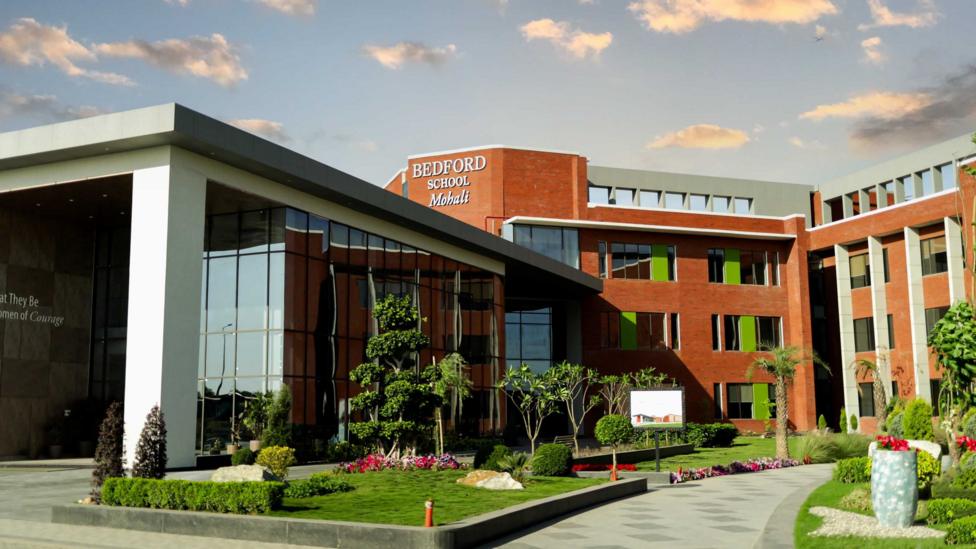
The Bedford School opened its first all-girls international campus on the outskirts of Chandigarh in Punjab state earlier in 2026, joining Harrow School in Bengaluru, Shrewsbury School in Bhopal, and Wellington College in Pune. BBC News reports that Millfield, Queen Elizabeth's School and others are reportedly planning satellite campuses in the coming years. The expansion comes as these institutions face tighter conditions in their traditional markets and new financial pressures in Britain.
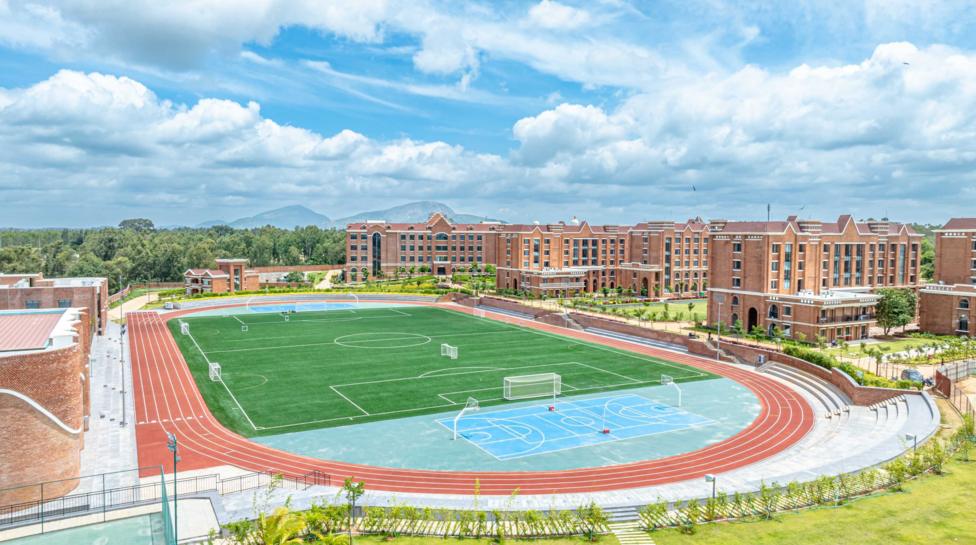
Bedford School Mohali welcomed its first pupils in April 2026 across its 14-acre campus, which offers day and boarding places for girls aged 4 to 18. The school's modern academic blocks contrast with the Gothic-style architecture of its Bedfordshire headquarters, though a red-brick clock tower signals its British heritage. Harrow School has operated in Bengaluru since 2023, while Shrewsbury's Bhopal campus began accepting students in August 2025.
Why are British schools targeting India?
India's rapidly expanding population of newly wealthy families represents a significant market opportunity for these institutions. For decades, India has hosted well-established local boarding schools modelled on the colonial British public-school system, but this market has expanded dramatically as newly affluent families increasingly seek global educational exposure for their children.
Caroline Pascoe, head of school at Harrow in Bengaluru, told BBC News that the international curriculum drives much of the appeal. Harrow and Bedford are among the few schools in India offering an all-through Cambridge curriculum—a global education framework recognised at 10,000 schools worldwide—from primary through to A-levels.
Harsimran Singh Kocchar, who runs a chain of schools across India, chose to send his five-year-old daughter Parineet to Bedford Mohali because of the school's "holistic focus of character development, confidence and not merely academics." He was also attracted by the absence of what he called a "VIP culture." He explained:
All kids are treated the same. Children of ministers and bureaucrats don't get greater privileges.
Beyond locally wealthy families, non-resident Indians who have returned home after extended periods abroad, or those still based in the UK or Middle East wanting their children to connect to their roots, represent another significant market segment, according to Pascoe.
How are these schools adapting to India?
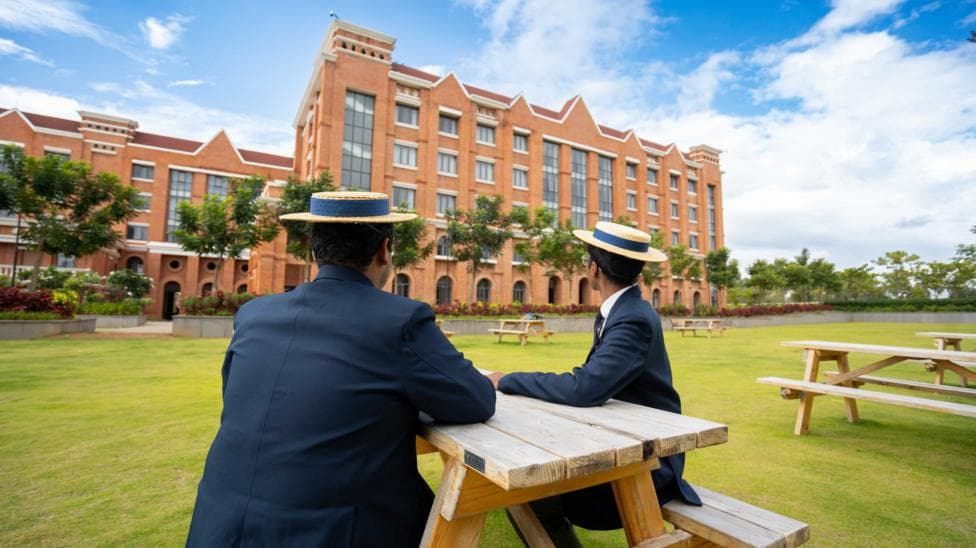
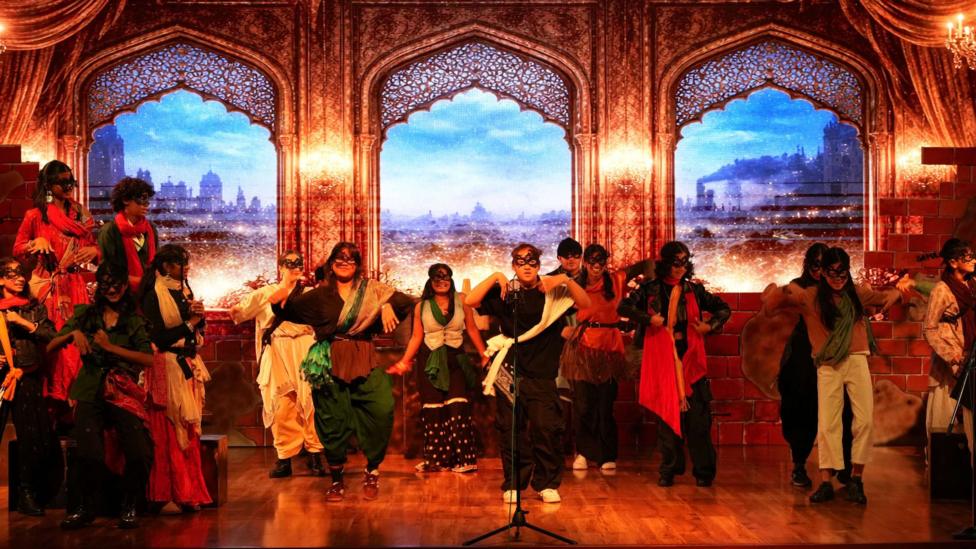
The schools are blending their quintessential British traditions with local customs and sensibilities. Sixty per cent of Harrow's staff in Bengaluru are international, and the school has imported its distinctive practices: teachers are called Beaks, students wear traditional Harrow hats and uniforms, and they participate in The Long Ducker, a cross-country race held across all Harrow schools globally. A house system—a hallmark of traditional British education—remains central to school life.
These parochial British quirks are combined with local observances such as singing the Indian national anthem each morning and celebrating Ganesh Chaturthi, a major Hindu festival. Shrewsbury's Bhopal campus opened its Sidney Centre for the Performing Arts in June 2026, featuring facilities for music, drama and fine arts, reflecting the school's commitment to extracurricular excellence in its Indian setting.
What is driving the shift away from China?
Much of the expansion of British public schools abroad over the past decade was concentrated in China and Hong Kong, where half of the 151 satellite campuses operated by 50 UK schools were situated. However, that growth has slowed significantly following regulatory changes and increased government scrutiny. A 2025 study by the UK-based Private Education Policy Forum think tank documented this slowdown, noting "increased scrutiny, and even resistance, from national governments."
A new Chinese law introduced in 2024 requiring schools to integrate patriotic education into all subjects further constrained expansion and led to planned campuses being cancelled. These regulatory pressures prompted British schools to explore alternative markets, particularly India and Vietnam.
Simultaneously, Britain's 2024 Autumn Budget introduced a 20 per cent VAT on private school fees, creating additional pressure on domestic operations. Naomi Atkins, founding principal at Bedford School Mohali, told BBC News that this tax change has forced many private schools to pursue international expansion.
They are in a desperate situation. Even those that hadn't previously looked for international expansion are now suddenly active in India.
What challenges do British schools face in India?
Despite India's economic growth and large population of newly wealthy families, the market presents significant obstacles. Most British schools operating in India are structured as partnerships with local investors or operators, and profit margins have compressed dramatically. Atkins noted that while schools in other countries might historically have charged local partners 10 per cent of revenue, margins in India have shrunk to as low as 1 per cent in some cases.
There has also been overestimation of market size. Although India has nearly 250 million children enrolled in schools, English education is deeply entrenched in the country, and competition from local players is far more intense than in non-English-speaking markets such as China, Korea or Vietnam. India's per capita income is also substantially lower, and the high fees charged by British schools—which can exceed £15,000 annually for full boarding—limit potential growth.
Atkins, who has worked in Indonesia, Malaysia and China, observed that
Indians are much more price-sensitive—they like a bargain.Consequently, Bedford Mohali has set its fees at roughly half those charged by other British schools in India.
What is the financial outlook?
Between 2011–12 and 2022–23, the satellite campuses of British schools generated £152.4 million in profit, according to the Private Education Policy Forum, with profits growing substantially over that period. However, India's market appears likely to develop slowly and steadily rather than explosively.
A 2026 academic study reported that 14 British private schools were interested in opening boarding-school offshoots in India in 2024. According to Economic Times, Queen Elizabeth's School, Barnet, opened a branch campus in Gurugram in August 2026 in partnership with GEDU, marking the school's first Indian branch. The same source reports that The King's School Canterbury formally launched a Bengaluru school in October 2026 with Vidyashilp Education Group.
The country's colonial heritage and new wealth create a significant business opportunity for these legacy institutions, but the Indian market is unlikely to be large enough to offset the loss of the Chinese market in the near term. While India offers growth potential, the combination of price sensitivity, intense local competition and lower profit margins suggests that expansion will proceed more cautiously than the rapid growth seen in China over the previous decade.
What comes next?
The King's School Canterbury Bengaluru campus expects its first pupils in the 2027–28 academic year, initially in Nursery through Year 2, with expansion planned over subsequent years. Clifton College has entered a partnership with Lighthouse Learning, though it has not committed to opening a standalone Clifton-branded campus. As more British schools evaluate India as a growth market, the coming years will reveal whether the subcontinent can provide the scale and profitability these institutions seek following their retreat from China.