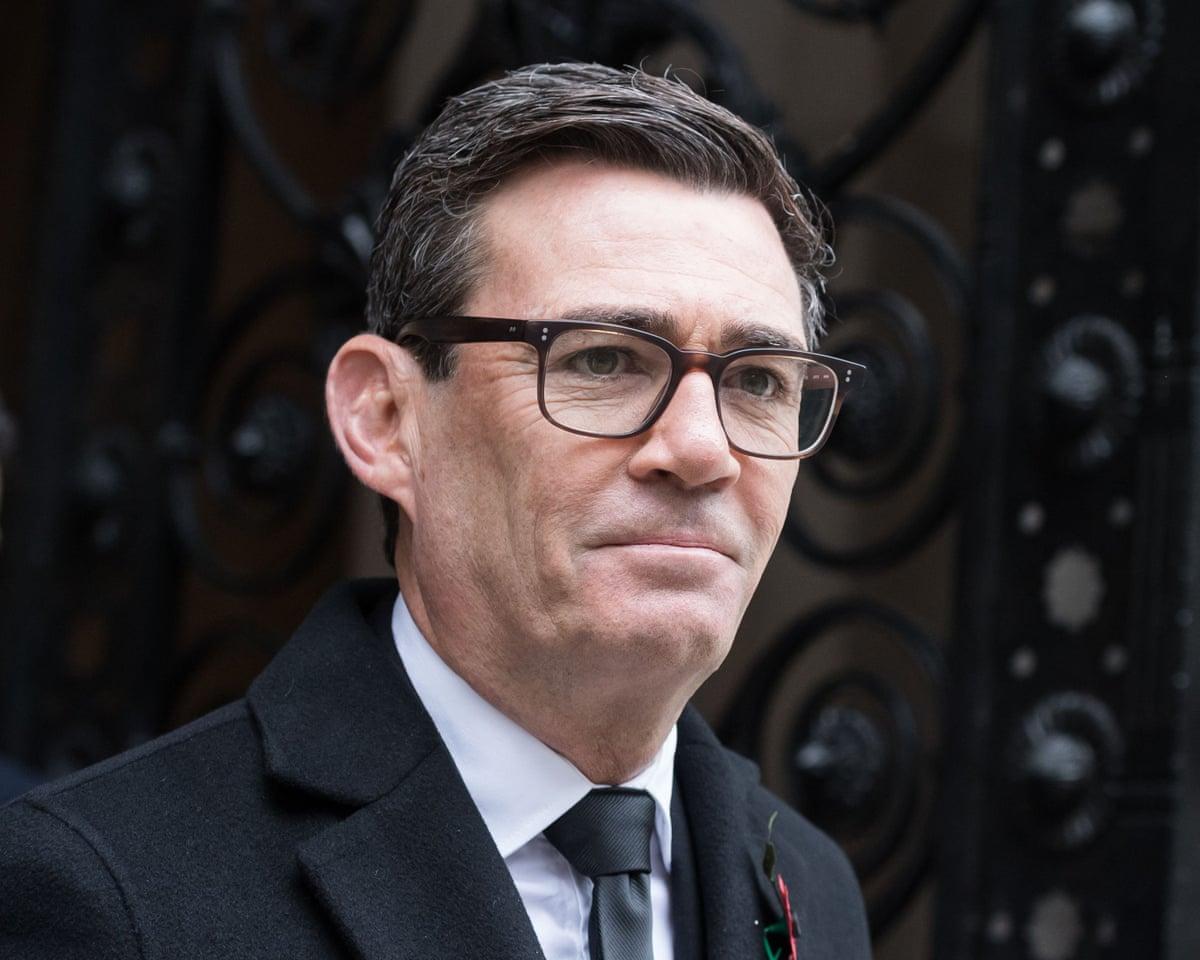
Prime Minister Andy Burnham is using two major offshore wind farm approvals to demonstrate his government's commitment to clean energy while managing cost-of-living concerns, as he prepares for a demanding schedule that includes addressing the Cop31 climate summit in Turkey on 12 November 2026 and attending his first major summit with European leaders in Dublin later that day. According to The Guardian, the announcements mark a significant moment for Burnham's strategy of balancing environmental ambition with pragmatism on household finances.
This story was first reported by The Guardian.
The two projects represent a substantial shift in UK renewable energy investment. Energy company RWE, alongside global investment firm KKR, have committed a total of £12 billion to develop the Vanguard West and Vanguard East offshore wind farms, which are expected to become operational by 2030. KKR announced that the partnership reached financial close with £11.1 billion in cash facilities and £1.7 billion in ancillary facilities from 35 international banks, representing the largest project financing for UK offshore wind to date. The joint venture, established when KKR completed its acquisition of a 50% stake in each Vanguard project, will deliver clean, secure energy to homes and businesses while protecting families from global fossil fuel price volatility.
The Vanguard projects will generate substantial employment during their development and operation. The investment is expected to support more than 2,400 jobs in construction and operation, while the wind farms will have a combined capacity of 2.8 GW and supply the equivalent of around three million UK homes once fully operational. The two farms, each rated at 1.4 GW, will be positioned 50–80 kilometres off Norfolk. Onshore construction work is already well advanced, with offshore construction scheduled to commence in early 2027.
In a separate development, Scottish-headquartered SSE has announced the latest phase of its major offshore wind farm, Berwick Bank B, which will support 2,677 skilled jobs in manufacturing, engineering and project delivery across the north of England and Scotland. The company has contracted Siemens Energy for the manufacturing of wind turbines and substation platforms. According to reporting from ITV News, the expected roles include 80 new SSE jobs in Glasgow and 50 Siemens Energy jobs at Montrose Port, though the supplier appointment remains subject to a final investment decision and final contract award. At full capacity, Berwick Bank, situated off the east coast of Scotland, could become the world's largest offshore wind farm, capable of meeting more than 6% of current UK electricity demand.
What did Burnham say about the announcements?
Welcoming the investment decisions, Burnham emphasised the domestic benefits of renewable energy development.
This major investment in UK renewables is a vote of confidence for building in Britain. And it is great news for billpayers because every turbine we put up is power under British control, not at the mercy of events on the other side of the world.His comments reflect a broader strategy to frame clean energy as both an environmental and economic necessity, particularly in the context of volatile global energy markets.
Why does this matter for Burnham's EU strategy?
The timing of these announcements is significant given Burnham's schedule. The European Political Community summit in Dublin later on 12 November 2026 represents his first major gathering with EU leaders and other European counterparts, and it provides an opportunity to clear the air ahead of the UK-EU summit scheduled for the following week. Renegotiating the relationship with the European Union has been established as a key objective of his premiership. These renewable energy investments demonstrate to European partners that the UK remains committed to climate action and can attract substantial private capital for green infrastructure.
Separately, Britain is willing to discuss paying towards infrastructure schemes in poorer parts of the EU in return for access to the European electricity market, according to Sally Weale and Kiran Stacey's reporting for The Guardian. This willingness to negotiate on energy market access reflects the government's broader approach to EU relations.
What is Burnham's climate agenda?
At Cop31, Burnham intends to demonstrate that his government remains committed to the net zero climate agenda while pursuing it in a manner that addresses cost of living pressures. This balancing act is central to his political positioning, as he seeks to show that environmental ambition and household financial security are not mutually exclusive. The renewable energy announcements provide concrete evidence of this approach.
Foreign Secretary Ed Miliband will warn at the Cop31 summit that the national security of all countries is at risk from the climate crisis. He will argue that scenarios previously regarded as science fiction—widespread environmental destruction and economic shocks from fossil fuel dependence—are already becoming reality, and that economic disruptions caused by fossil fuel markets are now the norm rather than the exception.
What is the government's broader renewable energy strategy?
These announcements build on earlier government initiatives to expand clean energy capacity. In September 2026, Burnham launched a £30 million community energy fund to support community-owned renewable energy projects, the first phase of a planned £1 billion programme that would allow communities to own and control solar, wind and hydro installations. The offshore wind investments represent the larger-scale, commercial dimension of this strategy.
The Confederation of British Industry has welcomed the offshore wind announcement. Rain Newton-Smith, the CBI's chief executive, stated that
The prime minister's announcement of major investment in offshore wind is a powerful restatement of the UK's clean energy ambitions and the economic opportunities they can unlock. Investment on this scale can attract further private capital, create skilled jobs and support growth in communities across the country.
What else is happening today?
Burnham faces Prime Minister's Questions at noon before departing London to travel to Turkey for the Cop31 climate conference. Other government business scheduled for 11 November 2026 includes:
Angela Rayner, the housing secretary, will give evidence to the Commons housing committee at 10am. Lucy Powell, the education secretary, will deliver a speech to the Association of Colleges annual conference in Birmingham at 10.50am. Louise Casey will address the National Children and Adult Services conference in Liverpool at 11am, where she will argue that successive governments in England have been negligent on social care, allowing the system to develop as a chaotic patchwork of local services without clear strategic direction.
Morgan McSweeney, Keir Starmer's former chief of staff, will provide evidence to the Lords constitution committee about constitutional safeguards at noon. Heidi Alexander, the transport secretary, will speak at the annual airlines' conference in London at 1pm. John Healey, the chancellor, will give evidence to the Commons Treasury committee about the budget at 2.15pm.
What happens next with the wind farms?
The Vanguard projects have now reached financial close, marking a major milestone with developers making their final investment commitment. Offshore construction on Vanguard West and East is scheduled to begin in early 2027, with the first Vanguard West foundation installation planned for the first half of 2027, followed by Vanguard East. Each project has secured a 20-year, inflation-indexed Contract for Difference at £91.20 per MWh in 2024 prices, with a £1 billion commitment from the National Wealth Fund supporting the financing package.
What are the implications for social care policy?
In a separate policy development, Louise Casey's commission reviewing adult social care has suggested the government should consider imposing profit caps on private care providers. A report commissioned by the Casey commission and published by the Nuffield Trust and the Institute for Government describes the current adult social care system in England as a complex patchwork where responsibilities are distributed across central government departments, arm's-length bodies, national and local government, and numerous non-public sector providers. The report notes that
The result is a complex system where responsibilities are spread between central government departments, and across a range of arm's-length bodies; between national and local government; and between government and a vast array of non-public sector providers. Decision-making processes can be opaque and a single point of responsibility for overall oversight and stewardship is lacking.
The report recommends that the Casey commission and government should take an explicit position on the balance of public, not-for-profit and for-profit provision in social care, and whether profit derived from public funding is acceptable in this sector. This echoes an earlier government announcement under the previous prime minister regarding profit caps for private children's care providers. The role of private equity in the social care market, with its potential to attract investment but also risks of instability driven by high debt ratios, requires careful examination according to the report.
What is the Welsh government doing on constitutional matters?
The Welsh government has announced the establishment of a commission to provide advice, evidence and analysis on Wales's constitutional future, with an expected annual cost of around £500,000. Dafydd Trystan Davies, minister for government effectiveness and the constitution in the Plaid Cymru-led Welsh government, stated that
The way the United Kingdom is structured and governed is under increasing strain, and debates about devolution, accountability and where decisions should be made are increasingly pressing.He added that
Responsible government means ensuring Wales is ready to shape its own future, with the evidence, advice and democratic space needed to make informed choices. This is not an abstract debate. It is about whether Wales has the right tools, powers and democratic arrangements to deliver better outcomes for our people.