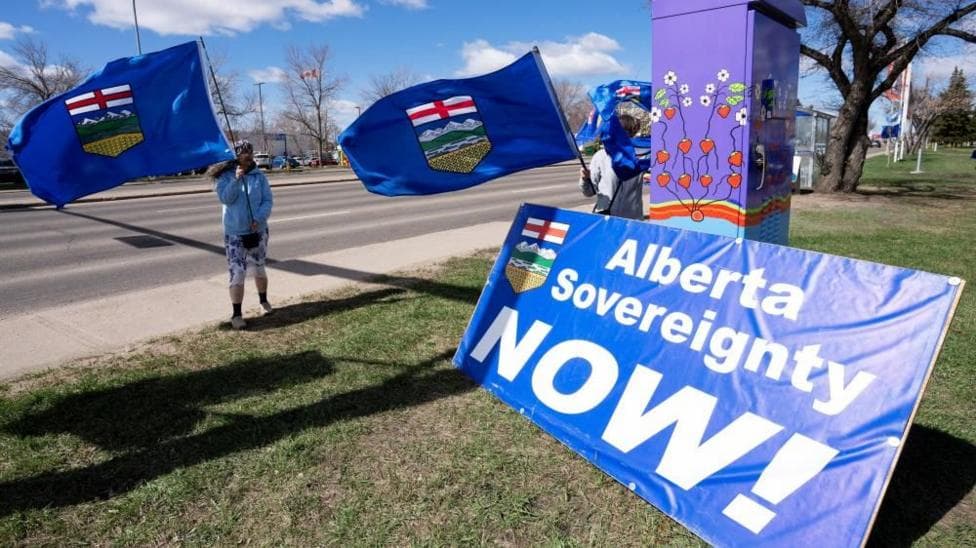
Albertans will decide on 19 October whether to authorize a binding referendum on independence, a vote that stands to become one of the most consequential tests of national unity in recent Canadian history.
The province will present residents with two options: maintain Alberta's place within Canada, or proceed with a formal separation referendum at a later date. According to a September poll, 72% of respondents indicated they would vote to remain in Canada, while 23% favoured moving forward with a binding referendum on separation.
The October ballot will include 10 referendum questions in total, with nine addressing immigration and constitutional issues alongside the separation question. Elections Alberta verified nearly 223,000 signatures on the separatist petition, exceeding the roughly 178,000 required, though the petition remains subject to a court challenge.
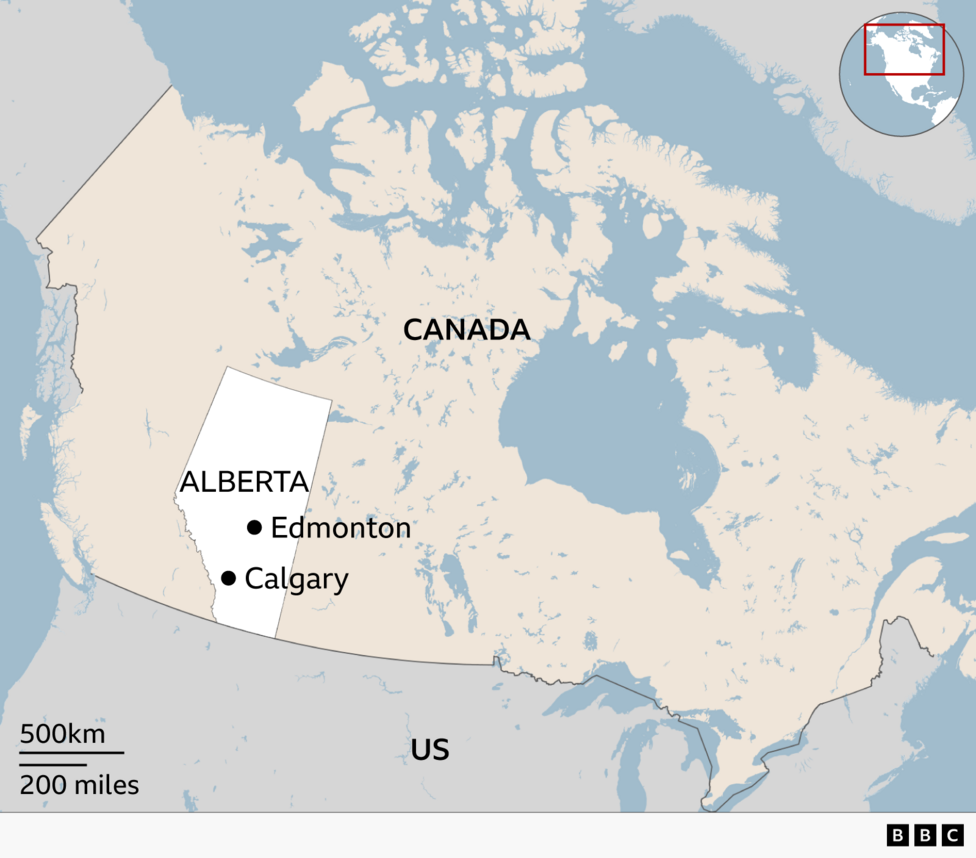
What makes Alberta's economy distinctive?
Alberta possesses natural resources and economic characteristics that set it apart within Canada's federation. The province is home to Canada's oil and gas sector, with oil reserves estimated to be the fourth-largest in the world. Crude oil represents Canada's most profitable commodity, accounting for C$142bn in export value in 2025 alone, with the vast majority sold to refineries in the United States.
The province maintains the highest GDP per capita in the country and contributes billions annually to the federal tax pool due to its strong economic performance. Since 1965, Alberta has not received any "equalisation" payments—funds that less wealthy provinces receive from the federal government to support public services.
Economists at the Fraser Institute calculated that Alberta's total net contribution to Ottawa since 2007 has reached C$322bn, averaging around C$17bn per year.
That's nearly four times that of British Columbia, more than four times Ontario. The other seven provinces were net recipients, meaning Ottawa spent or transferred more money to those provinces than it collected.This disparity forms a central grievance among those advocating for independence.
How did Alberta separatism reach the mainstream?
Once a fringe movement, Alberta independence has gained traction through accumulating frustrations with federal governance. Environmental and political opposition to proposed pipelines from landlocked Alberta to coastal waters generated significant anger. A decade of Liberal government in Ottawa created frustration in this reliably conservative province, while lingering distrust of federal authorities persisted following what some Albertans viewed as excessive pandemic lockdowns during the Covid-19 crisis.
These grievances reflect a broader sentiment of "western alienation" that has characterised prairie politics for decades. Over the past year, separatist organisers conducted townhalls across the province to assess public interest. They subsequently launched a citizen-led petition earlier this year, which garnered more than 300,000 signatures. In response, Premier Danielle Smith authorised the October vote.
Opinion polling indicates that approximately 20% to 25% of Albertans plan to vote in favour of proceeding with a binding separation referendum, with stronger support among younger, rural and conservative voters.
What do independence supporters claim about the economic benefits?
Proponents of separation argue that Alberta would achieve substantial financial gains by retaining revenues currently transferred to Ottawa. The Alberta Prosperity Project, one of the main organisations campaigning for independence, released a fiscal plan estimating that Alberta could save up to C$47bn annually by ceasing federal tax payments.
The plan acknowledges that independence would create new costs. National defence and international diplomacy would require approximately C$31.6bn annually—expenses Alberta does not currently bear as a province. Combined with existing provincial expenditures on healthcare and education, estimated at around C$75bn, total annual spending would increase substantially.
After accounting for these essential and new expenses, the Alberta Prosperity Project projects a surplus ranging from C$24bn to C$46bn per year. Advocates contend this windfall could fund tax reductions exceeding C$10,000 annually per individual, expand infrastructure investment, or build the province's wealth fund.
Keith Wilson, an Alberta independence supporter, emphasises the province's distinctive strengths.
Alberta's economy is unique. It is fundamentally different than the rest of Canada's - we have the people, the institutions, the infrastructure to excel.He dismisses comparisons to other separatist movements, arguing that
We're a resource economy. We have leverage. We have products the world wants. That's why investment comes here, despite the constraints imposed by Ottawa.
What do economists warn about separation costs?
Premier Smith, who opposes independence, presents a starkly different economic picture. She predicts the province could face C$400bn ($283bn; £213bn) in transition costs alone, while suffering billions more in lost investments and trade due to political upheaval.
A report commissioned by her government and released earlier this month calculated separation costs between C$50bn and C$170bn over five years, with a highly unpredictable long-term outlook. The report identifies an extensive list of institutional requirements for a newly independent state: establishing agencies to manage taxation and national security, developing a constitution, creating legal and court systems, establishing pension plans, and negotiating the division of federal assets including national parks and military bases.
Lennie Kaplan, a former finance official in Alberta, notes that the province would be expected to assume a share of Canada's national debt alongside numerous other fiscal obligations. A separate analysis by the CanadaWest Foundation, an Alberta-based non-profit think tank, estimates that Alberta could inherit additional debt ranging from C$258bn to C$333bn.
Combining the projected GDP reduction with additional costs, the CanadaWest Foundation report estimates that separation could reduce Albertans' disposable income by 5.8% on average. Kaplan questions the rationale for creating such uncertainty, asking:
Why do we have to create all this uncertainty that might impact and impair the province's fiscal position going forward? Why wouldn't we just work within Canada to address these issues?
How could prolonged uncertainty affect investment?
Economists emphasise that extended uncertainty represents one of the most damaging economic consequences of separation debates. Tegan Hill of the Fraser Institute explains that prolonged uncertainty, particularly if a referendum fails to resolve the issue or triggers lengthy negotiations with Canada, could deter investment.
If someone doesn't know if Alberta is going to be a part of Canada or if it's going to go on its own way in the next couple years, in what world are they going to be putting their money in the province?
Prime Minister Mark Carney frequently invokes Brexit—the United Kingdom's vote to separate from the European Union—as a cautionary example. The UK economy sustained a 6% hit from Brexit's effects, according to one report published earlier this year. If Alberta's economy experienced comparable damage following independence, it could contract by C$62bn annually, according to projections by Calgary-based economist Trevor Tombe, who also estimated workforce shrinkage of 175,000 positions.
Wilson dismisses such comparisons, characterising projections from the pro-union side as
doom and gloom, and joking that opponents had failed to mention
a large asteroid hitting Canadaamong their predicted catastrophes.
What happens next?
The referendum is scheduled for 19 October 2026. Special ballot packages must be received by 5 p.m. on 16 October. Elections Alberta estimates the unofficial count for the separation question will be available between 1 a.m. and 4 a.m. on 20 October, with unofficial results for all questions due by 8 p.m. on 21 October.
Key Facts
- Alberta holds the fourth-largest proven oil reserves globally and exported C$142bn in crude oil in 2025 alone
- The province has contributed a net C$322bn to federal coffers since 2007—approximately C$17bn annually—while receiving no equalisation payments since 1965
- A September poll showed 72% of Albertans would vote to remain in Canada, with 23% favouring a binding separation referendum
- Government analysis estimates separation costs between C$50bn and C$170bn over five years, potentially reducing disposable income by 5.8% on average
- The October ballot includes 10 questions total, with nine addressing immigration and constitutional matters alongside the independence question