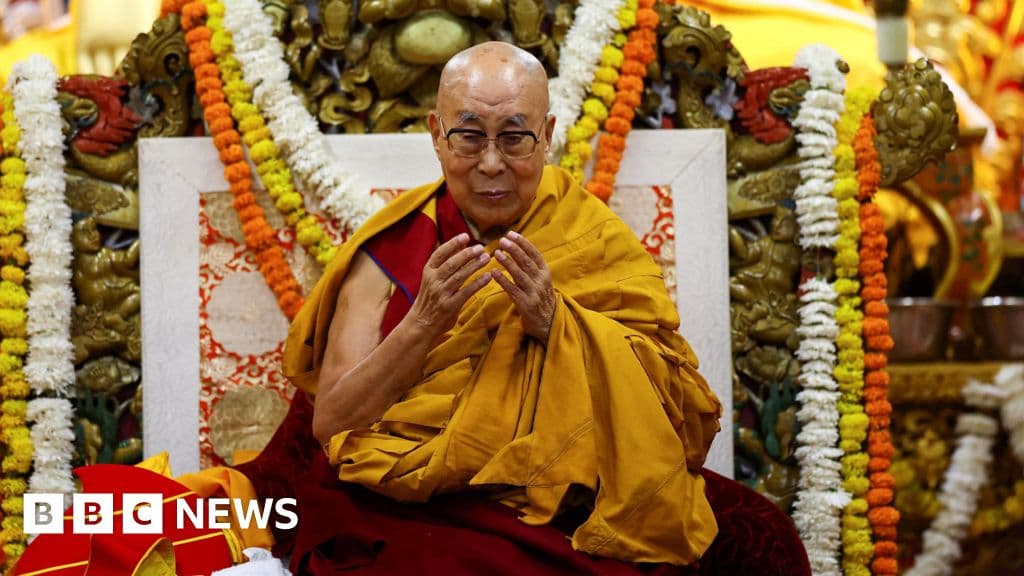
China Responds to Dalai Lama's Grammy Award
China has expressed strong disapproval following the Dalai Lama's unexpected win at the Grammy Awards, criticizing the recognition as a misuse of art awards for "anti-China political manipulation." The Tibetan spiritual leader was honored in the audiobook category for Meditations: The Reflections of His Holiness the Dalai Lama.
The Dalai Lama, aged 90, accepted the award with "gratitude and humility." He has lived in exile since 1959 after fleeing Tibet amid fears for his safety following a Chinese military crackdown on an uprising. Beijing regards him as a separatist and rebel.
Official Chinese Statement
China's foreign ministry spokesman Lin Jian addressed the issue at a news conference, stating:
"We firmly oppose relevant parties using art awards as a tool for anti-China political manipulation, and this position is consistent and clear."
The Dalai Lama currently resides in Dharamshala, India, and has long advocated for greater autonomy for Tibet, a region China considers an inseparable part of its territory.
Dalai Lama's Response and Award Presentation
On social media, the Dalai Lama, who is also a Nobel Peace Prize laureate, remarked:
"I receive this recognition with gratitude and humility. I don't see it as something personal, but as a recognition of our shared universal responsibility."
The Grammy was accepted on his behalf by musician Rufus Wainwright, who contributed to the audiobook alongside other artists.
Succession Controversy and Tibetan Tradition
Last year, the Dalai Lama announced plans to appoint a successor, a move that has further strained relations with China. Tibetan Buddhist tradition holds that the Dalai Lama is reincarnated after death, a process deeply rooted in spiritual customs rather than political authority.
The Dalai Lama has previously indicated that his reincarnation will occur in the "free world," implying outside of communist and atheist China. However, Beijing has rejected his authority to determine his successor.
Chinese officials maintain that any succession must comply with Chinese laws, religious rituals, and historical precedents, with final approval resting with the government in Beijing.
This announcement has heightened concerns among Tibetans living in exile that China may attempt to appoint a successor to consolidate its control over Tibet, a region occupied by China since 1950 and governed by it ever since.