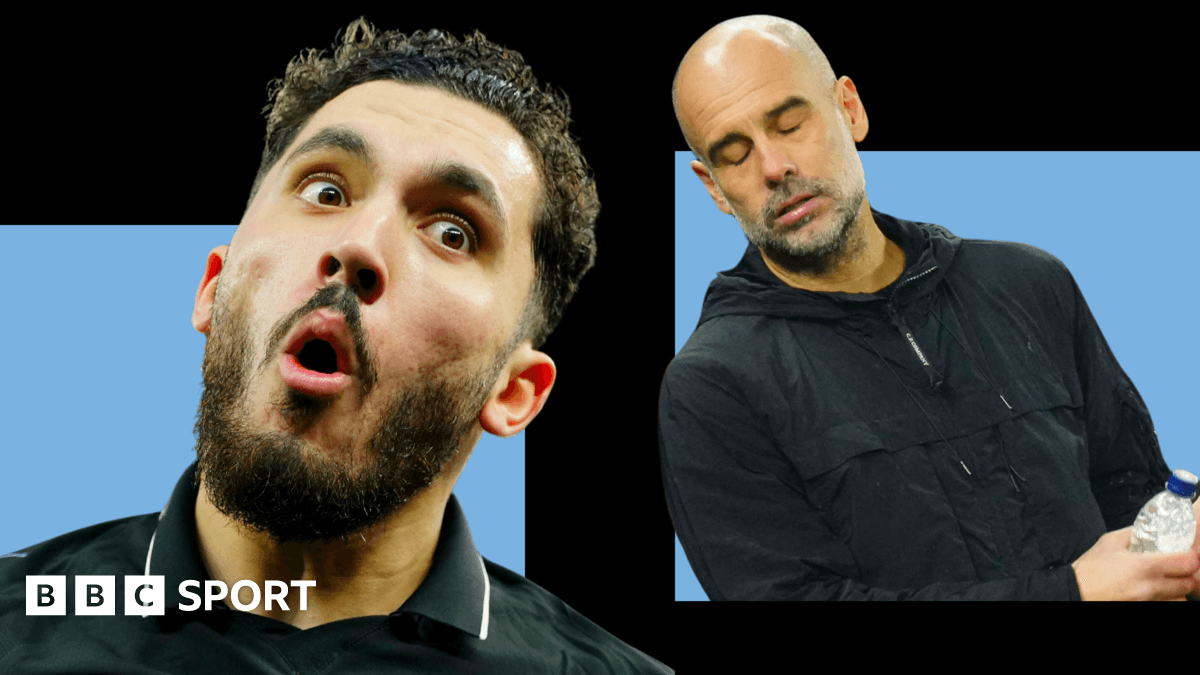
Concerns Over Manchester City's Second-Half Performances
Manchester City's difficulties in maintaining their performance levels in the second half of matches are increasingly worrying and could jeopardize their pursuit of the Premier League title.
Following Sunday's match where City surrendered a 2-0 lead to draw 2-2 against Tottenham Hotspur, the team has now failed to secure victories in three of their last four league games after leading at halftime.
In addition to the Tottenham match, City also dropped points at home against Chelsea and Brighton since the start of the year. However, those games did not witness the same significant decline in performance during the second half as seen against Spurs.
In all three matches, City had opportunities to secure the win but were unable to capitalize.
The Tottenham Comeback: Attitude and Tactical Shifts
The turnaround at Tottenham Hotspur Stadium was influenced by the contrasting approaches of the two teams after halftime. Tottenham emerged re-energized and motivated, implementing personnel changes and a different tactical system, while City appeared complacent.
Although tactics played a role, with Tottenham disrupting City's ability to play through them as they had in the first half, the greater factor was Tottenham's superior attitude and desire in the second half.
"In any game, I always believe that if the team with the better players matches the energy, desire and running power of the team with less quality, and wins the important duels, then they will win the game or maintain their lead."
City did not lose their advantage because Tottenham had more quality; rather, Tottenham simply wanted victory more in the latter stages.
This presents a significant concern for Pep Guardiola, especially as City aim to challenge leaders Arsenal.
Possible Causes: Mental or Physical Factors?
There are two primary reasons why a team's performance might decline in the second half as City did against Spurs: mental or physical fatigue.
Despite a busy January schedule, City's large squad and Guardiola's rotation policy suggest physical fatigue is unlikely to be the main issue. Instead, the problem appears to be related to mindset.
Reflecting on his own playing experience, Danny Murphy explains how a comfortable first half can lead to a false sense of security:
"What happened to them against Spurs happened to me as a player, where a game is so easy and feels so comfortable in the first half, you do not expect what is coming.
Yes, you know the opposition will have a little go at fighting back, especially if you are away somewhere, but you just think you are going to have the same dominance and as many chances.
The irony is that, if the game is a bit more even before the break, you are more fired up for the second half, knowing you have got to kick on.
But because City were 2-0 up and probably should have been three or four goals ahead, they were so dominant they probably switched off a bit.
They should not have done, because they have got enough experience throughout their team to know better - but what was most worrying is this is not the first time it has happened recently."
First-Half Dominance and Tactical Innovations
In the first half against Tottenham, City were dominant, dangerous, and composed—performing as expected from a team chasing the title.
Guardiola's decision to play Antoine Semenyo and Erling Haaland together as a split front two, supported by a fluid midfield four, was notable.
During build-up play, Bernardo Silva would drop alongside Rodri, while Nico O'Reilly and Rayan Cherki moved inside, a strategy reminiscent of Aston Villa's approach. This caused significant problems for Tottenham.
Another tactical adjustment involved City's pressing strategy. Silva left his midfield position to join the front two, creating a press that contributed to City's first goal.
Tottenham, dealing with personnel shortages, deployed players out of position and used a system they do not regularly employ. This disorganization left them vulnerable, and it seemed only a matter of how many goals City would score. However, the expected outcome did not materialize.
Second-Half Tactical Changes and Momentum Shift
At halftime, Cristian Romero left the field due to illness, prompting Tottenham's Thomas Frank to switch to a four-at-the-back formation and adopt a more traditional 4-4-1-1 shape, with Randal Kolo Muani joining Dominic Solanke upfront.
The midfield quartet narrowed to limit space for City, making it harder for them to penetrate. As Tottenham gained more possession, their confidence grew, enabling them to gradually re-enter the contest.
The battle for duels became crucial; Tottenham began winning second balls, knockdowns, and high-press possession, wh...