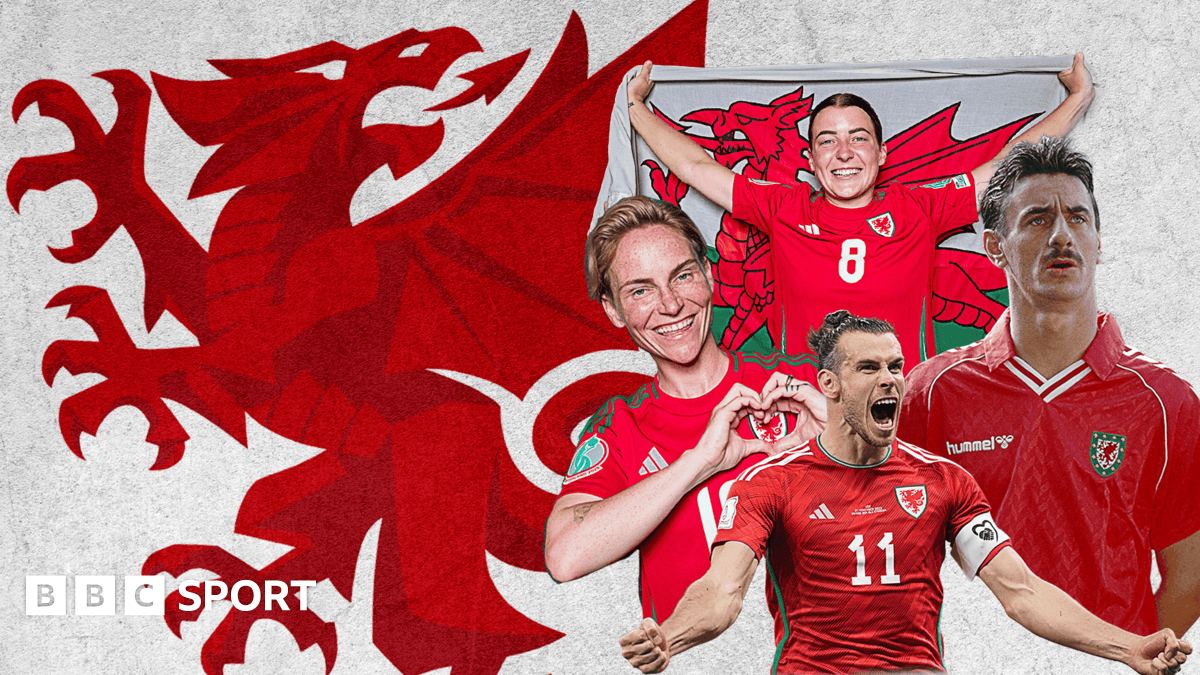
Origins of the FAW in Wrexham
Wrexham holds a special place in Welsh football history as the birthplace of the Football Association of Wales (FAW). On 2 February 1876, the FAW was established at a meeting held in the Wynnstay Arms Hotel, a three-story Georgian red-brick building that still stands in the town centre today. This made it only the third football association formed worldwide.
Llewelyn Kendrick, a solicitor, was appointed as the first chairman, with Hawley Edwards serving as treasurer. Over 150 years later, the FAW has evolved significantly from its modest beginnings in Wrexham.
Early International Matches and Milestones
Founded three years after the Scottish Football Association (SFA) and thirteen years after the Football Association (FA) in England, the FAW ranks as the third oldest football association globally. Just seven weeks after its formation, on 25 March 1876, the Wales men's national team played their inaugural international match, suffering a 4-0 defeat away to Scotland at Partick.
A year later, Scotland visited Wrexham and defeated Wales 2-0 in the first home international match held at the Racecourse Ground—now known as Stok Cae Ras—which remains the oldest international football stadium still in use.
Wales secured their first international victory in 1881, when John Vaughan scored the only goal in a 1-0 win over England in Blackburn.
The 1950s Golden Era and World Cup Debut
The 1950s are remembered as a golden era for Welsh football, featuring legendary players such as John and Mel Charles, Ivor Allchurch, Cliff Jones, Trevor Ford, and Terry Medwin. The Wales men's team qualified for the FIFA World Cup for the first time in 1958 after defeating Israel in a play-off.
The tournament was hosted in Sweden, where Wales faced the hosts, Mexico, and Hungary in the group stage. All three group matches ended in draws, but Wales advanced to the quarter-finals by winning a play-off against Hungary.
In the quarter-final, Wales faced Brazil but were without their star player John Charles, who was injured in the previous match following rough treatment from the Hungarians. A 17-year-old Pelé scored the only goal, leading Brazil to a 1-0 victory. Nearly 70 years later, Welsh football fans still speculate on what might have been had Charles played against Brazil.
Development of the Women's National Team
The FAW took more than a century to formally recognise a women's national team. Although the team was initially established in 1973, it received no official support from the FAW. Players had to organise their own training, matches, and funding.
The first women's international match attracted around 3,500 spectators in Llanelli, where Wales played against the Republic of Ireland wearing kits borrowed from Swansea City's men's team. The players wore shirts several sizes too large. Gaynor Blackwell and Gloria O'Connell scored Wales' first goals in a 3-2 defeat.
It was not until 1993 that the FAW officially took control of the women's team, after players Laura McAllister, Michele Adams, and Karen Jones persuaded association secretary Alun Evans to assume responsibility.
Challenges and Formation of the League of Wales
During the 1980s, concerns arose regarding Wales' status as an independent football nation. Leading Welsh clubs competed within the English football pyramid, and the absence of a national domestic league was a point of contention among FIFA members.
In response, the League of Wales was established in 1992. Some clubs, including Newport County, Merthyr Town, and Colwyn Bay, declined invitations to join and continued playing in the English non-league system outside Wales.
The inaugural season featured twenty teams, with Cwmbran crowned as the first champions. Since then, the league has undergone several changes and is now known as the Cymru Premier, comprising twelve teams. The New Saints are the most successful club, having won the title 17 times.
Euro 2016: A Defining Moment
The summer of 2016 is etched in Welsh football history. Wales had not qualified for a major international tournament since the 1958 World Cup. Euro 2016 in France provided an opportunity for a squad dubbed the 'golden generation' to showcase their talents on the international stage.
Key players such as Gareth Bale, Aaron Ramsey, Joe Allen, and captain Ashley Williams led the team. Wales topped a group containing Slovakia, England, and Russia before defeating Northern Ireland in the round of 16 in Paris.
In the quarter-finals, Wales faced Belgium, one of the tournament favourites, in Lille. Hal Robson-Kanu scored one of the most iconic goals in Welsh football history during a 3-1 victory, marking one of the finest results in the FAW's 150-year history.
Wales were eventually eliminated by Portugal in the semi-finals without suspended players Ramsey and Ben Davies. Cri...