Argentina's route to the semi-final
Group J results: Algeria 3-0, Austria 2-0, Jordan 3-1
Quarter-final: Switzerland 3-1 (AET)
Life moves quickly, and sometimes we forget the matches that never took place. It is worth pausing to remember that England came extremely close to reaching the final of Italia 90.
Consider the anticipation before that game, especially as it occurred only four years after one of football’s most infamous controversies: Terry Fenwick playing the full 90 minutes against Argentina during the infamous Hand of God incident.
The memories ahead of the semi-final against West Germany evoke a sense of nostalgic poignancy.
England's route to the semi-final
Group L results: Croatia 4-2, Ghana 0-0, Panama 2-0
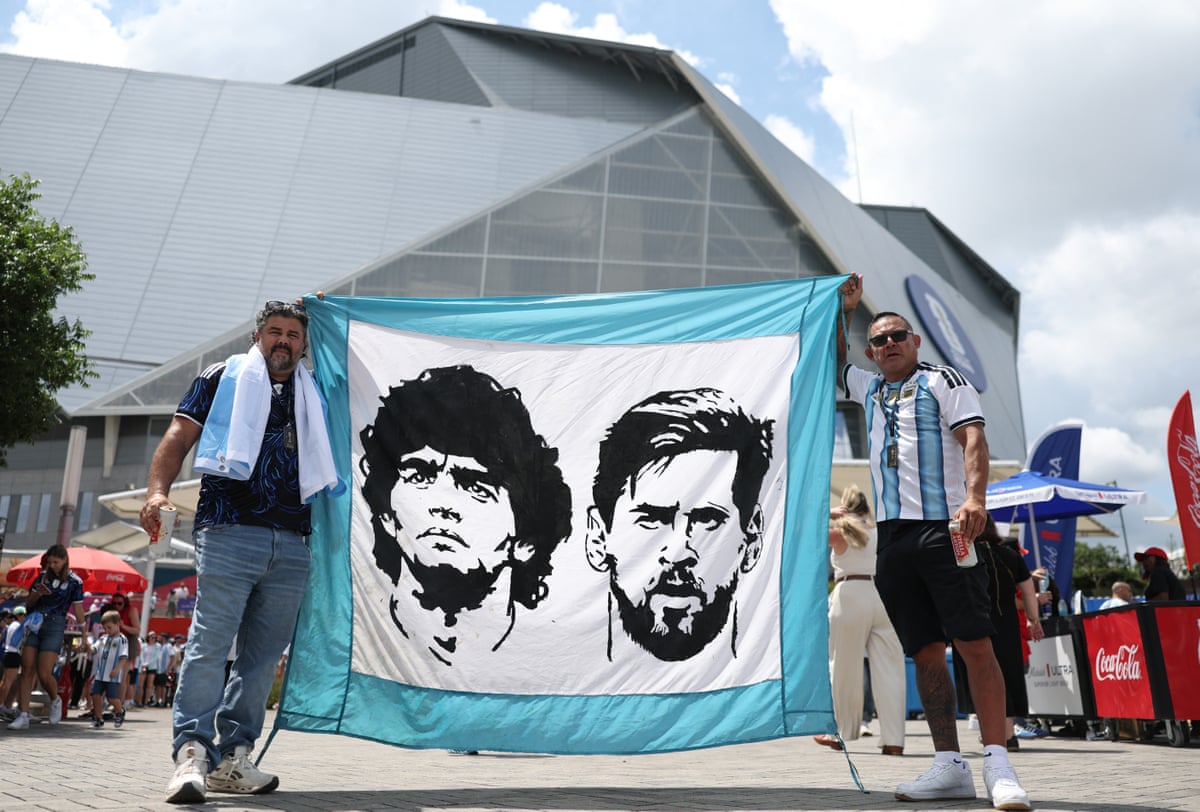
Thomas Tuchel has stated that England will face an Argentina team “fuelled by history” in their World Cup semi-final in Atlanta on Wednesday. This will be the sixth time the two nations have met at the tournament, with the previous three encounters occurring after the 1982 Falklands War.
The most controversial match was the 1986 quarter-final when Diego Maradona scored his “Hand of God” goal, leading Argentina to a 2-1 victory en route to winning the title. Argentina also triumphed on penalties in the last 16 in 1998, a match marked by David Beckham’s sending off. Beckham later gained some measure of revenge by scoring a penalty in a 1-0 group-stage victory four years later. England won 3-1 in the group phase in 1962 and 1-0 in the quarter-finals in 1966, the year they became champions.
“I saw somewhere on the internet the incredibly valid point that this England team aren’t actually scarred with memories of bad days against Argentina,” writes Eddy Nason. “Even old man Jordan Henderson was -4 years old for the Hand of God. Us oldie fans however...”
It appears that this particular historical scarring is not a significant issue for the current England team, unlike the psychological challenges faced by, for example, cricketers touring Australia. More relevant are the recent semi-final and final defeats over the past eight years and the historical pattern of England being eliminated by the first truly strong team they face. It is estimated that the only time England have defeated a higher-ranked team in a knockout match was the quarter-final against Spain at Euro 96, a game they arguably should have lost.
On Wednesday night at Atlanta Stadium, with 101 World Cup games played and only three remaining, the moment finally feels significant. The anticipation builds for The Countdown, the moment before kick-off in these quietly fascinating matches when the world’s most excited announcer enthusiastically counts down over the PA system, setting the tone for the game.

“NAYYYN!! EEEIGHYYT!! SEEEVEERRN!! …” the announcer shouts, preceding cautious possession and early back-passes, reminding fans that the game itself will not be stage-managed. For those seeking quiet drama, this event promises to deliver the greatest understated tension in football history.
However, this time the atmosphere is different. The excited announcer is needed. The Countdown is appropriate. This World Cup has been gripping on the field, and now it reaches an occasion so layered and luminous that even the announcer’s excitement feels fitting, if somewhat restrained.
England versus Argentina for a place in the World Cup final represents one of the biggest matches international football can offer. While Argentina-Brazil matches carry more grandeur, and Germany-Netherlands encounters are always compelling, and Spain-France showcases top talent and quality, this fixture carries unique energy, historical weight, and cultural significance.
The entire World Cup seems to have been a countdown to this moment for England and Argentina, a sense of dramatic inevitability even before considering the online conspiracy theories currently circulating.
There has been extensive hype surrounding this match, but it is important to maintain perspective: this is, after all, the most significant game in football’s greatest cross-continental rivalry.
The history of England versus Argentina could fill a Netflix three-part series, featuring the Falklands War, the Hand of God, and other iconic moments. Yet, this is the first time the two teams have met in a World Cup semi-final or final. For both nations, defeat is unthinkable and difficult to contemplate.
In cinematic terms, this is a clash of mentality monsters. England and Argentina have advanced to the semi-finals relying on collective resilience, individual brilliance, and strong team spirit. Given the stakes and the inherent intensity of this fixture, it is unlikely that approach will change today. Exceptional performances may have to wait until 2030.
The unspoken concern for both teams is that this match may effectively serve as a second-place playoff. Spain are strong favourites in the final after their authoritative and synergistic victory over France. However, disbelief is easily suspended when so close to glory, and currently millions of England and Argentina supporters simply want the opportunity to focus on the prospect of facing Spain’s tiki-taka style.
In a few hours, one of these outcomes will be true:
- England will reach their first men’s World Cup final since 1966.
- Argentina will be one game away from becoming the first team to retain the men’s World Cup since Brazil in 1962.
The alternative outcome exists only in dreams.
Kick-off is scheduled for 8pm BST / 3pm EST / 5am AEST.