Daily Reminders of a Miraculous Past
The WhatsApp group awakens around 6am each day, led by the manager, Osvaldo Jaconi, who at 79 maintains old routines.
“Good morning,”he greets his former players and staff, prompting a gradual flow of replies from across the region. Occasionally, a birthday or special occasion accelerates the conversation, often sparked by an inside joke recalling the extraordinary event that united them three decades ago. The group’s name, simply “Serie B,” serves as a constant reminder of that remarkable achievement.
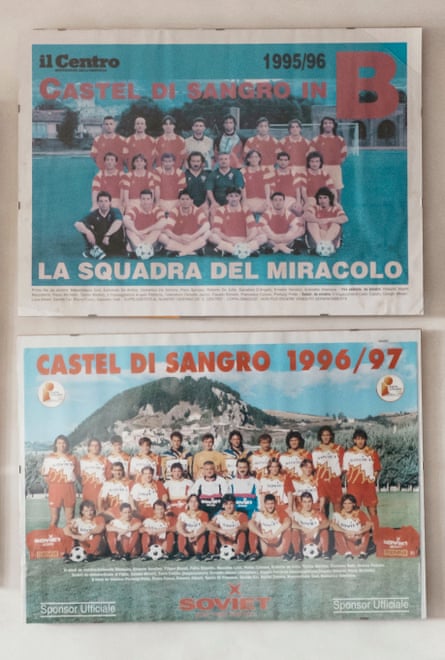
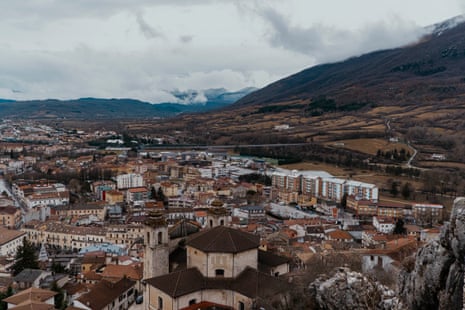
This ritual exemplifies how the memory of miracles endures. Such is the legacy of Castel di Sangro’s 1995-96 season. From humble beginnings in local amateur leagues, this modest club from mountainous Abruzzo ascended to Italy’s second division, an unprecedented feat. Angelo Petrarca, once the team’s masseur and a versatile backroom figure, reflects on the enduring bond:
“It’s like 30 years haven’t passed. It shows how much love everybody has for each other, and did back then. As if everybody is still right here.”
An Unlikely Ascent Captured in Literature
The club’s unexpected rise stunned followers of Italy’s rigorous football hierarchy beneath the then world-renowned Serie A. American journalist Joe McGinniss chronicled this journey by embedding with the team during their inaugural Serie B campaign. His works, Il miracolo and La salvezza (The Miracle and The Salvation), documented not only the sporting triumph but also the team’s improbable survival from relegation. The Miracle of Castel di Sangro became a celebrated sports book, blending personal narrative with football’s raw realities.
McGinniss introduced a global audience to football’s lesser-known realms, portraying his transition from an intrigued outsider to an emotionally invested observer. While his depictions occasionally bordered on caricature, particularly of club characters, the essence of a community thrust into the spotlight remains vivid.
A Family-Run Operation
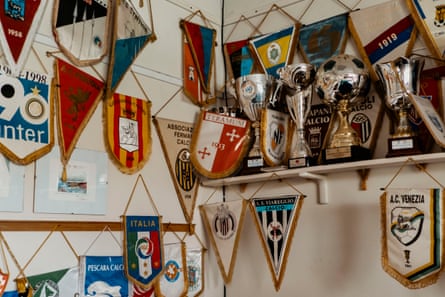
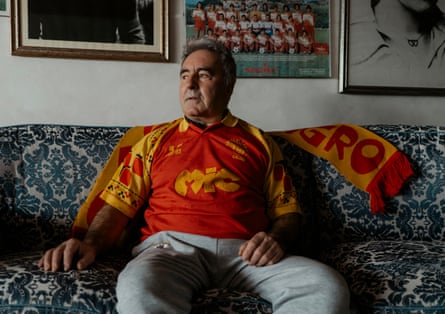
“There were three of us on the staff and things were really family-run,” says Petrarca, now 73, surrounded by old team photographs in his living room overlooking the town.
“If the kit man wasn’t around I’d take my two sons to the stadium laundry and we’d wash the players’ clothes.
Some of them had come all the way up with us. Our guys were the lowest-paid in Serie B and perhaps in Serie C. We went to Palermo, Bari, Turin, Genoa, cities with more than 700,000 inhabitants, but we survived. From a qualitative point of view and an economic one, what happened was extraordinary.”
Everyone recognized the achievement’s fragility.
“We lived a miraculous thing,”Petrarca admits.
“But it was impossible to think of it continuing. There was a sense at the time that, one day, the history of that Castel di Sangro team would end. It couldn’t carry on forever.”
Local Heroes and Continuing Legacy
Behind the counter at Bar Pasticceria Serricchio, a longstanding town gathering spot, Gabriel Romito prepares drinks. He is also Castel di Sangro’s goalkeeper and will wear the No 1 jersey in their upcoming match against Gessopalena. Romito gained local fame five years ago by saving a penalty from Napoli’s Amin Younes during a friendly, an event marked by the gift of Napoli goalkeeper Alex Meret’s jersey, now framed at Romito’s home with the match date.
“We’re a team where no one is paid, playing for the love of the sport,”Romito explains. After relegation following La Salvezza, the club faced bankruptcy in 2005 upon demotion to the fifth tier. Since then, the club has undergone multiple name changes and restarts, eventually becoming Castel di Sangro Cep 1953, competing in the neighbouring Molise region’s league.
However, this arrangement felt disconnected to locals. Competing outside Abruzzo, management based 80 miles away in Naples, and a lack of youth development pathways left many dissatisfied. Two years ago, Ferdinando Iacobucci led a local initiative to establish Castel di Sangro Calcio, entering the Abruzzo third division (Italy’s ninth tier) and launching an academy with approximately 120 children.
“We’re starting with good intentions,”Iacobucci says.
“The miracle is difficult to replicate but we hope to reach a level that Castel di Sangro deserves. Seeing kids from Castel di Sangro unable to play for their home town broke our hearts, so we decided to begin all over again and let them wear the jersey.”
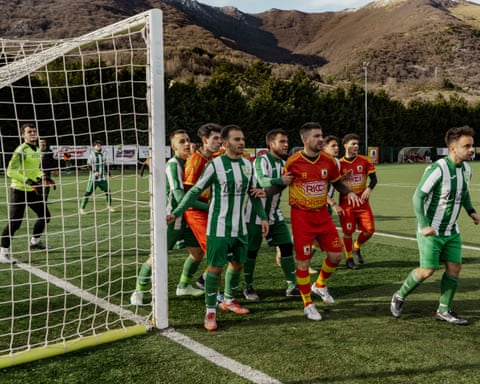
Generations United on the Pitch
Angelo Bonomi, a right-back on the current team, carries the legacy of the glory years. His father, Claudio Bonomi, scored the decisive left-footed goal against Pescara securing La Salvezza. The stadium, now managed by Italy’s football federation and a venue for the Under-21 national team, hosts about 50 spectators for the match against Gessopalena. Claudio, visiting from Sardinia, watches closely.
During the game, Castel di Sangro misses chances, and Romito narrowly avoids conceding from a long-range shot. Petrarca, still deeply involved, stands near the dugouts and manages administrative tasks. The team scores twice before halftime, with Claudio following Angelo’s runs along the right flank.
“It’s an honour to see a member of my family wearing the Castel di Sangro shirt,”Claudio says.
“It’s a great town and a great club, and these guys need to be aware of it. Football has changed and it’s really tough now, the sport has become about politics at all levels. It’s very unlikely we can repeat our climb, but you never know.”
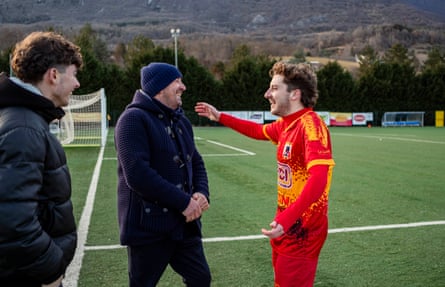
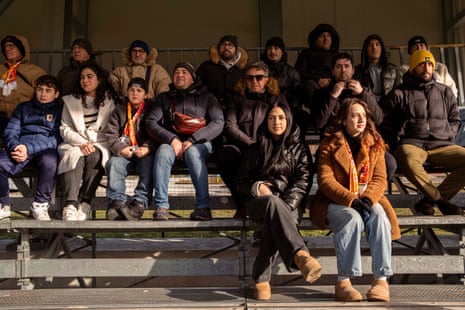
Bonomi recalls the ecstatic celebrations after his father’s goal in June 1997:
“The perfect Sunday. We celebrated a little too much, but that was normal. It was like we had won the Serie A title.”
The current team wins 3-1 and celebrates at La Lanterna, a local pizzeria that served as a central hub for the original squad in the 1990s. Iacobucci spends the match in the club shop, selling replica shirts and serving coffee.
“We’ve started over with the legacy of the old,”he says.
“And we’re seeking a glimmer of light in the new.”
Enduring Connections and Complex Histories
Petrarca makes a video call to Jaconi, who appears smiling on screen. Jaconi remains active in amateur football with a club in Porto San Giorgio. McGinniss once lived next door to him, their relationship marked by both admiration and frustration over Jaconi’s stubbornness.
“The friendship was good,”Jaconi reflects.
“Up until the end there weren’t any particular problems.”
However, tensions arose during the final day of the 1996-97 season when McGinniss suspected the team might have been instructed to lose a match against Bari, a claim strongly denied. Such arrangements, known as Il sistema, were common then. McGinniss’s anger led him to label the team “traitors” and depart under a cloud.
“A writer who doesn’t understand football could clearly have misinterpreted some banal things,”Jaconi says.
“It would be the same if I went to report on fashion shows. I would also not understand anything and take into account things that have no importance.”
The 1996-97 season was also marred by tragedy and controversy: two players, Danilo Di Vincenzo and Pippo Biondi, died in a car accident; Gigi Prete was detained during a cocaine smuggling investigation but later acquitted; and a high-profile signing, Robert Ponnick, turned out to be a publicity stunt. Jaconi comments,
“If anyone wanted to make a story, all the characters were there. There was no need to expand the discussion on things that seem farcical to me.”
McGinniss portrayed the club’s owner, Pietro Rezza, as a James Bond villain and described a fraught relationship with president Gabriele Gravina, now head of the Italian FA and UEFA’s first vice-president. Their confrontation ended McGinniss’s time in Italy.
Legacy and Love Amid Chaos
The release of The Miracle of Castel di Sangro in 1999 stirred controversy locally, with some stories disputed. Petrarca maintains a cordial relationship with McGinniss, who sent champagne during a New York visit in 2000. Both narratives, despite their ups and downs, share themes of affection.
Jaconi recounts another story of devotion: the team’s beloved goalkeeper Roberto De Juliis suffered a brain haemorrhage in October 2024. Jaconi visits him every ten days, and De Juliis has rejoined the WhatsApp group, bringing joy to all. He may attend the upcoming 30th anniversary celebration of Il Miracolo.
“I never thought anything of it,”Jaconi says modestly.
“We won, we did it, then everyone went their own way. The fact it still causes a stir makes us happy, and it’s you who keep it going.”
The steady stream of messages on Petrarca’s screen tells a different story, one of enduring passion and community.