Jamie Vardy features in Netflix series Untold
"A raw, caged animal, drinking, partying and fighting" is the opening line of a new Netflix film about the life of Jamie Vardy.
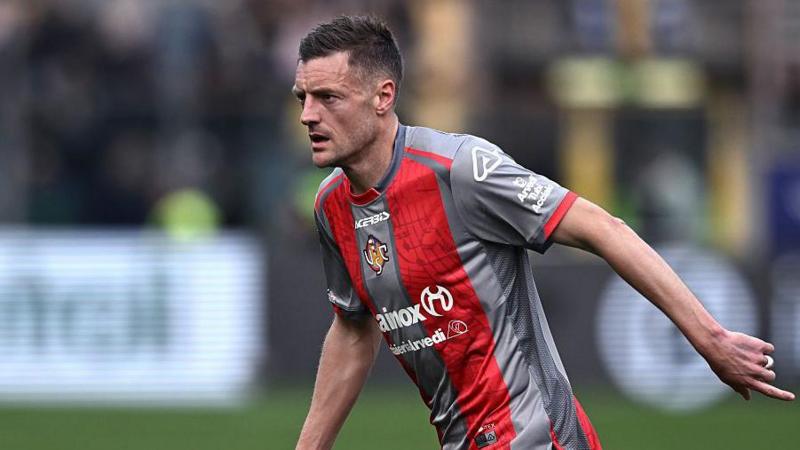
Vardy, 39 and currently playing in Italy's top flight with Cremonense, uses a stronger expletive to describe himself in the documentary.
Despite this, his story is also notable as an underdog, rags-to-riches tale, in which he attempts to reflect on his life and career during a session with journalists at Netflix's London headquarters.
"I don't have time to reflect, to be honest," Vardy says, speaking after the first screening of his Untold UK film, with wife Rebekah watching quietly but occasionally reacting to questions or her husband's answers.
"At the minute, it's playing, the season finishes and I just want to forget about football. I need to mentally forget everything and get back to a normal place."
Vardy was aware when he chose Cremonense over Dutch club Feyenoord in the summer that he was joining a team battling relegation, and they remain in the drop zone with three matches left to play.
"Physically and mentally, football is a killer," he continues. "It's such a grind on your body and your mind, so I just want to completely forget about it."
This is not a complaint from Vardy, who clarifies:
"Of course I love it. If I didn't still love it, I wouldn't still be playing."
When asked if he would relive the journey, he admits:
"If you asked me to go and do it all again, I wouldn't."
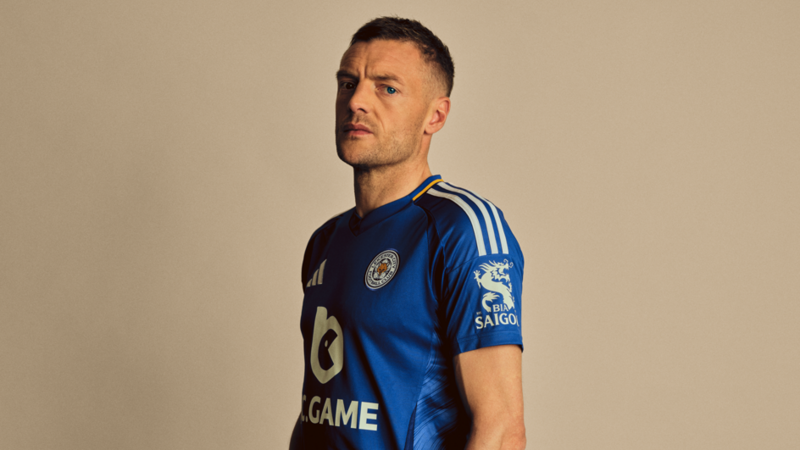
From playing in the eighth tier at Stocksbridge Park Steels to winning the Premier League and becoming an England international with Leicester City, it is clear the journey has been arduous.
A story of pitfalls narrowly avoided
Vardy was released by his boyhood club Sheffield Wednesday for being too small, but the documentary reveals footage of his prolific goalscoring at Stocksbridge while also working in a factory producing medical splints.
However, in 2007, Vardy admits in the documentary he had "no stability" in his life. He had been convicted of assault during a night out drinking and was required to wear an ankle tag for six months.
He also had a 6pm curfew, which meant he had to leave matches early.
Subsequent moves to Halifax Town—where he met his long-time agent John Morris—and later Fleetwood Town followed, before his £1 million transfer to then-Championship club Leicester City.
Throughout, "The Inbetweeners"—a nickname for Vardy's small, all-male social group from Sheffield—provided his main support, alongside his wife.

"If one of us is having a problem, then get it in the group. Might get abused for a bit but at least it's us lot keeping an eye on each other," Vardy says.
They were essential, as former Foxes midfielder Andy King notes that Vardy experienced an initial "culture shock" at Leicester, where the striker admits he initially felt inadequate.
Physiotherapist Dave Rennie also confirms Vardy's struggles with alcohol, worsened by the pressure of the move, including "manufacturing his own Skittles vodka at home."
Vardy would arrive at training hungover and, on one occasion, was unreachable to his then-pregnant wife Rebekah, affectionately called Becky.
There was concern he might jeopardize his career, but the support of a "good psychologist," the patience of manager Nigel Pearson, and his own efforts to mature after the birth of his daughter Ella helped him persevere.
Fame brought further challenges. A 2015 Sun on Sunday report showed him on video using a racial slur against a Japanese man in a casino.
He later described it as "a massive, massive learning curve," explaining he was never taught which terms were acceptable.
The film also highlights "one of the harder things" Vardy faced when he rushed home from a team-bonding trip to Helsinki after learning a tabloid was publishing a story about his secret biological father, whom he had not known about previously.
Despite these challenges, Vardy became the face and top scorer of Leicester's Premier League title-winning campaign in 2015-16, went on to lift the FA Cup, and fulfilled his agent's prediction made when he signed for Halifax that he would one day play for England.
Asked whether he could have achieved more internationally after retiring from England in 2018, Vardy replied: "Possibly. We'll never know.
"I'll be honest, going away with England is unbelievable - you want to play for your country - but the mental side of it was tough. That changed when Gareth [Southgate] came in, but before that you were stuck in your room all day.
"You trained and then you were just back in your hotel room, pulling your hair out. There's only so much time you can spend on a PlayStation or speaking to the kids on video calls. You've already not seen them and now you're getting pulled away for another two weeks. It's tough.
"At the time, after the World Cup, I just wanted to protect [my legs] as much as possible, prolong my club career, and as I'm still going now, it was obviously the right decision."
Retirement or management?
Vardy has scored five Serie A goals this season.
"I watch as many games as I physically can and it's not nice to see," Vardy says of Leicester's situation, having returned to watch them last month before their relegation to League One.
"Management? No. I've not really thought about it," he says. "I've not looked that far down the line."
Rebekah, observing from a plush mini-cinema room, describes his lack of planning as "infuriating."
There is no direct mention of the notorious 'Wagatha Christie' social media dispute between her and Coleen Rooney, but she features prominently as Vardy seeks to refine himself throughout his coming-of-age story.
She lingers afterwards, curiously asking media members for their honest assessments of the film, where Vardy appears engaged with his parenting.
"We bring them up as normally as possible," he said of his children. "They need to have a home life, be kids and enjoy it, but also do what I didn't and work hard at school."
This mentality to focus on the next day gives him a chance to play another season at Italian top-flight side Cremonense, which would take him into his 40s.
"I wake up in the morning, train and go again - the same on matchdays," he says.
"I give as much as I can. I still love football or I wouldn't be doing what I'm doing."
Finally, Vardy is asked if another non-league footballer could achieve what he has.
"I think, luckily, I was just a bit of a freak," he added. "I don't think it will probably happen again, no, but it happened for me and it was hard work.
"It really was tough, but all worth it."