

Consistent Core Squads in Recent Years
Oval Invincibles men and Northern Superchargers women, both champions in 2025, have maintained a stable core squad over recent summers.
Grace Ballinger, a title-winning Hundred player with the Northern Superchargers last year, shares her perspective in a column on what it feels like to participate in this year’s player auction.
The opportunity to earn more than an annual domestic wage in a 23-day franchise competition has become a tangible prospect for many English cricketers.
However, numerous uncertainties remain for domestic players aspiring to compete in The Hundred this summer.
Mixed Reactions to The Hundred Since 2021
Since its inception in 2021, The Hundred has elicited divided opinions among fans.
While some critics oppose its unconventional format, others appreciate its brief, dynamic nature. It is designed not only as cricket but as a highly marketable spectacle.
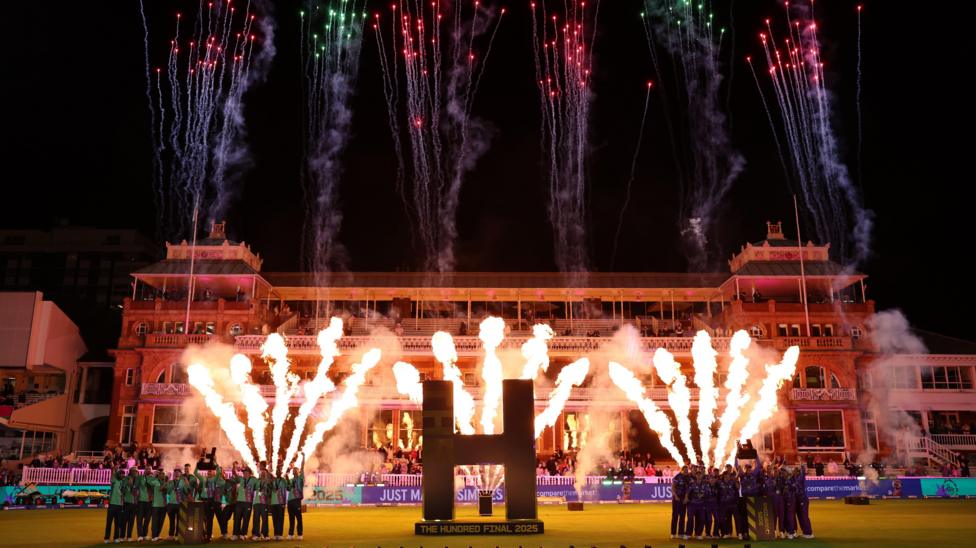
The simplified rules, fireworks, and presence of DJs contribute to an entertaining atmosphere for spectators.
After all, professional sport is an integral part of the entertainment industry.
Though skepticism persists, it is undeniable that The Hundred has attracted a new generation of cricket enthusiasts and transformed the female domestic game.
Last year’s women’s final recorded a historic attendance exceeding 22,000 spectators.
Following five years of competition, private investment has been introduced for the first time in the 2026 edition, signaling a new era accompanied by substantial change.
The Hundred Auction: A First in UK Professional Sport
The eight counties hosting Hundred franchises were given the option to sell shares of their teams.
Five counties chose to sell 49% shares, while the others sold varying proportions: Welsh Fire 50%, Manchester Super Giants 70%, and Yorkshire 100% to the group behind IPL team Sunrisers Hyderabad (Sunrisers Leeds).
Ownership and branding changes are evident. Less visible, however, is the uncertainty permeating every aspect of these new developments for players.
Significant player movement is anticipated. In 2025, men’s teams could retain up to 10 players from their 2024 squads, and women’s teams up to eight.
For this edition, only four direct signings or retentions per squad are permitted.
Squads that have been carefully assembled over previous seasons will undergo complete reconstruction.
Unlike previous years, when non-retained players were selected via a draft, this year’s selection will be conducted through an auction.
This auction is the first of its kind in any professional sporting competition in the United Kingdom.
While this generates excitement and anticipation, it also introduces considerable uncertainty for many players.
Within this auction system, players have diminished autonomy. Unless already signed, they have no control over which of the eight teams they join.
Once signed, a franchise effectively 'owns' the player in The Hundred for up to three years.
Previously, players could decline retention offers in pursuit of better opportunities, higher pay, or different locations. Now, team ownership can retain players for up to three years at their original salary, regardless of the player's preference.
First Hundred Auction to Span Two Days in March
The inaugural auctions will be held on 11 March for the women’s competition and 12 March for the men’s, hosted at the iconic Piccadilly Lights in central London.
Privatisation and Ownership Details
The privatisation of The Hundred introduces new ownership structures and branding changes, with some franchises now under private groups, including IPL-affiliated entities.
A Financial Boost for English Cricket
Not all uncertainty is negative.

This new phase is expected to positively impact cricket in England and Wales.
The privatisation of The Hundred has already generated £520 million for the sport, with approximately £45 million earmarked for grassroots cricket development.
All 18 counties have received substantial funding to support the domestic game. According to the Leonard Curtis Cricket Finance Report, this investment could prevent financial collapse in as many as six counties.
Salary pools have increased significantly: the women’s salary pot has doubled since 2025 to £880,000, while the men’s pot has risen by 45% to £2.05 million.
The possibility of earning more than an annual domestic wage for less than a month’s work is now a reality for many English cricketers, especially in the women’s game.
Among those already signed, the highest English earners have secured substantial contracts.
England men’s white-ball captain Harry Brook will earn £465,000 for the month-long tournament, while women’s internationals Nat Sciver-Brunt and Lauren Bell have been paid £140,000 each.
Players participating in the auction must set a reserve price, representing the minimum amount they are willing to accept.
If multiple teams bid for a player, the salary increases incrementally with each bid.
In the women’s competition, salary bands are £15,000, £27,500, £37,500, and £50,000.
The men’s bands start at £31,000 and increase to £50,000, £75,000, and £100,000.
Determining an appropriate reserve price is challenging due to the competition’s rebirth; previous salary benchmarks are not directly comparable, and the auction’s novel format introduces unpredictability.
Players will learn their outcomes during the auctions on 11 and 12 March, which will be live-streamed.
The Hundred previously held annual auctions, with the 2024 edition streamed from The Shard.

Determining the Right Price
Players must decide on a reserve price that reflects their minimum value in this new context.
Setting a price too low could result in being locked into a lower salary for up to three years.
Conversely, setting it too high risks going unsold, missing out on both financial rewards and the experience of participating in The Hundred, a major part of the English cricket summer.
Strategies may differ between male and female domestic players.
Both genders have similar squad sizes (16-18 players per team, including four overseas players), but the men’s player pool is significantly larger, with 710 players (including overseas) on the longlist.
The women’s longlist includes 254 players.
The larger talent pool in the men’s game makes selection more competitive, and many skilled domestic players may remain unsold.
For women, the likelihood of being selected is higher, potentially reducing the risk associated with setting a base price.
Significant player movement has already occurred through direct signings.
Team dynamics, which many successful Hundred teams have cultivated over years, could be substantially altered.
Players will observe themselves being auctioned live, with the process potentially lasting up to eight hours.
The outcome of this new phase of The Hundred, scheduled from 21 July to 12 August, remains uncertain.
Questions remain about whether the privatisation and substantial financial influx will benefit English cricket at all levels.


