

A Decade of Dominance in County Cricket
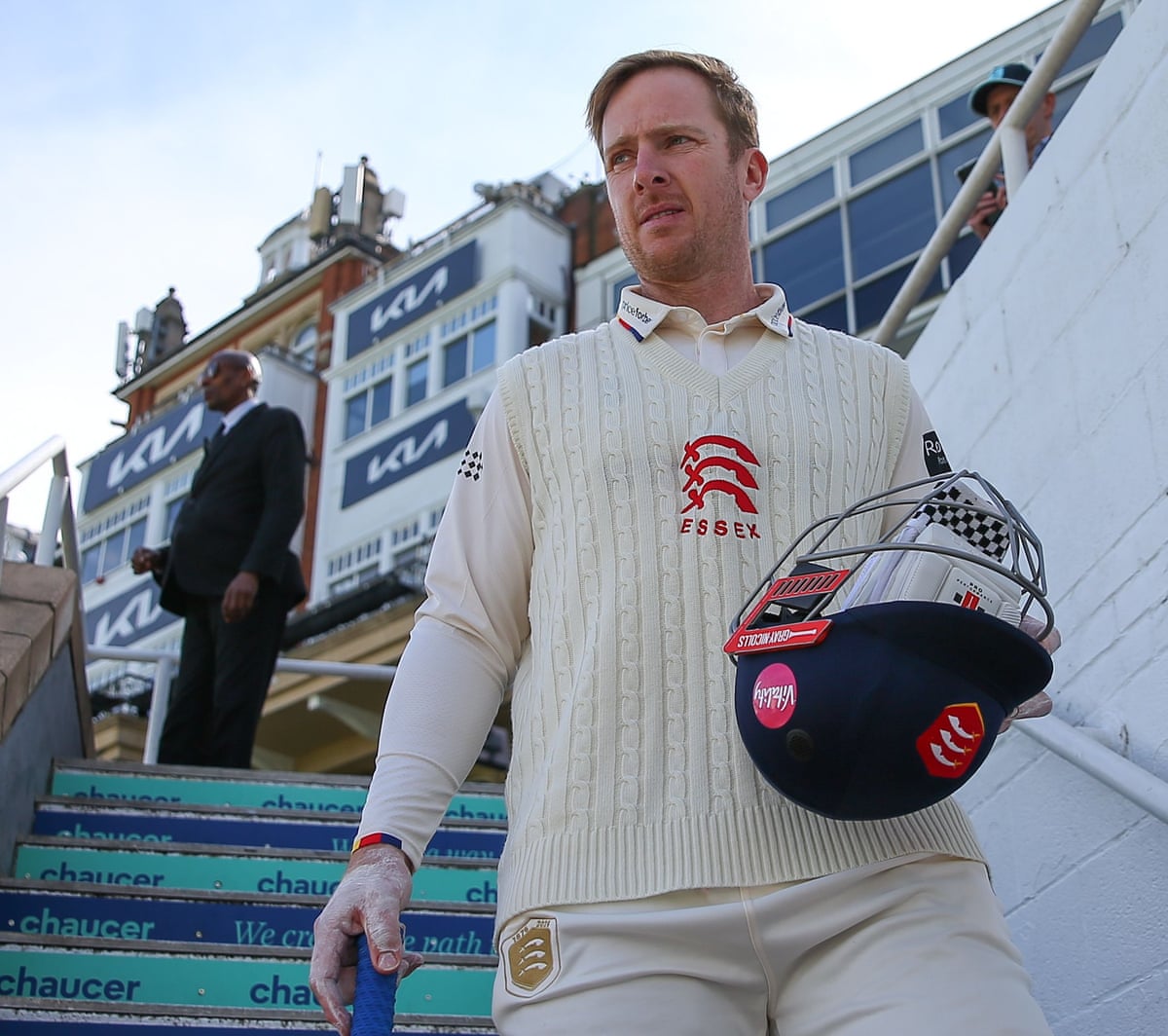
For ten seasons, Simon Harmer has been a prominent figure in English cricket, particularly in the County Championship. Since joining Essex in 2017 on a six-month contract, the South African off-spinner has taken more wickets than any other player in the competition, establishing himself as a key import in the English game.
Harmer's journey has been marked by significant achievements: 522 first-class wickets for Essex, two County Championship titles, a Bob Willis Trophy, a return to South Africa’s Test side, and a sense of personal contentment. Reflecting on his career, Harmer states,
“My journey has been bumpy. I can say now that I’m at peace with it.”
When he arrived at Chelmsford under a Kolpak deal, Harmer had already faded from South Africa’s international scene after just five Tests, having moved from first-choice spinner to a backup role behind Keshav Maharaj and Dane Piedt. Recognizing his situation, he understood,
“I’m not dumb. I know when I’m not wanted.”
Essex, newly promoted to Division One, required a spinner, and Harmer needed an opportunity to showcase his skills.

His impact was immediate. In his debut season, he took 72 wickets at an average of 19.19, helping Essex secure their first County Championship title in 25 years. Over the next six seasons, he consistently finished as the most prolific spinner in the country, topping the overall wicket-taking charts in three seasons. Although there were rumors about a potential England call-up, Harmer maintains that such a prospect was never seriously considered.
Regarding his accomplishments, he comments,
“It’s my job. I just want to make sure that when I call it a day, I can say I was the best version of Simon Harmer that I could have been.”
The Mental and Tactical Aspects of Bowling
Harmer’s approach to cricket extends beyond physical skills to the psychological contest between bowler and batter. He openly discusses the embarrassment he felt after being dropped by the Proteas and how he transformed that setback into motivation, saying,
“Everybody is going to face that shit. How do you deal with it? Do you fade, or do you prove the fuckers wrong?”
He is also recognized as a craftsman and problem-solver within the modern county game, enjoying the strategic elements of bowling. He explains,
“I love working out [a batter]. That’s what gets me going. What’s he looking to do, where is he looking to score, what’s easy, what’s difficult, what field will get me a wicket? I love all that. That is the art for me.”
Perspectives on England’s Test Team and Domestic Cricket
Having spent a decade analyzing English domestic batters, Harmer’s insights into the England Test team’s aggressive philosophy are noteworthy. While intrigued by the approach, he expresses skepticism about some underlying assumptions. He observes,
“I do feel selection has gone away from scoring a thousand runs in the County Championship for a couple of years, to ‘it’s not how many you score, it’s how you score.’ If it’s easy on the eye, it’ll get you in the side.”
Despite this, he acknowledges England’s continued threat, noting,
“Root is like the only traditional Test cricketer in there but he’s still reverse-ramping Pat Cummins.”
However, Harmer questions whether this aggressive style truly aligns with the demands of Test cricket, which still rewards control and consistency over time. He senses a disconnect between what England’s management, including Rob Key and Brendon McCullum, pursue and the format’s requirements.
Regarding English spinners, Harmer offers a sympathetic view, pointing out that conditions often relegate them to secondary roles. He states,

“In England, generally your spinners are a bit of an afterthought.”
He praises players like Liam Dawson, whom he calls “a hell of a cricketer,” and Jack Leach, describing him as “very accurate, very wily,” but critiques the support system around them, saying,
“It’s not a lack of resources, you’ve got 18 counties. But how many have a spin-bowling coach? Probably two or three.”
Harmer emphasizes that talent alone is insufficient without resilience, adding,
“Somebody can have all the skills in the world, but when it hits, if they run for the hills, it doesn’t matter how good they are. I think English cricketers don’t always have that fight in them.”
He also critiques the county circuit, remarking,
“With 18 teams, there’s definitely a place for mediocrity. There are loads of guys just plodding along, doing enough to keep their average contracts.”
Views on the Global Game and South Africa’s Position
Harmer is candid about the global cricket landscape, particularly South Africa’s position. He notes that despite recent performances, the balance of power remains unchanged, largely due to India’s commercial influence. He explains,
“Because of their commercial power, they have all of the power. The BCCI control the ICC. But what can we do? As a player you just control the controllables. The only thing that changes the narrative is winning trophies.”
This perspective underlines his admiration for the current South African team led by Shukri Conrad and Temba Bavuma, which he describes as,
“more than the sum of their parts with only a couple of superstars.”
Harmer appreciates Conrad’s straightforward approach, saying,
“If he thinks you’re shit, he’ll tell you straight. I rate that. I’ve not always had that.”
Personal Growth and Future Plans
Harmer acknowledges personal growth influenced by his renewed security with the Proteas and fatherhood, having become a parent nine months ago. Reflecting on his younger self, he admits,
“I don’t think I was a good person on the field when I was younger. I didn’t know any different.”
He now has little tolerance for unnecessary abuse, though county cricket still presents challenges. He maintains rivalries, particularly with Somerset, and comments on Sussex’s attitude,
“Strut around like they’ve won three Championships in a row.”
Looking ahead, Harmer estimates he has “two more seasons” remaining before transitioning to a career in law. He is completing a degree with the aim of becoming a barrister and acknowledges the challenge ahead, stating,
“I have to be brave enough to go and be shit at something for the first time again.”
Memorable Moments and Legacy
Despite planning for the future, Harmer continues to cherish his cricketing experiences. He recalls his favourite wicket as Steven Finn, dismissed lbw late in an innings that secured victory over defending champions Middlesex in 2017, marking his ninth wicket in that innings. When asked about the best teammate, he names,
“Sir Alastair Cook. Not just as a cricketer, as a person,”
with Ryan ten Doeschate recognized as an outstanding leader. Regarding the best player he has faced, Harmer cites,
“The master, Kumar Sangakkara. I had him caught at first slip once.”
For now, Harmer remains active in the game, continuing to bowl and compete, embodying the idea that a short contract can lead to a lasting legacy. He advises aspiring players,
“Stop waiting around for the perfect situation. Get on a plane and go. That’s all it took for me.”


