

Final: India Secure T20 World Cup Title with 96-Run Victory Over New Zealand
India scored 255-5 to defeat New Zealand, who managed 159, winning by 96 runs.
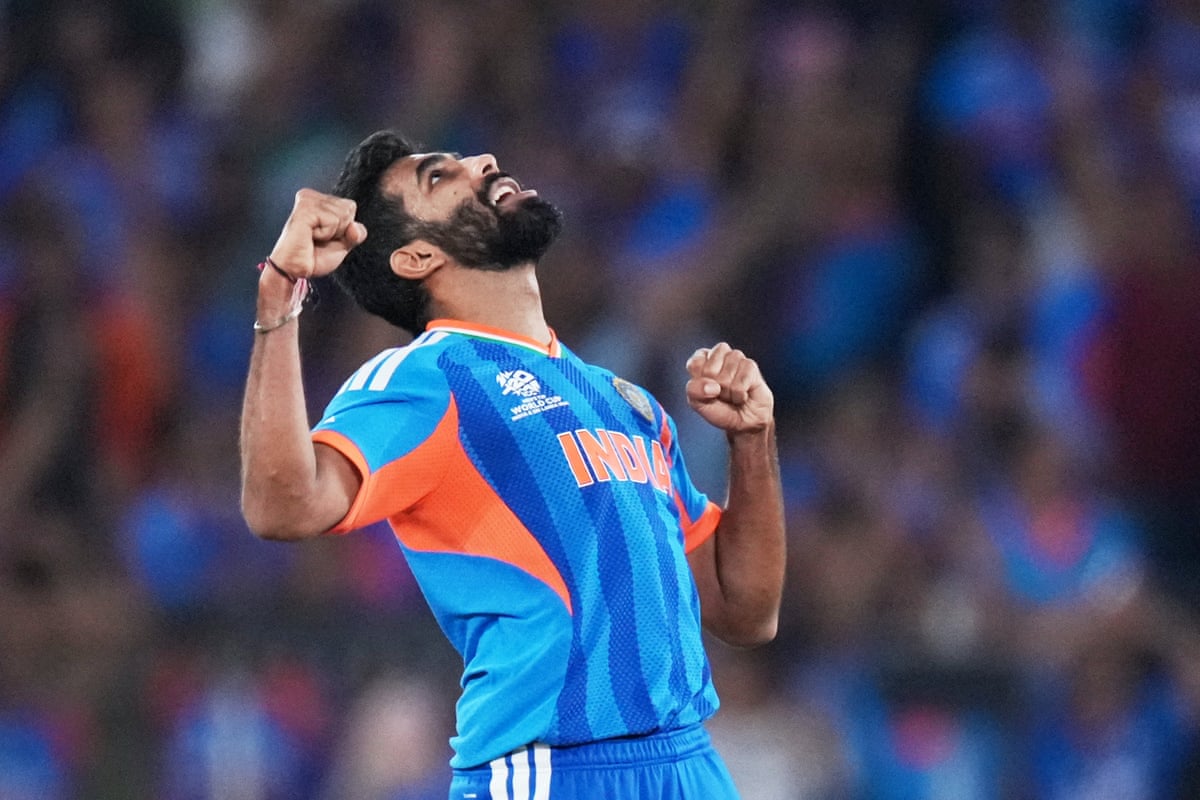
Sanju Samson’s 89 runs set the foundation before Jasprit Bumrah delivered a remarkable bowling performance, taking four wickets for just 15 runs.
Although the match lacked the suspense some neutrals might have hoped for, it fulfilled every expectation for India. They became the first men’s team to successfully defend the T20 World Cup title and the first to win the tournament on home soil. The victory took place in Ahmedabad, witnessed by an enthusiastic crowd of 100,000 supporters, predominantly clad in blue.
New Zealand struggled throughout, appearing disheartened as they conceded a formidable total of 255 runs. Their chase was ineffective, and despite their efforts, they finished 96 runs short. This defeat marks New Zealand’s fourth loss in World Cup finals across various formats since 2015, in addition to their loss in the Champions Trophy final the previous year.
Early Drama and Key Moments
The match featured a memorable moment involving Indian wicketkeeper Ishan Kishan. Attempting a difficult catch, Kishan sprinted forward and leapt to secure the ball. However, the impact caused the ball to bounce out of his hands while his cap slipped over his eyes. Remarkably, the ball became trapped between his chin and arm, allowing him to complete the catch and dismiss Rachin Ravindra early in New Zealand’s innings.
Kishan then celebrated by leaping into Jasprit Bumrah’s arms, signaling the early collapse of New Zealand’s batting lineup. At just 19 balls into their innings, New Zealand had lost two wickets, setting the tone for the remainder of the match.
The tournament co-hosts had adopted an anthem titled "Feel the Thrill," performed by Anirudh Ravichander, featuring the repeated lyric: "This is our year." This sentiment proved accurate as India dominated the tournament, largely playing in front of their home fans.
India’s Powerful Batting Display
During the tournament, only four teams scored more than 250 runs in an innings, with India responsible for three of those instances. Their total of 255 in the final was just one run fewer than their score against Zimbabwe in the Super 8s and two runs higher than their previous highest in the tournament. Despite this, the team considered the total somewhat below their potential.

India started cautiously, scoring seven runs in the first over and five in the second, with neither batter taking significant risks. Suddenly, the innings accelerated dramatically. By the end of the sixth over, India had reached 92 runs without loss, equaling the highest powerplay score in World Cup history.
New Zealand’s bowlers struggled to contain the Indian batsmen. Jacob Duffy, returning to the side after missing several matches, conceded 15 runs in his first over. Lockie Ferguson bowled three wides and gave away 24 runs, while Matt Henry bowled four wides and conceded 21 runs. This pattern of expensive bowling continued for some time.
India’s top three batsmen all reached half-centuries. Abhishek Sharma was the first to reach 50, achieving it off 18 balls before edging a delivery from Ravindra to Tim Seifert. Sanju Samson took a more measured approach, reaching his half-century in 33 balls, while Ishan Kishan scored his fifty in 23 balls. By the time the teams took their drinks break after the 14th over, India stood at 191 for one, with Samson hitting the last three balls of the over for sixes. At this point, speculation arose about India possibly surpassing the 300-run mark.
However, the drinks break interrupted India’s momentum. In the subsequent five overs, the team scored only two boundaries and lost four wickets. During this period, Jimmy Neesham bowled an over that yielded just one run but took three wickets. Samson, who had scored 89 runs from 46 balls, was dismissed after lifting a full toss to long-on. Kishan, who had scored 54 runs off 25 balls, was also caught at long-on from another full toss. Suryakumar Yadav was next to fall, caught by Ravindra at deep backward square leg after attempting an extravagant shot.
Following these dismissals, scoring slowed considerably. Shivam Dube added some late runs, increasing his score from two off two balls at the start of the final over to 26 off eight balls by its conclusion.
New Zealand’s Struggles in the Chase
India’s innings mirrored their semi-final performance in terms of scoring pace and wicket loss. New Zealand’s openers had previously combined for 158 runs in the tournament, including Finn Allen’s rapid 33-ball century. However, Allen was dismissed early in the third over after scoring only nine runs. The next three New Zealand batsmen collectively scored just nine runs, undermining the team’s chase.
Tim Seifert’s half-century, scored at a rate of two runs per ball, was a notable effort but ultimately insufficient to challenge India’s total.
Jasprit Bumrah’s bowling was instrumental in dismantling New Zealand’s batting lineup, as he took four wickets for 15 runs, restricting their scoring opportunities and ensuring India’s comprehensive victory.


