

Three Lord’s of London
There are three Lord’s in London. The first lies six feet beneath Dorset Square near Marylebone station, where today a square foot of a single bed flat can cost a thousand pounds. The second is buried beneath the Lisson Grove moorings on the Regents Canal, where canal boaters cultivate tomatoes along the towpath. The third, the current world-famous cricket ground, is located two blocks away on Wellington Road, on land rented in the 19th century from the Eyre family, who amassed wealth through wine and slavery. As long as the ravens remain in the Tower of London, Lord’s will endure.
This week, Lord’s celebrates a significant milestone. Although it was a late entrant to Test cricket—hosting its first Test match in July 1884 after venues like Melbourne, Sydney, the Oval, and Old Trafford—it is set to become the first ground worldwide to reach its 150th Test match. The Melbourne Cricket Ground (MCG) follows with 118 Tests. Lord’s has benefited from hosting two Test matches annually every year this century, a privilege that has caused some envy across other cricketing regions in England. Remarkably, the tradition has been framed as a privilege for the fans.
Despite its reputation for a stuffy atmosphere, supercilious staff, conservative pitches, expensive Test tickets, strict rules, and the elite crowd in the pavilion’s posh seats, Lord’s continues to inspire a sense of excitement among cricket lovers. Unlike other Tests, which are typically identified by their sequence in a series, the match at Lord’s is invariably referred to by the ground’s name alone.
The ground’s enduring appeal lies in its rich history. Lord’s represents a place where cricket enthusiasts have shared their passion for over two centuries. Visitors don’t just experience the game alongside thousands of contemporaries but also connect with the hundreds of thousands who have witnessed cricket’s greats over generations. The names of legendary players adorn the honours boards, their bats are displayed in the museum, their writings are preserved in the library, their flags fly from the stands, and their achievements are commemorated on plaques throughout the grounds.
In its early years, Lord’s was far from the permanent institution it is today. It required entrepreneurial spirit to establish itself as a viable venue. Initially, with a running track encircling the field, the ground hosted nearly as many pony races and stone-picking contests as cricket matches. Financial support from wealthy members was essential to sustain the Marylebone Cricket Club (MCC). Thomas Lord, the founder, once threatened to develop houses on the outfield until he was compensated £5,000 to prevent this.
Later in the 19th century, the club had to relocate a girls’ orphanage forcibly to facilitate a deal allowing the Manchester & Sheffield railway to tunnel beneath the Nursery ground. The old red brick walls surrounding Lord’s were constructed to protect it from the expanding city. In recent years, the MCC resisted a developer’s attempt to sell the tunnels beneath the ground.
Although often called the Home of Cricket, Lord’s is not truly the home of the sport unless one is a member of the MCC. Older grounds exist, such as one run by the Honourable Artillery Company just six stops along the Metropolitan Line, and there are more accessible venues like Surrey’s ground across the river. Lord’s is the home of the MCC, a private club that has historically been protective of its traditions, including resistance to female members and non-white players at various points in its history. It remains proud of hosting the annual Eton versus Harrow fixture.

Like Augusta National in golf, Lord’s is the domain of a private club that organizes a publicly cherished event. For much of the 20th century, the MCC controlled most aspects of cricket. It functioned as the sport’s headquarters until 1993, when that role was transferred, marking the loss of an empire for the MCC. Three decades later, the club continues to seek a clear purpose.
The MCC’s executive leadership, often at odds with some members, has been exploring new roles. The club operates an excellent Charitable Foundation, hosts the Army versus Navy match, the Village Cup final, and, for the first time this year, a state school cricket competition called the Knight-Stokes Cup. The England and Wales Cricket Board maintains offices in a corner of the ground. The MCC also organizes tours for visitors and fields its own professional team, the London Spirit.
Above all, the MCC remains the custodian of this historic ground, which occupies 17 acres in the city dedicated to summer sport. It is open once again this week to those fortunate enough to afford admission.

Five of the Most Memorable Tests at Lord’s
England v Australia, 1896. England won by six wickets
This match marked WG Grace’s last Test at Lord’s. The crowd was so densely packed that spectators spilled onto the playing field, obstructing Joe Darling from catching Stanley Jackson in the deep. Australia was bowled out for 53 runs in just 75 minutes on the first morning but recovered to score 347 in their second innings, setting England a target of 109 on a challenging pitch affected by overnight rain. Wisden described England’s eventual victory as
“sensational” and “bewildering”.
England v Australia, 1930. Australia won by seven wickets
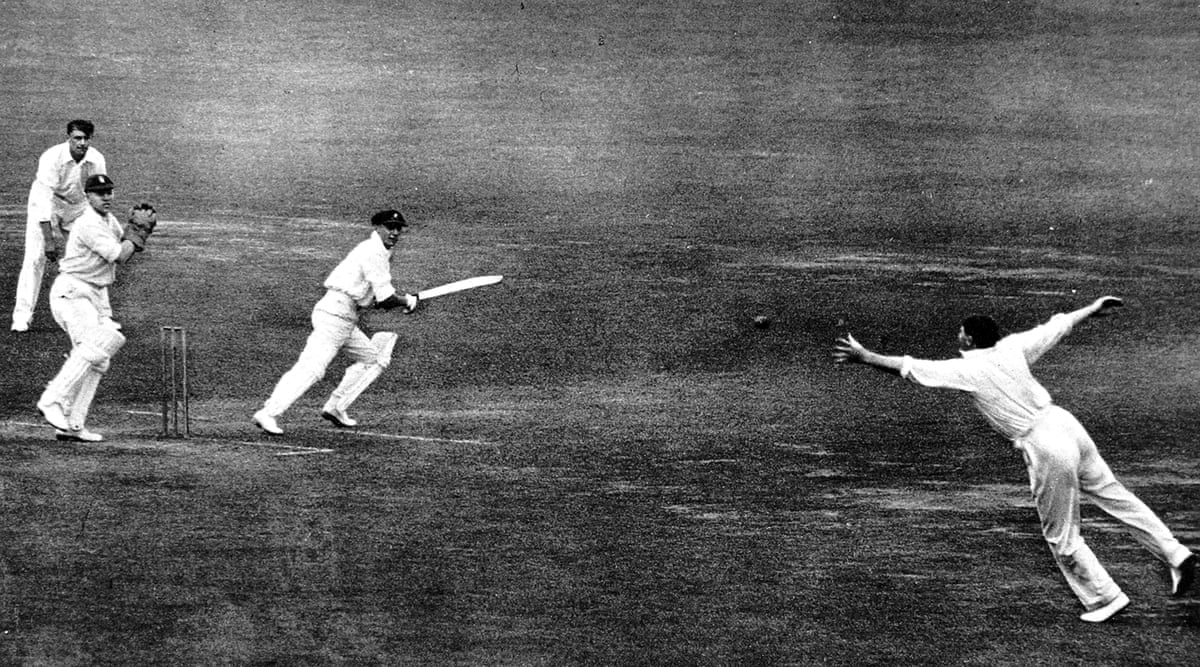
This was Don Bradman’s first Test at Lord’s, where he scored 254 runs, later calling it
“the best innings of my life”.England amassed 800 runs across two innings but still lost with a day to spare after Australia declared at 729 for six. Twenty-five years later, ’s Neville Cardus named this game as the one he most wished to watch again, describing it as
“the platonic idea of cricket in perfection.”
England v West Indies, 1963. Match drawn
This match is best remembered for Colin Cowdrey’s performance, though Basil Butcher’s century and Wes Hall’s remarkable bowling spell from the Pavilion End on the final afternoon were also notable. All four possible results remained open until the last ball. England finished nine wickets down with six runs needed to win, with Cowdrey, carrying a broken arm, watching from the non-striker’s end.
England v West Indies, 2000. England won by two wickets
Lord’s 100th Test was a turning point for both teams. The West Indies took a 133-run lead in the first innings but collapsed to 54 all out on the second day, with 21 wickets falling. England needed 188 runs to win against bowlers Curtly Ambrose and Courtney Walsh. The match concluded with an unlikely eight-wicket partnership between Dominic Cork and Darren Gough, who added 31 runs to secure one of the narrowest victories in Lord’s history.
England v Australia, 2023. Australia won by 43 runs
This four-day match featured Steve Smith scoring a century, Australia dismissing England, and Nathan Lyon batting despite a torn calf. The game escalated when Alex Carey stumped Jonny Bairstow as he stepped out of his crease, leading to a confrontation in the Long Room. Stuart Broad openly mocked the Australian players on the field, and Ben Stokes delivered an impressive innings of 155 runs.


