

English Cricket’s First Player Auction Marks New Era Amid Gender Imbalance
The inaugural player auction for English cricket’s Hundred competition was designed to signal a new era for the sport. However, the event was predominantly dominated by men making the key decisions.
The setting was Piccadilly Circus, vibrant with candy pink and dayglow green hues. Among the notable moments was 19-year-old Davina Perrin being acquired by Birmingham Phoenix for £50,000, a few years after she had emerged on the scene. Former Leicestershire fast bowler Charles Dagnall was present, dressed in skinny jeans and managing an iPad alongside an interactive screen.
The auction featured Hero Players and Vitality Wild Cards, with high-profile signings such as Sophie Devine and Beth Mooney, who were purchased for £210,000—an amount exceeding the total earnings of the entire women’s squad when the Hundred first launched in 2021. This event represented English cricket’s first-ever player auction.
Richard Madley, known from Bargain Hunt, presided over the auction wielding a gavel and sporting a silk handkerchief in his top pocket. The YouTube live stream attracted a total of 2,667 viewers. Teams’ in-house content creators conducted TikTok interviews with their management within a “brand performance space” situated in a part of London rarely frequented by locals unless necessary.
This event was promoted as the bright, inclusive future of English cricket. Yet, the auction room was predominantly filled with men evaluating the merits of young female players to bid competitively for their services.
Historic Day for Female Players, But Limited Female Representation in Coaching and Administration
While it was a landmark day for female cricketers, with England’s Dani Gibson becoming one of the highest-paid sportswomen in the country after securing a £190,000 contract, the presence of women in coaching, analysis, administration, and franchise ownership was notably sparse.
Of the approximately 60 individuals present in the room, only around a dozen were women, and two team tables were entirely male. This disparity was striking on the inaugural day of this new competition era.
“It is really disappointing seeing one female senior coach in this competition,” said MI London’s Lisa Keightley, the sole female senior coach present. “I hope that changes over time. There’s some really good female coaches that will be disappointed not to be involved. But I will keep flying the flag.

“We have another female coach coming in as assistant. I would hope that once we get to the competition to see more females involved in those sorts of roles.”
There are a few exceptions. Anya Shrubsole is part of the Southern Brave coaching staff.
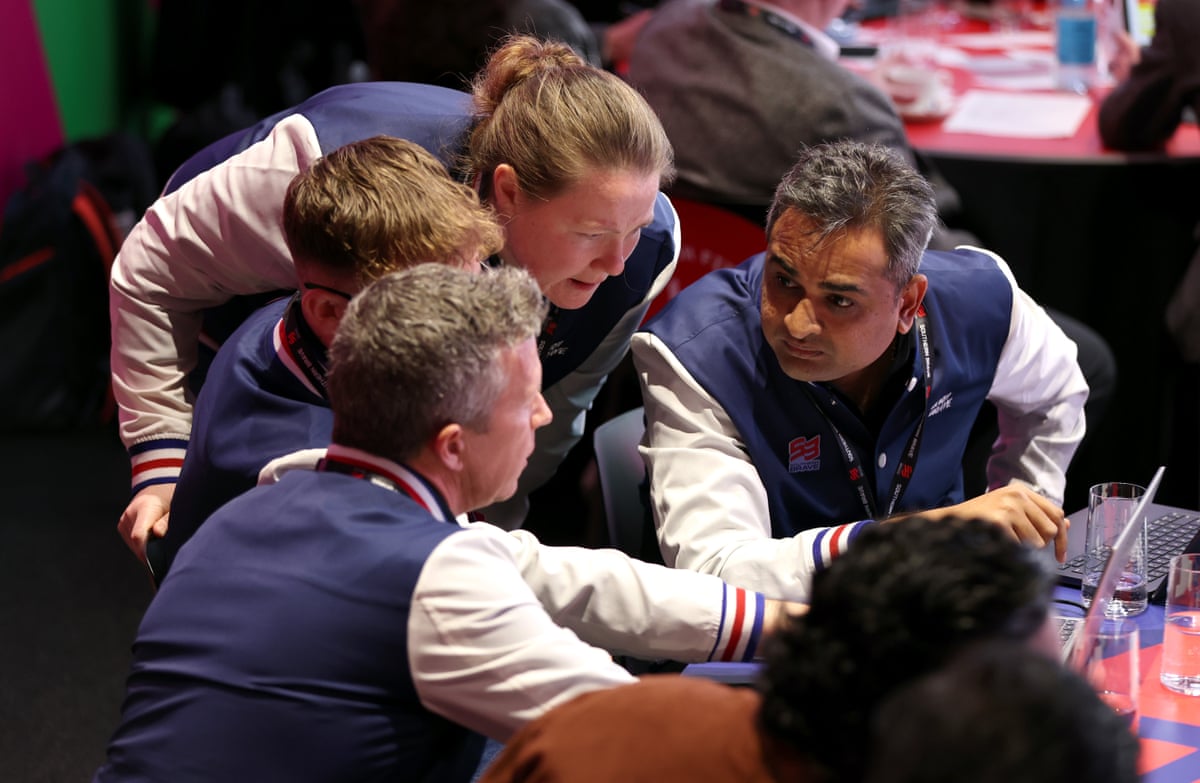
“I really hope it will change,” Shrubsole stated. “Similarly to the playing side of things it will probably take some time for those coaches to come through. It is a chicken-and-egg situation. I wouldn’t want to be there if someone didn’t think I was good enough, but I was there just because I was a woman. But, equally, in order to be good enough you have to be given an opportunity.”
“Me and Anya, we love what we are doing,” said Sarah Taylor, working with the Manchester Super Giants. “But naturally we would like to see more people doing it too. I’d like to think it will change. The more girls that are playing in the professional game, that are privy to these environments, then the more girls will have the knowledge for them to want to come back and coach or be part of the set-up in another role. I hope more people will go in that direction.”
Contrasting Examples and Challenges of Private Investment
This gender imbalance need not be inevitable. For example, the Women’s Rugby World Cup held in Britain the previous year was managed by an entirely female executive team, with a final featuring an all-female refereeing crew and groundstaff. However, English cricket’s reliance on private investors controlling teams has contributed to a loss of such control over inclusivity and representation.
Another notable aspect was the absence of Pakistani players being purchased during the auction. Sadia Iqbal, ranked No. 1 in the world IT20 bowling rankings, and Fatima Sana, the top scorer in a recent series against South Africa, were both unsold. This was partly due to the 32 overseas player slots being largely filled before the auction and the fact that neither player had previously participated in the Hundred.
Given the controversies surrounding the Hundred’s Indian team owners and the significance of the British-Pakistani community within English cricket, this situation highlighted tensions between the financial benefits of private investment and the sport’s broader cultural responsibilities.
The auction prices are expected to be higher on the following day when the men’s auction takes place. With 14 Pakistani players involved and six featured in the heroes list of the top 50 players, the stakes and attention will be considerably elevated.


