Introduction
Despite setbacks, Ben Stokes remains an all-round talent who has significantly transformed the way Test cricket is played.
Last year, I completed a book on England’s cricket captains since Mike Brearley, dedicating the final chapter to Ben Stokes. It began with the observation:
“There is jeopardy here”and concluded:
“I would be hard pressed to name anyone in the last few decades who has done more than Ben Stokes to keep a format [Test cricket], still beloved by so many, alive.”
Jeopardy and Stokes have frequently been intertwined both on and off the field. My own sense of jeopardy arose when assessing Stokes as captain before the Ashes series last winter, given the long tradition of judging England captains by their results against Australia. We now know the outcome and have some understanding of the torment it caused him. Nevertheless, I remain satisfied with those pre-Ashes observations. Stokes always brings an element of unpredictability, including his recent decisions. Despite recent disappointments, I believe he remains one of England’s finest captains, much to the surprise of many.
Early Career and Challenges
Stokes began as a brash novice, having been suspended for two breaches of discipline in Australia in early 2013. Yet by December that year, he made his England debut in Adelaide and then played on the fastest pitch in the world in Perth against an Australian pace attack that was overwhelming his more experienced teammates. He was notably combative and embraced the challenge posed by Mitchell Johnson and others. Graeme Swann recalled how Brad Haddin, an exceptionally talkative Australian wicketkeeper, attempted to provoke Stokes during that series. In a considerate effort to prevent conflict, Swann privately advised Haddin that antagonizing the young Stokes was unwise due to potential consequences. Haddin took note of this warning.

By this point, Stokes was on a helter-skelter ride. He quickly became the team’s driving force and was the player to rely on in crucial moments. Naturally, he was entrusted with the final over in the 2016 World T20 final, during which Carlos Brathwaite famously hit four consecutive sixes to win the match. Such a defeat might have ended many careers, but for Stokes, it was merely a minor setback compared to the events of 25 September 2017 in Bristol. On that night, he was arrested following a fight outside a nightclub; a disturbing video was recorded and sold to The Sun newspaper, casting doubt on his future. Consequently, he missed the Ashes tour that winter. At that time, it seemed unimaginable that he would one day captain England, a fact Stokes himself acknowledged when appointed in 2022.
Turning Point and Redemption
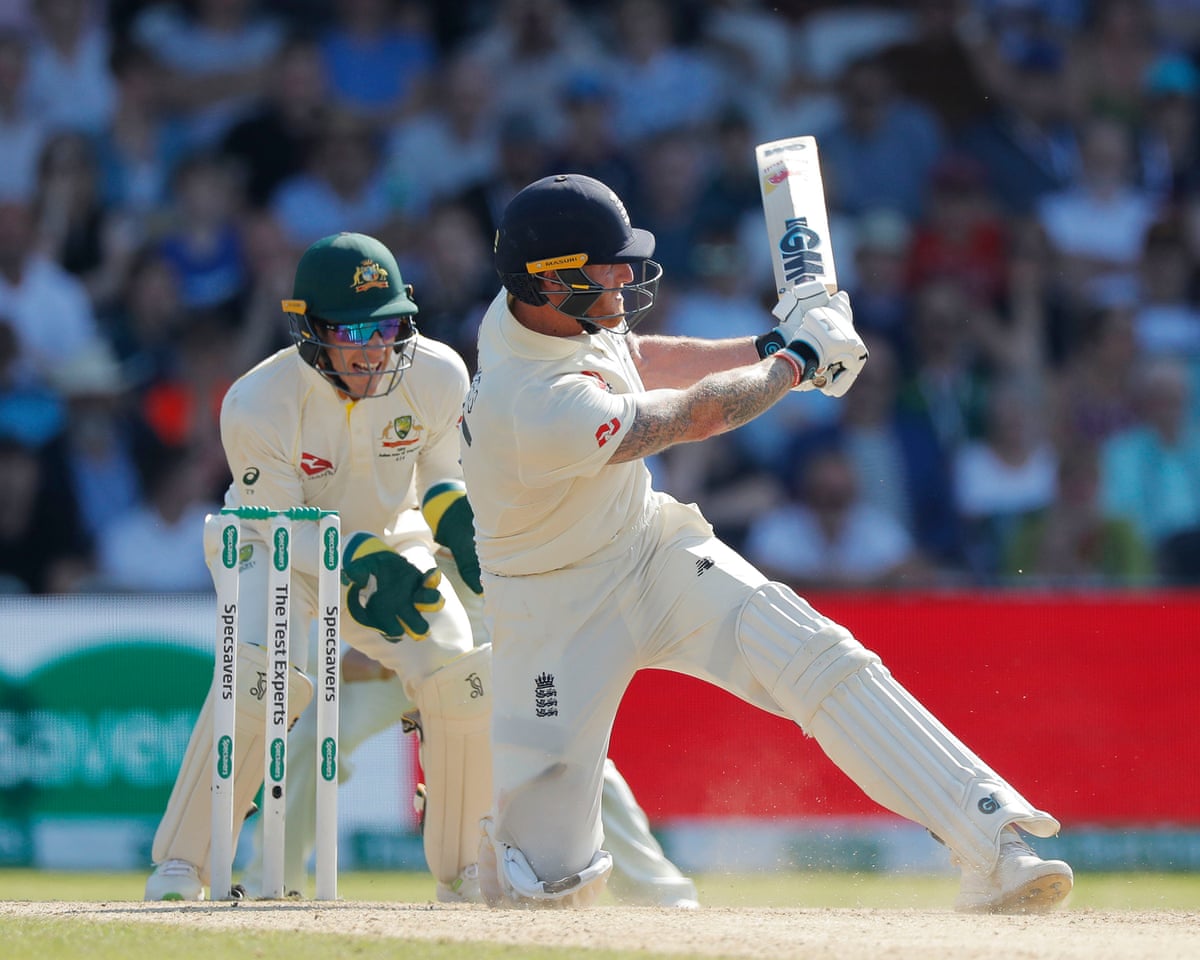
The Bristol incident, for which Stokes was later acquitted of affray, prompted deep reflection and a strong resolve to make amends. He committed to intense training, a trait less common among his predecessors Ian Botham and Andrew Flintoff, and improved significantly from an already high standard. His performance in the 2019 World Cup was outstanding, and at Headingley that August, he delivered an innings that David Gower, known for his measured commentary, described as
“the most incredible performance by anyone, ever.”
Leadership and Impact as Captain
Despite lingering concerns when Stokes was proposed as Joe Root’s successor in 2022, comparisons to the leadership challenges faced by Botham, Flintoff, and Kevin Pietersen were frequently cited. There was a legitimate fear that England’s most charismatic cricketer might be overwhelmed and constrained by the captaincy role. Stokes responded to these doubts with a shrug, stating,
“I’ve had to deal with those comparisons since I was 18.”
However, these concerns were not shared within the England dressing room. Stokes was already the dominant figure in the team, acting as a de facto leader both on and off the field. The transformation following his appointment was remarkable. Under Root, England had won only one of 17 Tests; under Stokes, they won 11 of 13. The team played with the enthusiasm of schoolchildren enjoying their favourite game on a sunny afternoon. An aggressive, attacking approach became the mantra, and players embraced the newfound freedom. The fear of failure was eliminated. On his first overseas tour as captain, England broke numerous records in Pakistan, securing three victories on pitches that would have previously guaranteed draws. Alongside Brendon McCullum, Stokes led the team to face challenges with optimism and joy. Test cricket had never been more enjoyable.
Recent Challenges and Legacy
It has become apparent that this approach does not always succeed, especially against top teams like Australia and India on their home grounds. Nevertheless, Stokes’s contribution to transforming Test cricket remains invaluable. His departure was marked by grace and his characteristic unconventional style. Although he expressed frustration with how his employers handled a recent incident after the Lord’s Test, his interview with Ian Ward on Sky at the close of play at Trent Bridge revealed no bitterness. He affirmed his love for the game and announced plans to continue playing for Durham, possibly with a shorter run-up. He also expressed how much he cherished being England captain, calling it the greatest honour possible. Yet, as with distinguished predecessors Michael Vaughan, Nasser Hussain, and recently Kane Williamson of New Zealand, he recognized that having given his all, it was time to step aside. Stokes leaves behind a legacy as a brilliant, charismatic sportsman and a cricketer capable of capturing headlines even during a football World Cup.