England and South Africa Set for T20 World Cup Semi-Final Clash
The outcomes are confirmed: England will face South Africa in the T20 World Cup semi-final on Thursday, following Australia’s match against West Indies on Tuesday. The decisive double-header at Lord’s on Sunday, witnessed by 27,000 spectators, featured South Africa narrowly defeating Bangladesh despite a late wicket surge, and India being eliminated after a six-wicket loss to Australia.
Record-Breaking Attendance and Growing Popularity
This tournament marks a positive period for women’s cricket. Tournament director Beth Barrett-Wild expressed optimism on Sunday.
“It’s been incredible,”
she said regarding the event so far.
“We set out on a mission to break women’s cricket into the mainstream, and over the course of the last three weeks we’ve seen record-breaking crowds. I feel like we’ve definitely delivered.”
The scale of this event significantly surpasses the 2017 global women’s tournament hosted by England and Wales. Despite extreme heat causing some fans to avoid attending during the past week, total attendance has already doubled the 2017 figure, reaching approximately 160,000. Notable record crowds include 18,814 for India versus Pakistan at Edgbaston and 21,018 for England against New Zealand at the Oval. The final at Lord’s next Sunday is sold out. The presence of ticket touts outside St John’s Wood tube station on Sunday, last seen during the 2017 World Cup final, marks a significant milestone.
Building on the Momentum from 2017
Barrett-Wild reflected on the progress since 2017:
“2017 was the first spark of what could be achieved,”
she said, adding,
“We’ve had multiple instances already through this tournament that have had that same vibe, and the same level of scale, as that one-off moment in 2017 [at Lord’s].”
High-Quality Cricket and Competitive Matches
The cricket itself has been as intense as the heatwave that affected England last week. This edition of the tournament is the first to feature more than one century, with three centuries scored so far by England’s Danni Wyatt-Hodge, Sri Lanka’s Chamari Athapaththu, and South Africa’s Tazmin Brits. The concept of a “record run chase” has become less relevant due to frequent successful chases of totals exceeding 170 runs. On Saturday, Ireland secured their first World Cup victory in 12 years by defeating West Indies, while Scotland narrowly missed a win against Sri Lanka last week. The competition is strong with no clear underdogs.

“It’s been really pleasing just how competitive the cricket has been,”
Barrett-Wild noted.
“Coming into the final weekend with everything still on the line in both groups is brilliant, and I think just testament to the growth and development of women’s cricket globally.”
England’s Strong Performance and Home Advantage
England’s consistent success, winning every group match despite the absence of captain Nat Sciver-Brunt due to injury, has been beneficial for the tournament. Barrett-Wild mentioned recent communications with England head coach Charlotte Edwards, often including the thumbs-up emoji.
“Obviously as tournament director, I’m not allowed to have favourites,”
she said.
“But speaking with the ICC, everybody is recognising the power and the impact of the home nation getting into the latter stages of the tournament.”
Broadcasting Influence and Scheduling Challenges
One challenge impacting ticket sales was the uncertainty about which semi-final England would participate in until Sunday evening, despite their qualification four days earlier. Currently, the scheduling of semi-finals in both women’s and men’s cricket is influenced by Indian broadcasters. If India had qualified, they would have played on Tuesday afternoon to secure a primetime slot in India. This arrangement, dictated by the Board of Control for Cricket in India, raises questions about fairness but reflects the influence of broadcasting rights.
Financial and Developmental Challenges for Smaller Teams
While England’s scheduling issue is minor, other teams face greater difficulties. Scotland cannot afford to host bilateral cricket matches, and their women’s team entered this World Cup without a sponsor. The Netherlands team consists of amateurs; Caroline de Lange notably resigned from her medical profession to participate in this tournament. Her dedication highlights the challenge of balancing cricket with employment. The International Cricket Council (ICC) has expanded the World Cup from 10 to 12 teams, a positive step, but further efforts to distribute cricket’s revenue more equitably could benefit the sport globally.
Looking Ahead to the Final and the Future of Women’s Cricket
Next Sunday at Lord’s, England has the opportunity to claim their first major trophy in nearly a decade, which would bring significant rewards to Sciver-Brunt and her teammates. However, until the ICC adopts a truly global perspective, disparities will persist, resulting in more teams facing challenges than enjoying success.
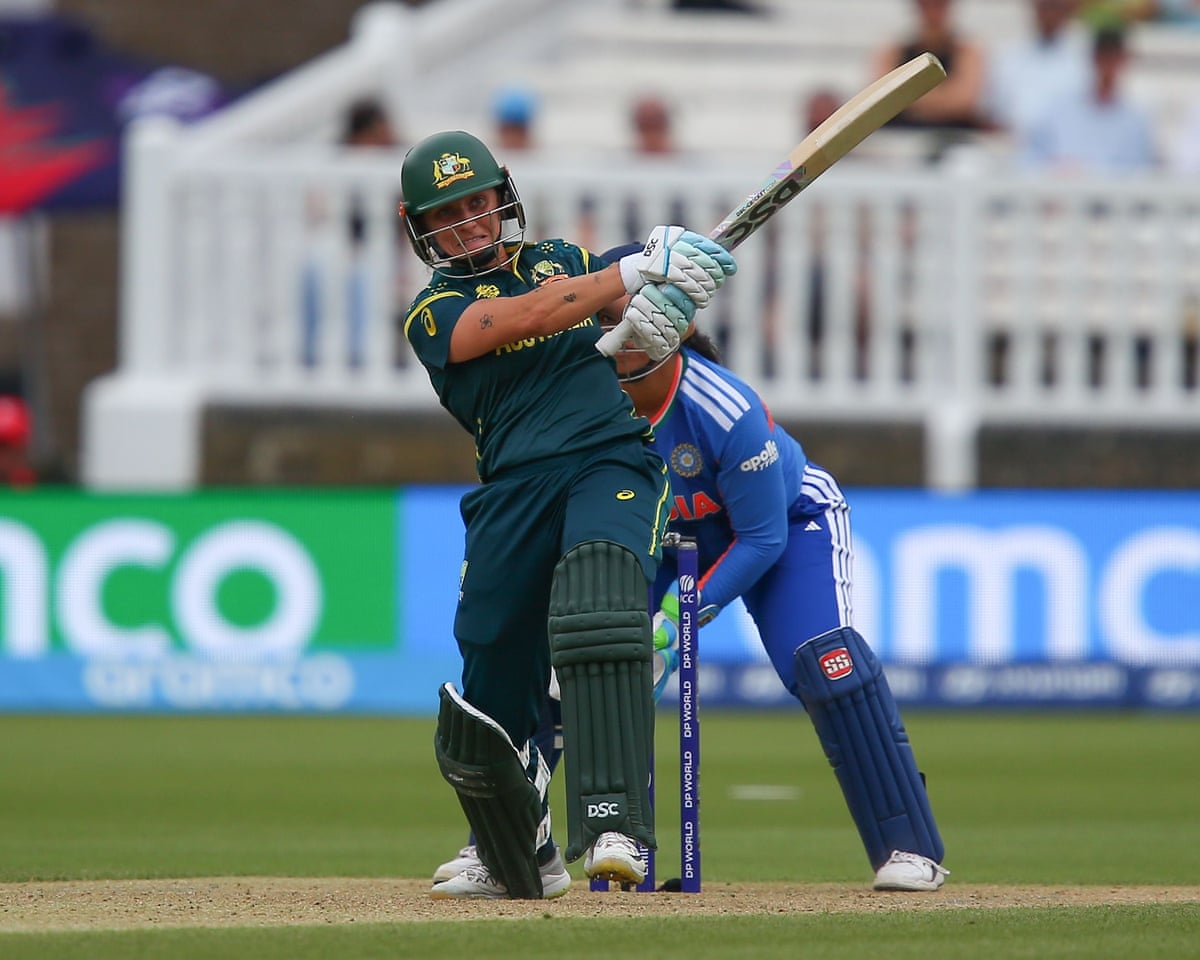
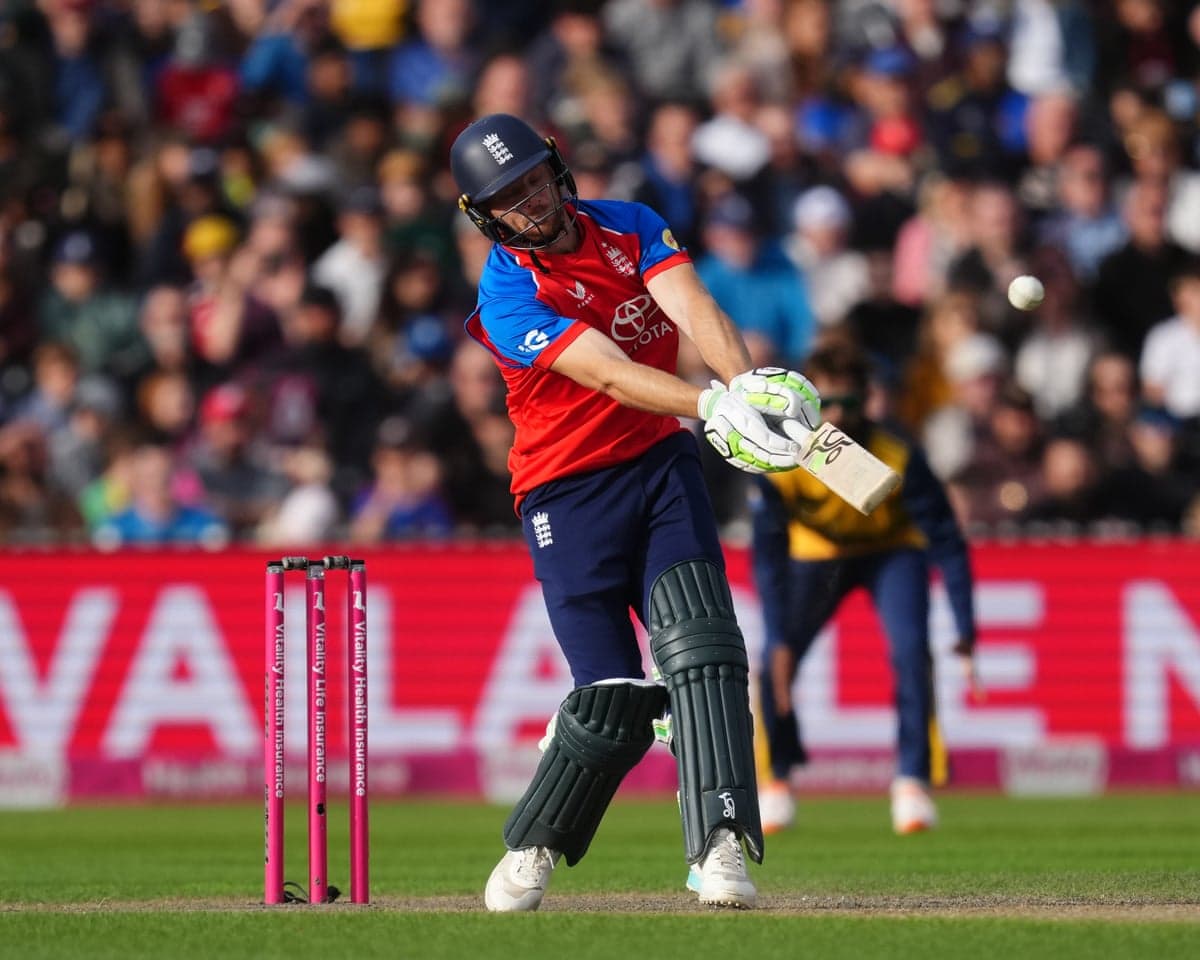
Ashleigh Gardner hits out in Australia’s win against India at Lord's. Photograph: Jay Patel/SPP/Shutterstock