

Senate approves funding for TSA and most of DHS, not ICE
The Senate has resolved a budget impasse that had left thousands of Transportation Security Administration (TSA) personnel working without pay and caused significant delays at airports nationwide.
Since mid-February, TSA staff responsible for screening passengers, baggage, and cargo have been operating without compensation due to a lapse in government funding. Several airports have advised travelers to arrive hours earlier than usual to accommodate extended security lines.
The approved agreement provides funding for Department of Homeland Security (DHS) components including the TSA and the US Coast Guard, according to official statements. However, CNN reported that the House of Representatives must still act before the funded agencies within DHS can fully resume operations.
The Senate passed the funding package by voice vote during an uncommon overnight session.
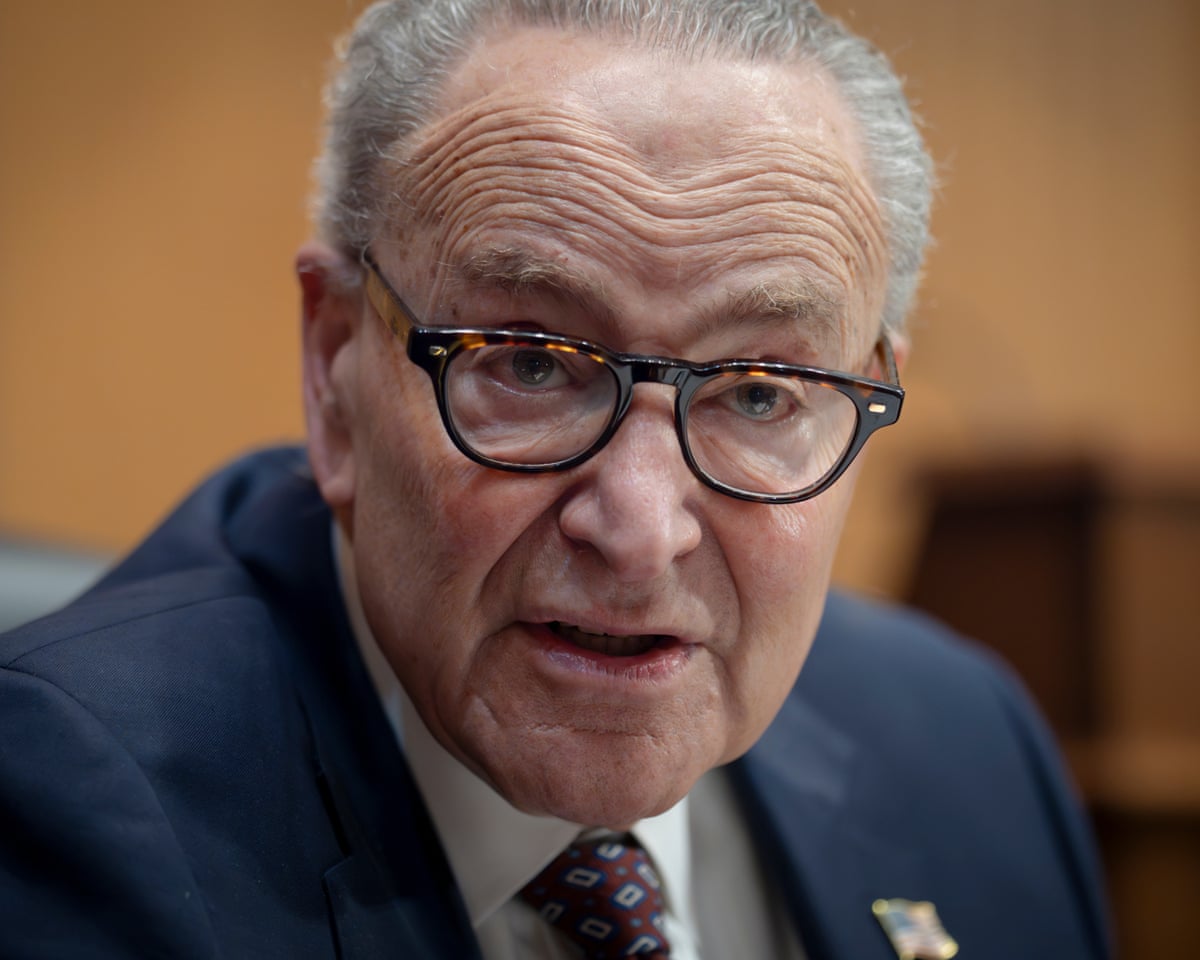
Senate Democratic leader Chuck Schumer expressed that the resolution could have been reached weeks earlier and pledged that Democrats would continue opposing additional funding for what he termed President Trump's "rogue" immigration operations without substantial reforms.
Democrats held firm in our opposition that Donald Trump’s rogue and deadly militia should not get more funding without serious reforms.
Conversely, Republican Senator Susan Collins, chair of the Senate Appropriations Committee, criticized the Democrats for damaging the congressional funding process, weakening national security, and establishing a precedent they might regret.
Democrats remained intransigent and unreasonable with their list of demands.
US financial markets experienced their largest decline since the onset of the US-Israel conflict with Iran on Thursday. President Trump commented that the conflict's impact on oil prices was less severe than anticipated. The Dow Jones Industrial Average closed down 450 points, the S&P 500 declined 1.7%, and the Nasdaq Composite fell 2.3%, entering correction territory, defined as a drop of at least 10% from its recent peak.
The US Department of the Treasury announced plans to feature President Donald Trump's signature on US paper currency to commemorate the nation's 250th anniversary. This initiative marks the first time a sitting president's signature will appear on legal tender. To accommodate this change, the treasurer's signature will be removed for the first time since 1861.
The Senate did not achieve the 60 votes required to pass an amendment to the Save America Act mandating photo identification for voters. The vote was 52-47, falling short of the two-thirds majority needed. No Democrats supported the amendment. Earlier, President Trump urged Republicans to end the Senate filibuster.
During a cabinet meeting, President Trump stated that Iran was allowing 10 oil tankers to pass through the Strait of Hormuz as a goodwill gesture amid ongoing negotiations. He reiterated his previous assertion that Iran is "begging to make a deal."
Reports indicate President Trump intends to renovate the White House's treaty room, traditionally used for diplomatic meetings, converting it into a guest bedroom with an en suite bathroom.
President Trump declared that the US has won its war with Iran, a statement met with ridicule by Iranian officials.
This week, Jonathan Freedland interviewed Susan Glasser of the New Yorker, discussing analyses suggesting that President Trump is losing effectiveness in closing deals, winning elections, and maintaining the energy required to manage the White House.
Chuck Schumer welcomes Senate DHS funding deal
Senate Minority Leader Chuck Schumer welcomed the DHS funding agreement passed by voice vote on Thursday night but remarked that the deal could have been "accomplished weeks ago if Republicans hadn’t stood in the way."
The agreement ensures payment for TSA workers, the Coast Guard, and funding for FEMA after nearly six weeks of a partial government shutdown, notably excluding additional funding for Immigration and Customs Enforcement (ICE).
In a statement, Schumer said:
Democrats held firm in our opposition that Donald Trump’s rogue and deadly militia should not get more funding without serious reforms, and we will continue to fight for those reforms.
Saudi Arabia has reportedly urged the US to intensify attacks on Iran, according to a Saudi intelligence source, while considering direct involvement in the conflict.

The source confirmed reports that Crown Prince Mohammed bin Salman, Saudi Arabia's de facto leader, has encouraged President Trump not to curtail the war against Iran, describing the US-Israeli campaign as a "historic opportunity" to reshape the Middle East.
The intelligence source indicated that Riyadh advocates not only continuation but escalation of the military campaign. President Trump appeared to confirm the Crown Prince's role, stating to journalists, "Yeah, he’s a warrior. He’s fighting with us."
Further details on this development are available from ’s Julian Borger and Aram Roston.
Updates on the Middle East crisis can be followed in the live blog.
A war of regression: how Trump bombed the US into a worse position with Iran
Four weeks into a conflict initially expected to last four days, with US expenditures estimated between $30-40 billion and Israeli costs at approximately $300 million (£225 million) per day, the US finds itself further from a diplomatic resolution with Iran than before.
The war has failed to compel Iran to dismantle its nuclear program in the comprehensive and irreversible manner demanded by the US in a 15-point proposal submitted on 23 May last year. Instead, the US is now negotiating to reopen the Strait of Hormuz, a strategic maritime passage that has remained open since the advent of the dhow, except during the tanker war between Iran and Iraq in the 1980s.
Patrick Wintour, ’s diplomatic editor, provides further analysis.
The Senate funding agreement was reached hours after President Trump announced on Thursday that he would sign an order directing the Department of Homeland Security to immediately pay TSA agents.
On social media, Trump wrote:
I am going to sign an Order instructing the Secretary of Homeland Security, Markwayne Mullin, to immediately pay our TSA Agents in order to address this Emergency Situation, and to quickly stop the Democrat Chaos at the Airports. I want to thank our hardworking TSA Agents and also, ICE, for the incredible help they have given us at the Airports.
The president did not specify the source of the funding for this directive.
G7 foreign ministers convened on Friday in France amid President Trump’s repeated complaints that US allies have ignored or rejected requests for assistance in the Iran conflict.
Secretary of State Marco Rubio joined his G7 counterparts just 24 hours after President Trump criticized NATO, as oil market instability continued with the Iran war entering its fourth week and uncertainty surrounding potential negotiations to resolve the crisis.
Most of America's closest allies have expressed skepticism regarding the Iran conflict, a sentiment evident during the G7 meeting at a historic 12th-century abbey in Vaux-de-Cernay, near Paris, even as they advocated for a diplomatic solution.
A newly released collection of documents from chemical producers and the US Environmental Protection Agency (EPA) reveals a coordinated industry effort that undermined stringent regulations on formaldehyde, a highly toxic chemical widely used in consumer products including cosmetics, furniture, and craft supplies.
In late 2024, the Biden administration’s EPA determined that any exposure to formaldehyde increases the risk of cancer and other health issues. Conversely, the Trump administration’s EPA in late 2025 relaxed these standards, adopting less protective thresholds.
The documents show that the industry and the Trump EPA’s efforts to weaken protections largely relied on studies led by chemical industry scientist Rory Conolly, who argued that some formaldehyde exposure is safe. These studies were funded by chemical trade groups. Between 2008 and 2024, the EPA had deemed this research outdated or unreliable.
After the Trump administration assumed control of the EPA, it adjusted formaldehyde risk levels to align with Conolly’s findings, relying partly on limited data from other researchers and studies previously considered outdated. Advocates contend the documents demonstrate that the Trump EPA selectively used data.
Obtained through a Freedom of Information Act request by the Environmental Defense Fund (EDF), a nonprofit organization, the documents also detail a rare three-day meeting in 2023 involving the EPA and leading formaldehyde producers, users, and trade groups. Rory Conolly was among the presenters at this meeting.


