

Over 170 Arrests Made in Six-Month Live Facial Recognition Trial
More than 170 individuals, including a woman who had been wanted for over 20 years, were apprehended during a six-month live facial recognition (LFR) trial conducted in south London.
The Metropolitan Police reported a 10.5% reduction in crime during the trial period on Croydon's high street, which ran from October 2025 to March 2026. Additionally, incidents of violence against women and girls decreased by 21%.
Among those arrested was a 36-year-old woman wanted for failing to appear in court regarding an assault charge dating back to 2004. Other arrests involved individuals sought for serious offences including kidnap, rape, and serious sexual assault.
The Metropolitan Police described the data as evidence that LFR is a "powerful tool," though the campaign group Big Brother Watch urged the implementation of "strict safeguards" for the technology.
LFR deployments typically require a dedicated van equipped with cameras and computer systems. However, during this pilot, cameras were installed on existing infrastructure such as lampposts positioned at the north and south ends of Croydon's high street.
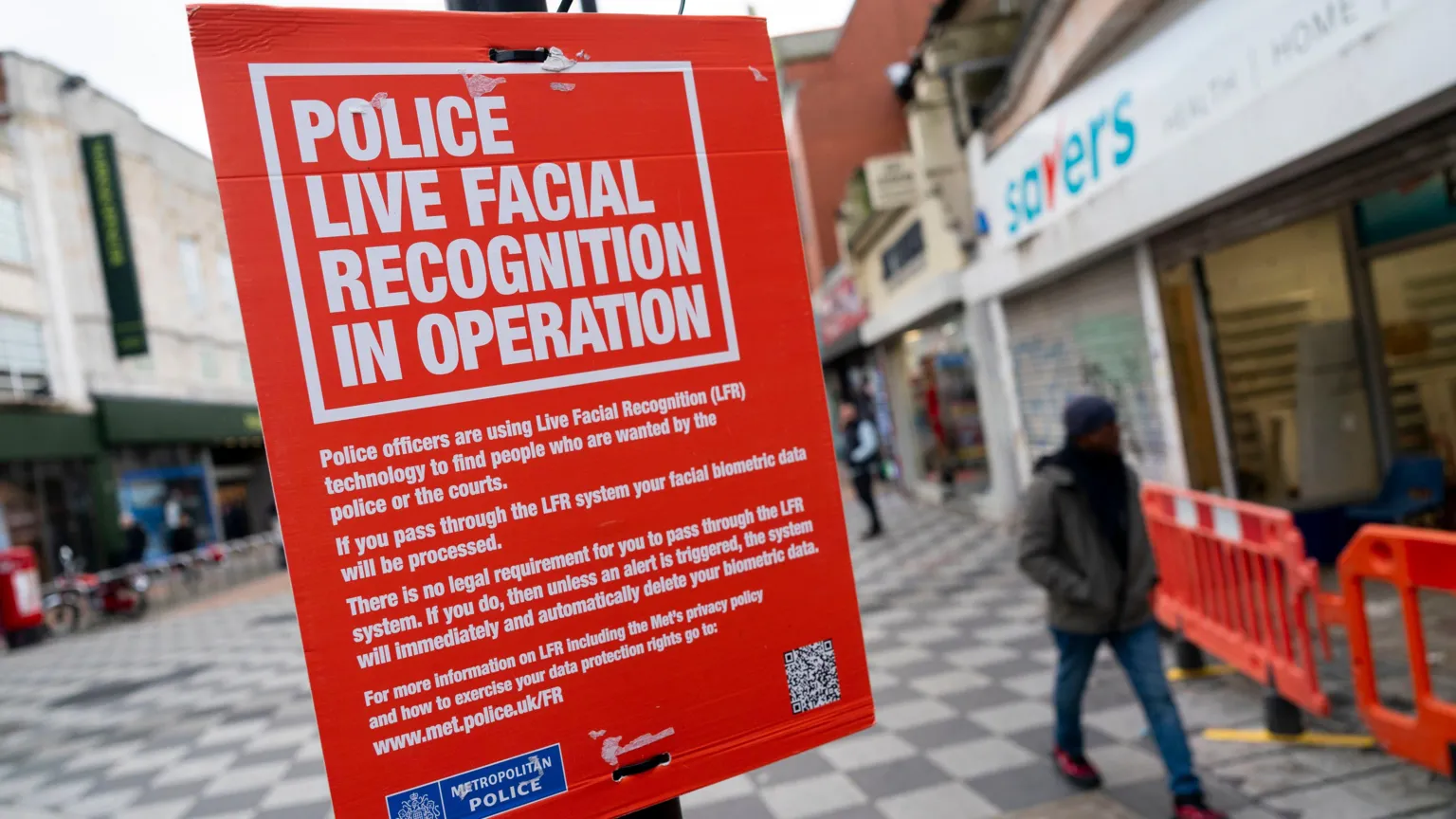
'Intelligence-Led Watchlist' and Arrest Details
The static cameras were activated and utilized in 24 separate operations, resulting in 173 arrests—an average of one arrest every 35 minutes, according to the Metropolitan Police.
Each camera deployment employed a "bespoke, intelligence-led watchlist" that was compiled no more than 24 hours prior to use and deleted immediately afterwards, the force explained.
Additional arrests during the pilot included a 31-year-old man wanted for voyeurism for over six months and a 41-year-old man sought for rape related to an incident in Croydon in November.
The Metropolitan Police stated that 61% of the offences connected to arrests occurred within Croydon.
Official Statements on Technology Use
Lindsey Chiswick, the national and Metropolitan lead for LFR, emphasized the technology's effectiveness when applied with care and transparency.
"This technology is helping us find people wanted by the courts, identify serious offenders quickly and focus our resources where they make the biggest impact," she said.
"We will continue using static cameras in Croydon as part of our regular live facial recognition deployments."
The force reported that over 470,000 individuals passed the cameras during the pilot, with only one false alert recorded. The individual flagged was not arrested.
Concerns Raised by Campaign Group
Jake Hurfurt, head of research and investigations at Big Brother Watch, criticized the trial, stating that Croydon's shoppers were "treated like human guinea pigs" with surveillance technology "rarely seen outside of authoritarian regimes."
"We all want the police to catch wanted criminals, but the Met's statistics today mask the many officer hours behind each arrest and huge resources that the force puts into LFR over more proportionate, traditional policing," he said.
"Strict safeguards restricting live facial recognition to the most serious cases are long overdue. The technology has never been voted on in Parliament and there is no law explicitly regulating its use."
He called on the Metropolitan Police to cease the use of LFR technology.
Listen to the best of BBC Radio London on Sounds and follow BBC London on Facebook, X, and Instagram. Story ideas can be sent to hello.bbclondon@bbc.co.uk.


