

Student Debt Concerns Prompt Youth to Challenge Welsh Politicians
Teenagers aspiring to attend university face anxiety over accumulating debt, with one 18-year-old, Sam Jones, publicly questioning politicians on the issue.
Sixth former Sam Jones, from Llay near Wrexham, addressed a panel representing Wales' six largest political parties, inquiring about their plans to support young people so they are "not racking up obscene amounts of debt".
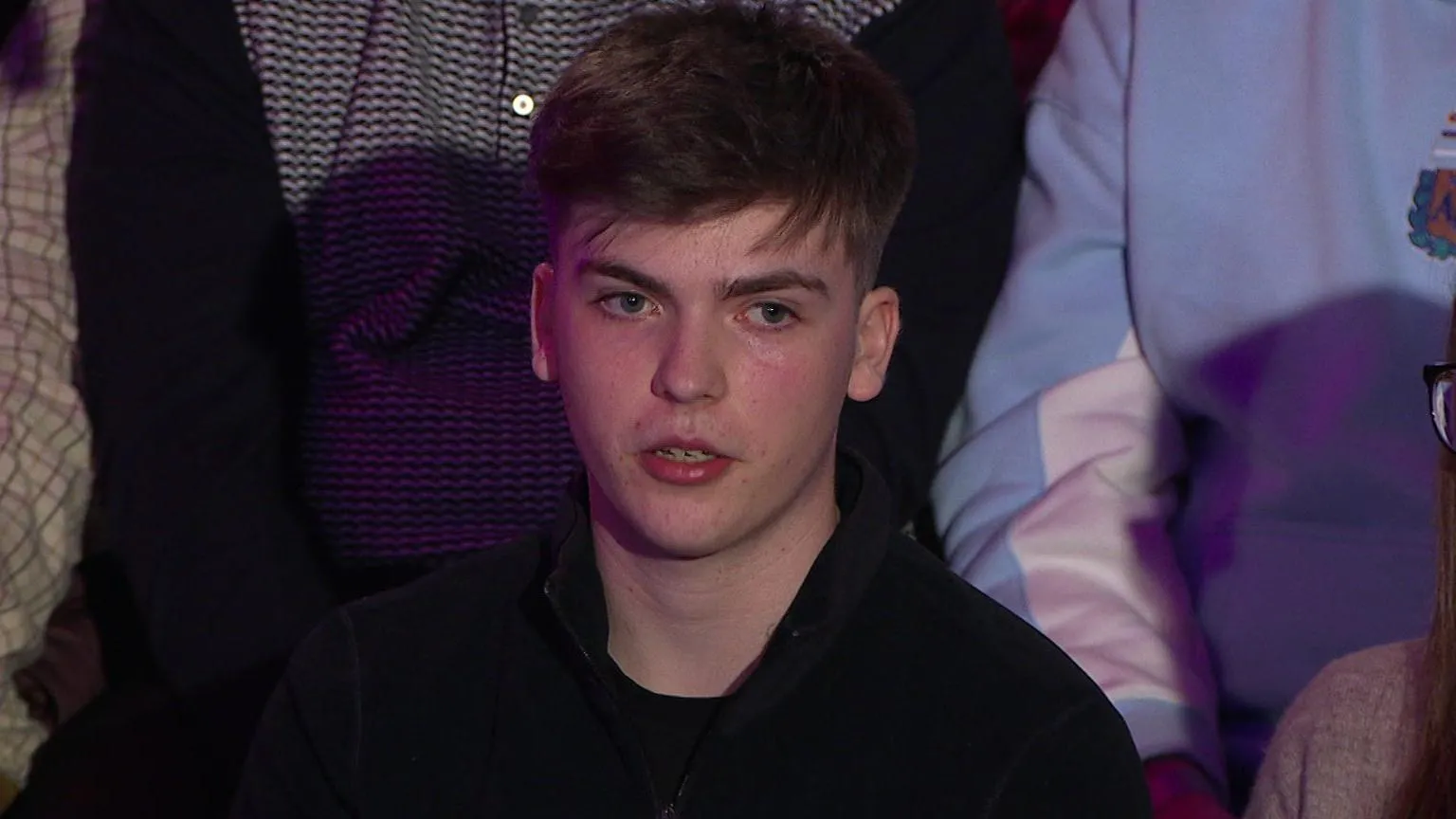
Jones revealed he had spent considerable time weighing whether to attend university due to the anticipated debt burden. He contemplated foregoing higher education in favor of an apprenticeship but ultimately decided a degree was necessary for his intended civil service career.
The Welsh government has described its living costs support as "the most generous" in the UK. Meanwhile, the National Union of Students (NUS) Cymru expressed a desire for "more ambition" from political parties participating in the election.
"It was a question that had to be asked,"said Jones, who feels compelled to incur significant debt to obtain a degree for his chosen profession.
He added that pursuing careers in certain sectors effectively forces individuals to assume debt.
As a participant in the BBC Wales Your Voice live debate in March, Jones explained he posed the question because "lots of people my age want to have a response from the people who are actually making the decisions".
"Lots of people that probably should go to university have decided not to because they can't financially justify it.
We're kind of as a society depriving ourselves of the people who are going to be the next great scientists, the next great teachers."
Concerns about student debt have intensified following the UK government's decision to freeze the repayment threshold for some English graduates. The Welsh government stated it would not adopt this freeze and supported a subsequent UK government move to cap loan interest at 6%.
This situation has highlighted broader issues regarding debt levels and repayment terms for students.
"I think it's really brought it to the forefront,"Jones said.
His mother, Amanda, expressed alarm at some media headlines.
"As a parent having tried to find information, I find it's very difficult to find – the system's very difficult to navigate and it's quite frightening."
Although she recognizes that repayment terms differ from bank loans and that debt is written off after 30 years, she finds it challenging to overcome the mindset of "I've borrowed £65,000, therefore I will need to pay that back".
As a teacher, Amanda found herself questioning whether higher education was the best path for Sam, with her feelings remaining "very mixed".
"I do waiver. I waiver on a daily basis. Should he do this?"
Nonetheless, she acknowledged the positives.
"It's a massive opportunity for him to secure his future and actually do what he enjoys doing,"she said.
Jones, preparing for A-level exams in the coming weeks, anticipates the next chapter with excitement but remains concerned about financial repercussions.
"I'm excited to actually go to university to learn, meet new people and pursue an academic interest I already love so much.
I feel very worried, very concerned about what my life afterwards is going to be like money-wise, repaying this,"he said.
Sam Thomas, 19, from Bridgend, contacted BBC Your Voice, identifying the key election issue for him as "whether Wales is investing properly in its students, so we can invest our future back into Wales".
Now in his second year at Bristol University, he feels education has been overshadowed by other issues but seeks clarity on how parties will ensure opportunities for young people.
"Uni is brilliant, but I think student loans and the cost of living for university in general is putting people off.
It's a bit of a lose-lose situation because you go to uni and get a degree in the hopes you'll get a good and well-paid job.
And at the moment you come out of university and you might struggle to find a job,"he said.

On average, Welsh students graduate owing £40,000, lower than the £53,000 average for English students.
One expert described Wales' student maintenance system as "very generous," noting Welsh students receive more living cost support than their English counterparts.
Gavin Conlon, from consultancy London Economics, stated the cost of higher education is becoming "very significant" for governments. He described the Welsh ministers' decision not to freeze loan repayment thresholds as "brave."
He added that future student finance policies might be limited by "very complicated" Treasury rules and that Wales is currently at its "credit limit."
The president of the National Union of Students in Wales, Dewi Owen, expressed a desire for greater ambition from political parties regarding student support.
"We're already seeing Wales out of all of the UK nations with the lowest rate of 18-year-olds going to university,"Owen said.
He noted that this trend not only deprives the Welsh economy of skilled workers but also affects young people's prospects.
"I think what we risk is a generation being left behind."
First-year student Alexander McLean, 18, also raised student finance concerns during the Wrexham debate.
"Some students were not able to socialise or even pay membership fees for societies because of cost pressures,"he said.
He decided against undertaking a year abroad as part of his international relations course in Liverpool due to financial constraints.
"The system itself needs changing because it's something that doesn't just affect people's decisions to study abroad, it also affects their decision to go to university in the first place,"McLean said.
He believes maintenance support for Welsh students is better than for English students but would prefer the free tuition Scottish students receive when studying in Scotland.
McLean also expressed concern about the graduate job market.
"It's scary to think that I could be doing these essays, these exams, going through all this stress trying to work out everything with the money... the student finance, all for it to just come to nothing because there's not enough jobs for people."

Dewi Knight, director of PolicyWise and former Welsh government adviser, criticized the lack of detail in political manifestos regarding student finance.
He emphasized the issue should be considered within the broader context of challenges facing young people.
"We look at getting on the housing ladder, the job market, general living costs... if you add in student debt and student finance then clearly that is a bigger issue in terms of young people's place within the economy and society."
Political Parties' Positions on Student Finance
The Welsh Conservatives stated they would collaborate with the UK government to "cut excessive interest rates on student debts."
They also proposed piloting discounted fees for science, technology, engineering, and maths subjects, as well as refunding fees for some healthcare and teaching students who study in Wales and commit to working in the Welsh NHS or schools for at least five years.
A Welsh Labour spokesperson affirmed their commitment to "continue the most generous non-repayable student maintenance grants anywhere in the UK, so background does not limit ambition."
The spokesperson added that the Welsh Labour government has "ensured Wales has a unique and progressive student finance system."
Plaid Cymru pledged to commission an independent review of higher education funding to "improve access to higher education for everyone, protecting students from disadvantaged backgrounds and ensuring students are supported to study here in Wales."
They promised to make higher education sustainable, noting that universities are currently "on the brink."
Wales' Green Party expressed support for free higher education to eliminate excessive student debt but indicated that in the interim, they would "maximise a student finance partial cancellation scheme within the limits of devolved powers" and increase maintenance support for students studying in Wales.
Reform UK's Senedd election manifesto committed to ensuring university courses offer value for money and adequately prepare graduates for the workplace. It also promised to place universities on a "sustainable financial footing."
The Welsh Liberal Democrats' manifesto stated intentions to increase access to university-level education and maintain "the most generous system of student finance anywhere in the UK for Welsh students - no matter where they study."



