

The BBC Wales Senedd election debate fact-checked
The leaders of Wales' six major political parties participated in a special BBC debate on Tuesday ahead of the Senedd election. The 90-minute programme featured discussions on topics including the NHS, immigration, and independence.
BBC Verify has reviewed several claims made during the debate.
Have NHS waiting lists fallen for nine months in a row?
Welsh Labour leader Eluned Morgan defended her government's NHS record, stating that waiting lists had decreased "for nine months in a row".
"Waiting lists had come down for nine months in a row."
This statement is accurate. However, the total number of waiting list cases remains significantly higher than before the Covid-19 pandemic.
According to the latest official figures, the waiting list in February 2026 was 687,958. Prior to the pandemic, waiting lists typically hovered around 463,000.
It is important to note that the number of waits does not equate to the number of individual patients, as some individuals may be awaiting multiple treatments. The most recent report indicates that the 687,958 waits in February correspond to 543,400 individual patients.
Does the UK government owe Wales money because of HS2 rail?
Wales Green party leader Anthony Slaughter, whose party supports Welsh independence, addressed UK government funding for Wales, stating:
"We don't get money from HS2 - we need that money, that's the money that belongs to Wales."
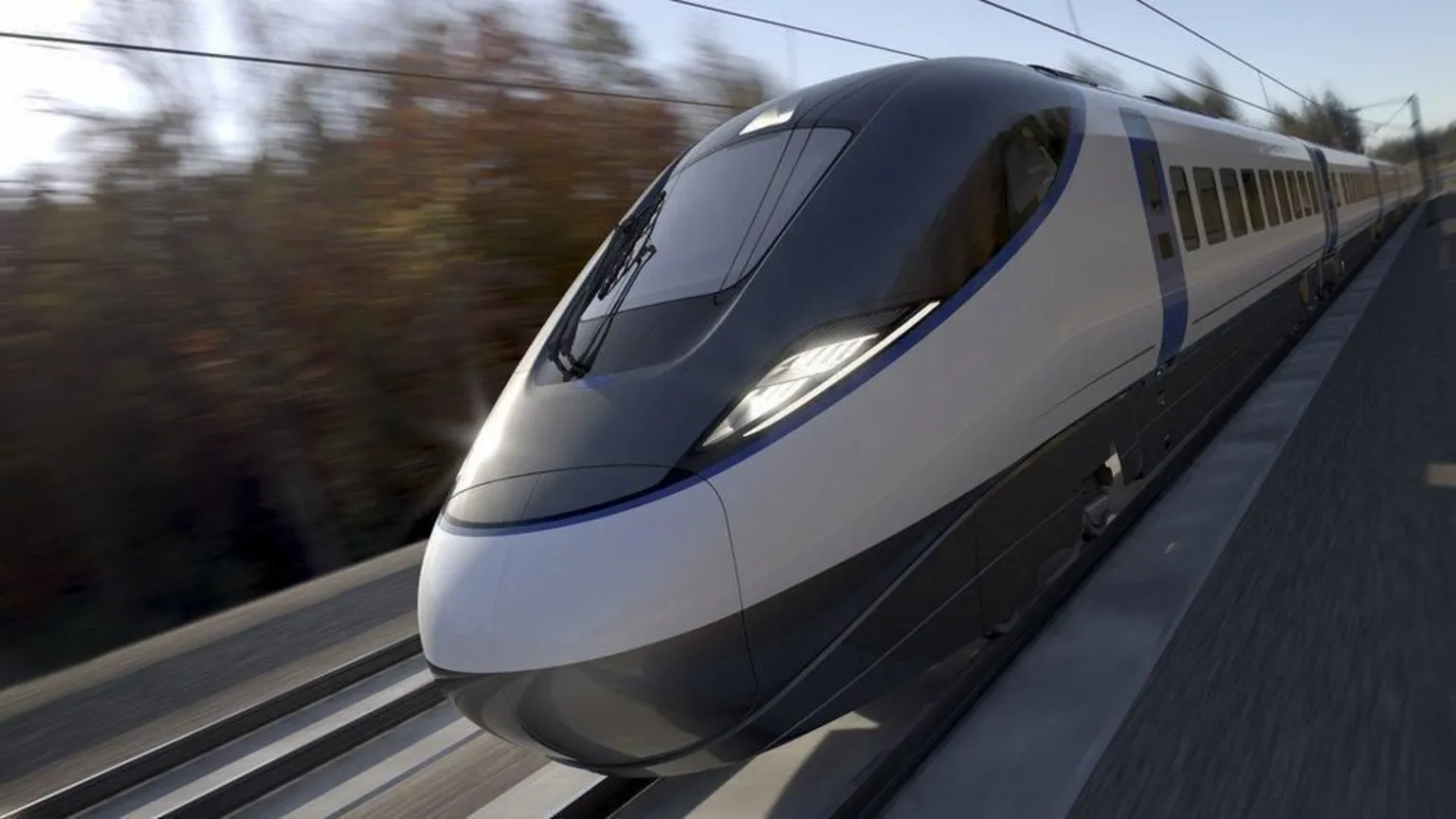
This claim pertains to calls for Wales to receive funding under the "Barnett formula" to reflect the billions spent on the HS2 high-speed rail project.
Under the Barnett formula, public spending in England triggers corresponding funding for Wales, Scotland, and Northern Ireland.
Although no HS2 track is planned within Wales, the project is classified as an England and Wales initiative. The UK government argues that Welsh railways are highly integrated with those in England, justifying the joint classification. Additionally, most rail infrastructure in Wales falls under UK government responsibility.
When the previous UK government cancelled the northern leg of HS2 in 2023, it committed £1 billion to electrify the rail line between Crewe and Holyhead.
In February 2026, the UK government announced a £14 billion plan to "transform" Welsh railways. The plan includes £445 million allocated for seven new train stations in Wales, though funding for other projects has not yet been specified.
Are a third of children in Wales in poverty?
Plaid Cymru leader Rhun ap Iorwerth stated:
"We know that being in the UK leaves us with a third of our children living in poverty."
This assertion is supported by the latest Welsh government data, which show that 31% of children in Wales lived in relative income poverty between April 2022 and April 2024.
Relative income poverty is defined as living in a household with total income less than 60% of the median UK household income.
Other organizations, such as the Bevan Foundation, report that child poverty rates in Wales have remained steady at around one in three children for the past two decades.
Are there 1,400 people in hospitals in Wales who don't need to be there?
Welsh Liberal Democrats leader Jane Dodds said her party aims to get "1,400 people out of hospital that are there right now and shouldn't be there."
"1,400 people out of hospital that are there right now and shouldn't be there."
According to figures published in March 2026, there were 1,351 people in Welsh hospitals who could not be discharged because appropriate care, support, or accommodation was not yet available.
This figure represents a snapshot from a single day in March and does not account for the total number of delayed discharges over the entire month.
The March figure was lower than February's; however, the total number of days patients were delayed in hospital slightly increased. In February, the total delayed days were 60,601, averaging 42 days per person, compared to 57,512 days in March, averaging 42.6 days per person.
Did 1,000 people die in A&Es because they waited more than 12 hours?
Welsh Conservatives leader Darren Millar stated:
"The Royal College of Emergency Medicine has told us very clearly that 1,000 people died last year because they waited 12 hours or more in our emergency departments across the country."
This claim is based on the "State of Emergency Medicine in Wales" report, which estimated at least 965 deaths in Wales in 2025 were associated with waits of 12 or more hours in Emergency Departments (EDs).
However, these figures are estimates derived from a 2022 study conducted in NHS England that examined the link between prolonged ED waits and deaths within 30 days. The study suggested one additional death for every 82 patients who waited six to eight hours or more in an ED before hospital admission.
Furthermore, coroners reviewing hospital deaths in Wales since early 2025 have not raised concerns about extended ED waiting times. While some reports have highlighted issues such as ambulance response times and handover delays, none reviewed by the BBC specifically addressed ED wait times.
Was taxpayer money spent on solar panels for sport clubs?
Reform party's Dan Thomas discussed plans to reform quangos—public bodies funded by taxpayers but not directly controlled by central government—claiming they "are spending our money on the wrong things."
He cited one quango as an example, stating:
"Sport Wales spends £5m of taxpayers' money insulating sports clubs and putting solar panels on."
It is accurate that the Welsh government launched a scheme in 2023 allowing sports clubs to apply for up to £25,000 to fund various energy-saving improvements. By February 2026, the scheme had cost £5.4 million.
The Welsh government asserts that the scheme has enabled sports clubs to reduce energy costs and carbon emissions. On average, each club saves approximately £3,000 and offsets 3.3 tonnes of carbon annually, totaling an estimated 840 tonnes of carbon offset and around £840,000 in energy savings across all participating clubs.
Reform Wales leader has previously claimed that 200 quangos cost Wales over £135 million. When asked by BBC Verify about the calculation method, the party responded:
"We will release our costings when the other parties also agree to do so."



