

Popularity plummeted
After losing the confidence of his MPs and key cabinet members, Sir Keir Starmer appeared outside Downing Street on Monday to announce his resignation as prime minister.
BBC Verify reviews his record in government across key areas such as immigration and energy bills since he assumed office in July 2024.
In August 2024, just one month after taking office, a YouGov poll indicated that only 36% of respondents believed Sir Keir was performing well as prime minister, while 43% viewed his performance negatively, resulting in a net popularity rating of minus 7.
By this month, 74% considered his performance poor, compared to 18% who viewed it positively, suggesting his net popularity had declined to minus 56.
Additional polling by Ipsos shows Sir Keir's personal ratings among voters fell below those of recent prime ministers including Rishi Sunak, Boris Johnson, and Theresa May.
Economic growth picked up
Labour's manifesto committed to achieving "the highest sustained growth in the G7," which comprises the US, UK, Japan, France, Italy, Germany, and Canada.
Between the second quarter of 2024—just before Labour assumed power—and the first quarter of 2026, OECD data indicates the UK economy grew by 2.3% in total, outpacing all G7 nations except the US, which grew by 3.7% during the same period.
Moreover, the UK recorded the fastest quarterly growth among G7 countries in the first quarter of 2026, expanding by 0.6%.
However, most forecasters do not expect this growth to continue, partly due to the energy shock resulting from the US conflict with Iran.
The International Monetary Fund's (IMF) latest forecast projects UK GDP growth of 0.8% for 2026, lower than the US (2.3%), Canada (1.5%), and France (0.9%).
The IMF also anticipates weaker UK growth compared to the US and Canada in 2027.
Immigration fell
Regarding immigration, Sir Keir pledged to "smash the gangs" responsible for small boat Channel crossings, but these crossings have persisted during his premiership.
Last year's total crossings were the second highest after 2022's peak under the previous Conservative government, and total crossings since 2018 have surpassed 200,000 during his tenure.
Nevertheless, there are indications of a slowdown in arrivals; the number of crossings detected so far in 2026 is down 40% compared to the same period in 2025.
Under Labour, overall immigration and net migration (the difference between immigration and emigration) have both decreased significantly.
Official estimates for 2025 report net migration at 171,000, a 48% decline from the previous year and a substantial drop from the peak annual rate of 944,000 recorded in 2023 under the Conservatives.

NHS waiting lists down
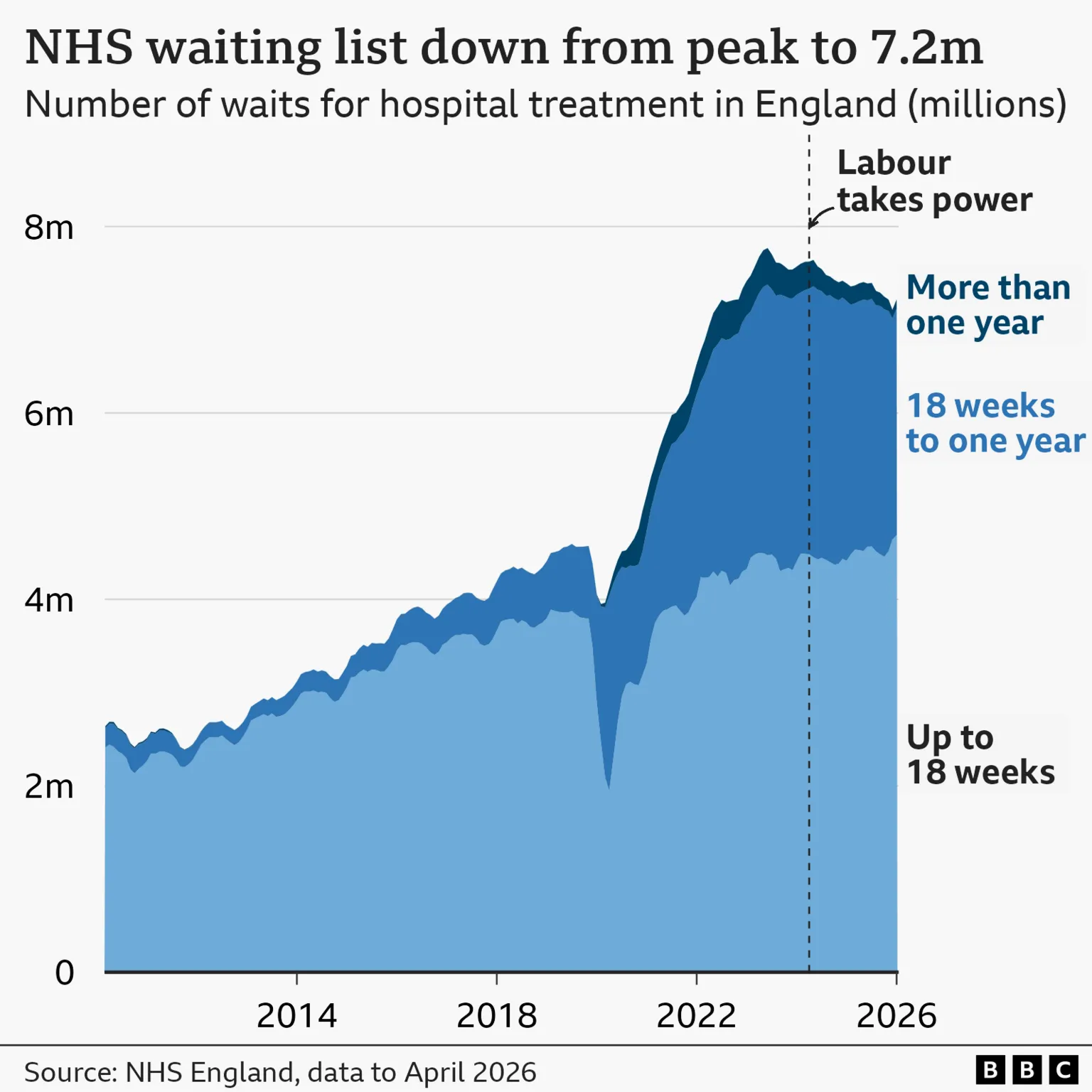
In health, Sir Keir pledged that 92% of patients in England would be seen within 18 weeks by the end of the Parliament.
Latest official data for April 2026 shows 65% of patients were seen within this timeframe, up from 58.9% in June 2024, the month before Labour took office.
The total number of waits for treatment in England in April was 7.22 million, down from 7.62 million in June 2024, a reduction of 400,000.
Energy bills up
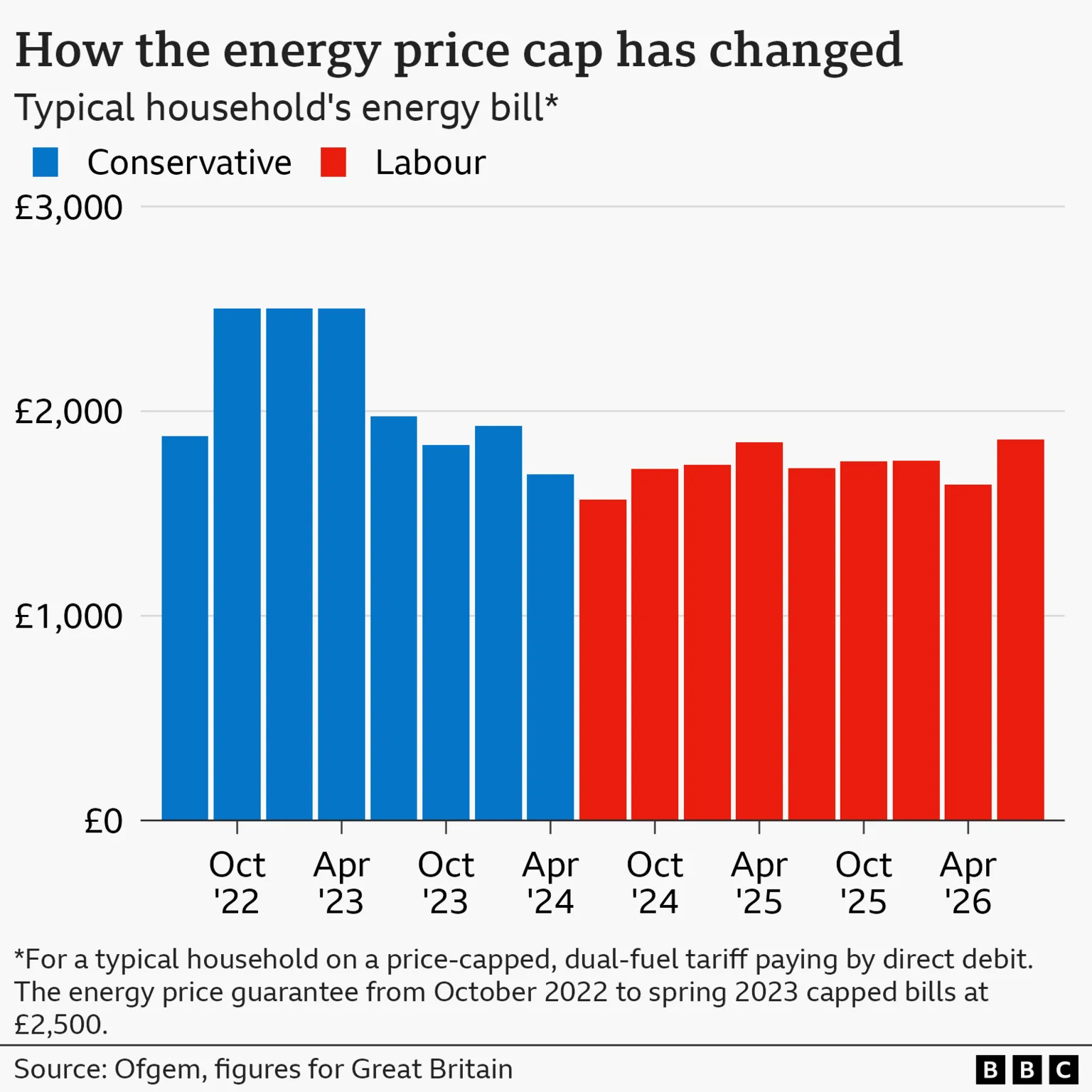
Labour promised to reduce average household energy bills by more than £300 over the course of the Parliament, but bills have instead increased.
The latest domestic energy price cap set by Ofgem, the energy regulator, for summer 2026 is £1,862 annually for a typical household, partly reflecting global events such as the Iran war.
This represents an increase of nearly £300 from the £1,568 price cap in summer 2024, which Labour inherited.
Benefit spending increased
Sir Keir sought to limit the rising working-age welfare bill but was compelled to retreat in June 2025 due to opposition from his backbenchers.
Forecasts from the Office for Budget Responsibility (OBR) indicate the total UK welfare bill, including the state pension, will rise from 10.7% of GDP in 2024-25 to 11.1% by 2029-30.
A major factor driving this increase is projected growth in health and disability welfare payments to working-age adults, particularly more grants of Personal Independence Payments (PIP).
The working-age adult health and disability benefit bill is forecast to increase from £58.2bn in 2024-25 to £78.1bn in 2029-30.
Sir Keir also legislated to remove the two-child limit on Universal Credit.
The official impact assessment estimates this change will result in 450,000 fewer children living in relative poverty—after housing costs—by the end of the Parliament than would otherwise have been the case.
Additional reporting by Tom Edgington, Becky Dale, Aidan McNamee, Jess Carr, Wesley Stephenson, Christine Jeavans, and Daniel Wainwright.



