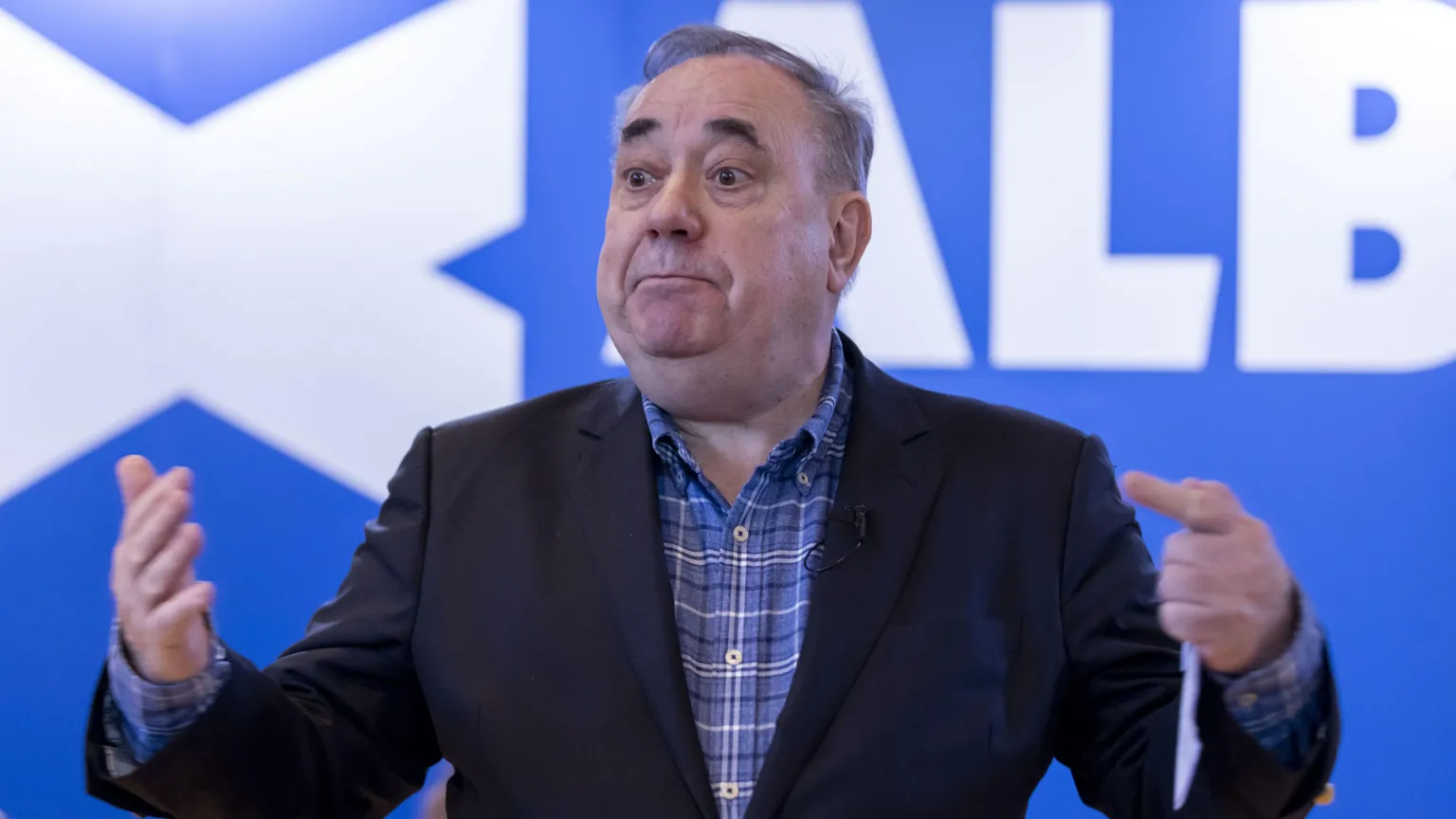
Scottish Government Found in Contempt for Delaying Salmond Files
The Scottish government has been found in contempt by the Court of Session for intentionally delaying the publication of the so-called Salmond files.
The court determined that the government did not commence redacting the documents until after Christmas, despite being instructed to begin on 1 December of the previous year.
The documents, central to a prolonged legal dispute concerning a Freedom of Information (FOI) disclosure, were ultimately published in February.
The court reprimanded the government and ordered it to cover legal expenses incurred by the information commissioner.
A Scottish government spokesperson stated that it "acknowledged and respected" the ruling.
The files pertain to the inquiry into whether former First Minister Nicola Sturgeon breached the ministerial code in her handling of complaints against her late predecessor, Alex Salmond.
Sturgeon was cleared of breaching the code following an independent inquiry conducted by lawyer James Hamilton in 2021.

The information commissioner, David Hamilton, issued a warning letter to the Scottish government on 16 January, mandating the publication of the documents by 22 January.
The government had been found to have "incorrectly withheld" the information on the basis of cost.
After missing the deadline, Hamilton referred the matter to the Court of Session.
In a written judgment, Lady Poole stated that the Scottish government "deliberately failed" to carry out the redaction by the date set by the information commissioner.
The judge criticized the government's claim that they would comply "as soon as possible," describing it as demonstrating a "lack of respect" for the commissioner's role.
Lady Poole also noted that the government failed to "tender an apology" to the commissioner or admit contempt.
She concluded that no measures had been taken to "rectify matters and avoid future repetition."
Lady Poole's judgment acknowledged that the government provided a "partial explanation" for the delay, citing additional complexities due to court orders and the substantial volume of documentation involved.
It also noted that the information commissioner might have allowed a slightly extended period for compliance because of the Christmas holidays.

However, these factors did not justify the lengthy delays before redaction work began, especially considering the "significant resources" available to the government.
The ruling emphasized that the court not exercising its powers would send the wrong message to other public bodies, undermine the commissioner's authority, and subvert the rule of law.
The amount of legal expenses the government must pay was not disclosed.
David Hamilton stated that the decision to refer the case to the Court of Session "had not been taken lightly."
"Failing to comply with my decisions undermines the fundamental principles of FOI and damages the information rights of individuals. I trust that the Scottish Ministers will now reflect carefully on this ruling and review their broader legal approach to certain aspects of FOI compliance - and particularly those relating to the [James] Hamilton Inquiry."
The Scottish government confirmed it complied with the commissioner's decision on 24 February.
A spokesperson added:
"As Scottish ministers set out to parliament, they have to balance their obligations under Freedom of Information legislation and the need to avoid identification of alleged victims in cases of sexual assault. We acknowledge and respect the ruling in this case and will consider it in detail."
Background: Why Was the Government Taken to Court?
The dispute centers on James Hamilton's investigation into the alleged breach of the ministerial code.
Following Sturgeon's clearance, an FOI request was submitted to the Scottish government seeking disclosure of all written evidence involved in the investigation.
The government initially rejected this request, arguing that Hamilton, as an independent advisor on the ministerial code, was not subject to FOI legislation.
However, the information commissioner intervened and ordered the government to reconsider its position.
The government challenged this decision in the Court of Session, initiating a series of complex appeals.
Alex Salmond, who died in 2024, had successfully sued the government in 2019 over its mishandling of harassment complaints against him.
He was cleared in 2020 of sexually assaulting nine women.
In February, First Minister John Swinney explained that the commissioner's request was complicated by the need to redact information to avoid identifying women who had made allegations against Salmond.
At the time of his death, Salmond was pursuing another lawsuit against the government alleging misfeasance, a civil term referring to the wrongful exercise of lawful authority.
Paul McManus, drummer with Glasgow rock band Gun, took over funding the case in February after Salmond's estate was placed into sequestration—equivalent to bankruptcy—due to costs linked to the court action.