

Douglas Alexander will remain Secretary of State for Scotland after new UK Prime Minister Andy Burnham unveiled his cabinet on Monday. Burnham, the former mayor of Greater Manchester, replaced Sir Keir Starmer as prime minister after becoming Labour leader last week.
A number of cabinet ministers from the Starmer government confirmed they were leaving their posts, including Peter Kyle, Rachel Reeves and David Lammy. Alexander, who left Downing Street shortly after 23:00 on Monday, said he was "very happy" to keep his job.
In a statement posted on social media, external, he said:
It is an honour to be asked to continue my work as Secretary of State for Scotland.
In these challenging times, I am determined to be Scotland's voice around the Cabinet table, working constructively to solve problems and seize opportunities on behalf of the Scottish people.
I am delighted to have the new prime minister's confidence in the role and work we have been doing for the past year. His desire to decentralise power to enable communities to shape their own futures rather than being directed from the centre will chime with Scottish sentiment as much as the rest of the UK.
Who is Douglas Alexander and why is he significant?
Douglas Alexander was first appointed to the Scottish Secretary job from 2006 to 2007. A former minister in the Tony Blair and Gordon Brown governments, he was first elected to represent Paisley and Renfrewshire South in 1997.
He was favoured by the leadership for his intellect and presentational skills, and as campaign co-ordinator he played a central role in delivering Labour's 2001 general election victory. But the Labour veteran lost his seat to the SNP's Mhairi Black in 2015, only returning to politics at the 2024 general election.
He returned to the Scottish Secretary job in September last year after the sacking of Ian Murray in a government reshuffle. Alexander had previously served as Keir Starmer's Minister for Trade Policy and Economic Security.
How did Andy Burnham’s takeover happen?
Andy Burnham made his first speech as prime minister on Monday.
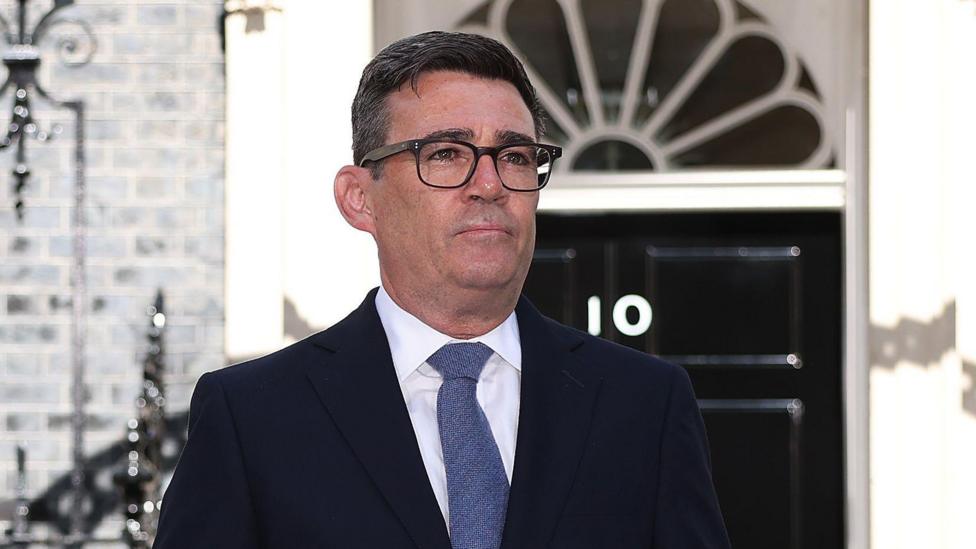
Burnham was the only candidate to run for the UK Labour leadership after Keir Starmer signalled his intention to resign as prime minister in June. Pressure from within Labour had been mounting on Sir Keir to outline a timetable for his departure following Burnham's victory in the Makerfield by-election.

Discontent towards Starmer's leadership had also been rising before a poor set of election results in England, Wales and Scotland in May. This included over his decision to change direction on three major policies in a month after pressure from within his own party.
Sir Keir's decision to appoint Lord Mandelson as UK ambassador to the US also led to questions about his judgement and the wider Downing Street operation.
Lord Mandelson was sacked after new information came to light about the depth of his relationship with the late convicted sex offender Jeffrey Epstein.
What has John Swinney said about devolution?
Earlier, First Minister John Swinney congratulated Burnham on becoming prime minister. Swinney said his government would "engage constructively" on the devolution of responsibilities to Scotland.
He said he would push Burnham for the power to hold a second independence referendum, however Burnham recently confirmed he would maintain the UK government's opposition to a second poll. Swinney also said he wanted Burnham to devolve energy and economic powers to Scotland.
How have Scottish party leaders responded?
Scottish Labour leader Anas Sarwar said he was confident that Burnham would deliver on the change "our country so desperately needs".
We must re-empower those communities that have been forgotten about and left behind, and re-industrialise every part of our great country
Sarwar had previously called on Burnham's predecessor Sir Keir to stand down in February, saying "too many mistakes" had been made during Starmer's premiership.
Reform UK Scotland leader Malcolm Offord wished Burnham well, but called for action instead of "empty promises".
Meaanwhile the Scottish Greens urged the new prime minister to rule out new North Sea drilling, and "invest in communities" and deliver a "genuinely just transition".
Key Facts
- Douglas Alexander will remain Secretary of State for Scotland after Andy Burnham unveiled his cabinet on Monday.
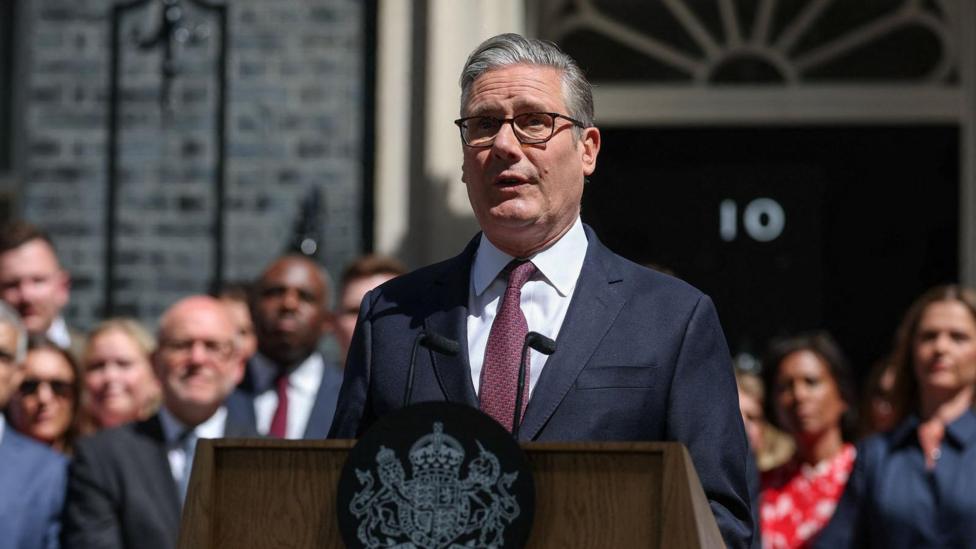
- Burnham replaced Sir Keir Starmer as prime minister after becoming Labour leader last week.
- A number of Starmer government ministers, including Peter Kyle, Rachel Reeves and David Lammy, confirmed they were leaving their roles.
- John Swinney said his government would "engage constructively" on devolution, while seeking more powers for Scotland.
- Scottish party leaders reacted with support, caution and pressure over independence, energy and economic policy.


