

Louise Haigh’s political rise stalled after Labour returned to power, when she resigned as transport secretary four months into the job following the revelation that she had pleaded guilty to a fraud offence in her twenties. She has now been brought back into government by Andy Burnham, who has given the Sheffield MP the Cabinet Office and the title of first secretary of state.
The move restores Haigh to a central role in Burnham’s administration. Before his arrival in Downing Street, she was among a small group of trusted allies involved in “access talks” with civil servants, and later played a significant part in building his route back to Westminster.
After leaving the cabinet in November 2024, Haigh remained a prominent figure on the backbenches. She helped organise the Labour rebellion against proposed welfare cuts last year and revived the Tribune group, a caucus dating back to the 1960s that has become a home for the party’s “soft left” wing, which has also supported Burnham’s rise.
As she became more critical of the Starmer government, Haigh signed up to the Burnham project in the run-up to elections scheduled for May this year, reportedly after meeting him in Manchester to sound out his plans for power. She then oversaw his successful bid to return to Westminster as MP for Makerfield, while living out of an AirbnB and running a campaign headquarters in a community club used for weddings, tribute bands and exotic bird auctions.
Haigh has said she was initially sceptical about using the seat outside Wigan as the launch pad for Burnham’s Westminster return, describing it as a “huge risk”. But the gamble ultimately paid off for both of them, clearing the way for Burnham’s return to Parliament and Haigh’s elevation back into the cabinet.
Where did Haigh’s political story begin?
Born and raised in Sheffield, Haigh has said party politics was not a major part of her early life before she joined Labour in her teens after being influenced by a “very left-wing economics teacher”. Her parents separated when she was in her early teens and she lived with her mother, who enrolled her in a private girls’ school in the city, something Haigh later said she found “quite uncomfortable” as a Labour MP.
She began a degree at the London School of Economics but left after “absolutely hating” student life in London, instead choosing to study politics at Nottingham University. She later worked for several Labour MPs, including veteran party figure Jon Trickett and Lisa Nandy, and also became a volunteer police officer for the Met.
As shop steward for parliamentary staff at Unite the union, she led a cost-of-living campaign to reduce the price of food and snacks on the parliamentary estate and to reopen a mothballed bar run by a “workers' co-operative”.
In 2015, she was elected MP for Sheffield Heeley at the age of 27 and nominated Jeremy Corbyn rather than Andy Burnham in that year’s Labour leadership contest, a decision she has said she regretted in later years. She later said she got to know Burnham after her mother confronted him at a party hustings in Doncaster to ask whether he planned to give her daughter a job if his bid for the Labour crown succeeded.
Corbyn gave Haigh her first shadow ministerial post and kept her on the frontbench even after she backed Owen Smith’s unsuccessful 2016 challenge to replace him as Labour leader. Although she nominated her former boss Lisa Nandy in the 2020 contest to succeed him, eventual winner Sir Keir Starmer promoted her to the shadow cabinet as shadow Northern Ireland secretary before she later became shadow transport secretary.
It was in that role that she developed a close working relationship with England’s metro mayors, including Burnham, who by then was serving his second term as mayor of Greater Manchester.
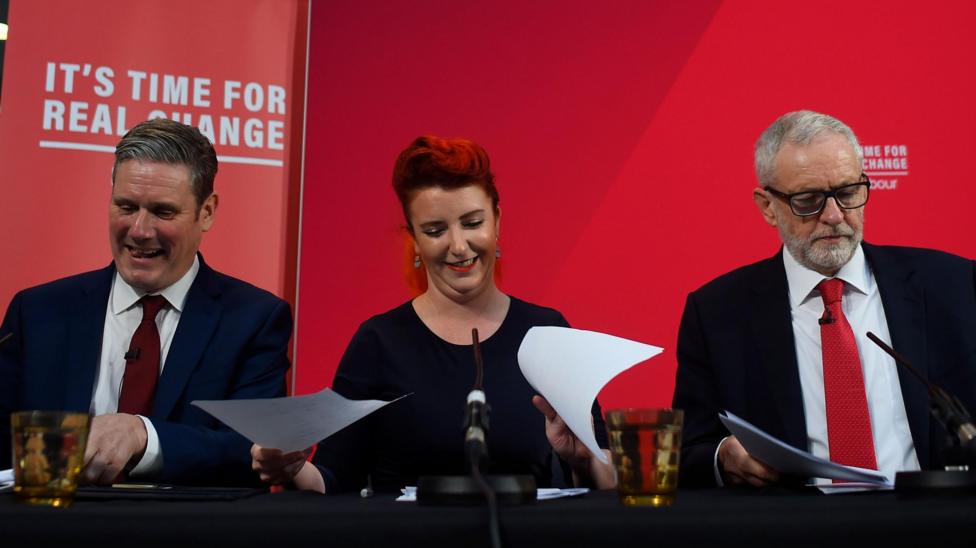

Haigh says online comments about her hair colour encouraged her to make it “even wilder”.
What happened when Labour entered government?
After Labour’s election victory, Haigh became transport secretary and quickly made headlines by deciding to award train drivers a 14% pay rise over three years to end their long-running strike action. Her bright dyed hair and left-leaning reputation also led to her being dubbed “Red Lou” in the press.
She drew criticism from the prime minister after attacking P&O Ferries’ decision to sack hundreds of workers in 2022, with her remarks putting the attendance of the company’s parent at a government investment summit in doubt and prompting a public rebuke.
A month later she resigned after the media revealed her previous conviction for making a false report to police in 2013. The case dated back to her time at insurance giant Aviva, when a work phone she had reported as stolen was later found. Haigh said the incident had been a “genuine mistake” and that she had pleaded guilty on the advice of her lawyer.
Haigh said she had told Sir Keir about the episode while Labour was in opposition, but was asked by Downing Street to resign after the story emerged because “additional information” had come to light.
“But at no point would any of them tell me what that additional information was,”she said in a recent interview.
Her departure from the cabinet gave her the freedom to set out the political ideas now expected to feature prominently in Burnham’s administration. In two essays published shortly before his Makerfield campaign, she outlined a plan for a radical reshaping of the British state.
That included a substantial loosening of Labour’s debt rules, with the rolling five-year debt target extended to 10 years, and a call to
“re-examine the mandate”of the Bank of England with a stronger focus on growth. She also backed several policies previously supported by the new prime minister, including a new tax on the value of land to replace stamp duty on house purchases.
“The status quo is not sustainable,”she wrote.
“We cannot afford to wait any longer before we change the system we inherited.”
That is now the task she has been brought back to deliver from a seat at the centre of the new Burnham administration.
Haigh admits pleading guilty to 2014 criminal offence
Louise Haigh's swift resignation prompts questions


