Legal Ruling on Prison Housing Guidance
A judge has declared that the Scottish prison guidance permitting some transgender prisoners to be housed according to their gender identity, rather than their biological sex at birth, is unlawful.
Judge Lady Ross stated that sex segregation in prisons must be determined by biological sex, referencing a Supreme Court ruling from April of the previous year concerning the definition of a woman under equalities law.
Judicial Review Challenge
The campaign group For Women Scotland initiated a judicial review against the Scottish government’s guidance, arguing that only individuals born biologically female should be accommodated within the women's prison estate.
Government lawyers contended that restricting housing in this way would violate transgender prisoners' human rights and could increase the risk of suicide among this population.
However, Lady Ross ruled that the guidance was "in conflict with the requirement that prison accommodation be provided separately for men and women" and described it as "a mis-statement of the law".
"In all the circumstances, the prisons guidance is unlawful."
Current Scottish Prison Service Policy
The Scottish Prison Service (SPS) currently employs individual risk assessments intended to prevent individuals who pose a danger to women from being placed in the female estate.
Nevertheless, the policy allows for certain cases where transgender women, who were born biologically male, may be housed alongside women if they are assessed not to pose an unacceptable risk.
Supreme Court Ruling and Human Rights Considerations
The Supreme Court ruling highlighted that all prisoners retain rights under the European Convention on Human Rights (ECHR), including transgender prisoners.
It acknowledged that Article 8 of the ECHR, which protects private and family life, is relevant in decisions regarding prison accommodation.
However, the court clarified that Article 8 does not guarantee an automatic right for transgender prisoners to be housed in prisons designated for the opposite biological sex.
Lady Ross emphasized that this right is qualified and may be limited when there is a legitimate justification, such as maintaining sex-based segregation within prisons.

The judge also recognized that exceptional circumstances might arise.
In cases involving serious threats to life, such as suicide risk, Article 2 of the ECHR—which protects the right to life—may necessitate consideration of accommodation in a prison for the opposite biological sex.
Background and Reactions
For Women Scotland brought the case following its successful appeal to the Supreme Court regarding the definition of a woman under the Equality Act.
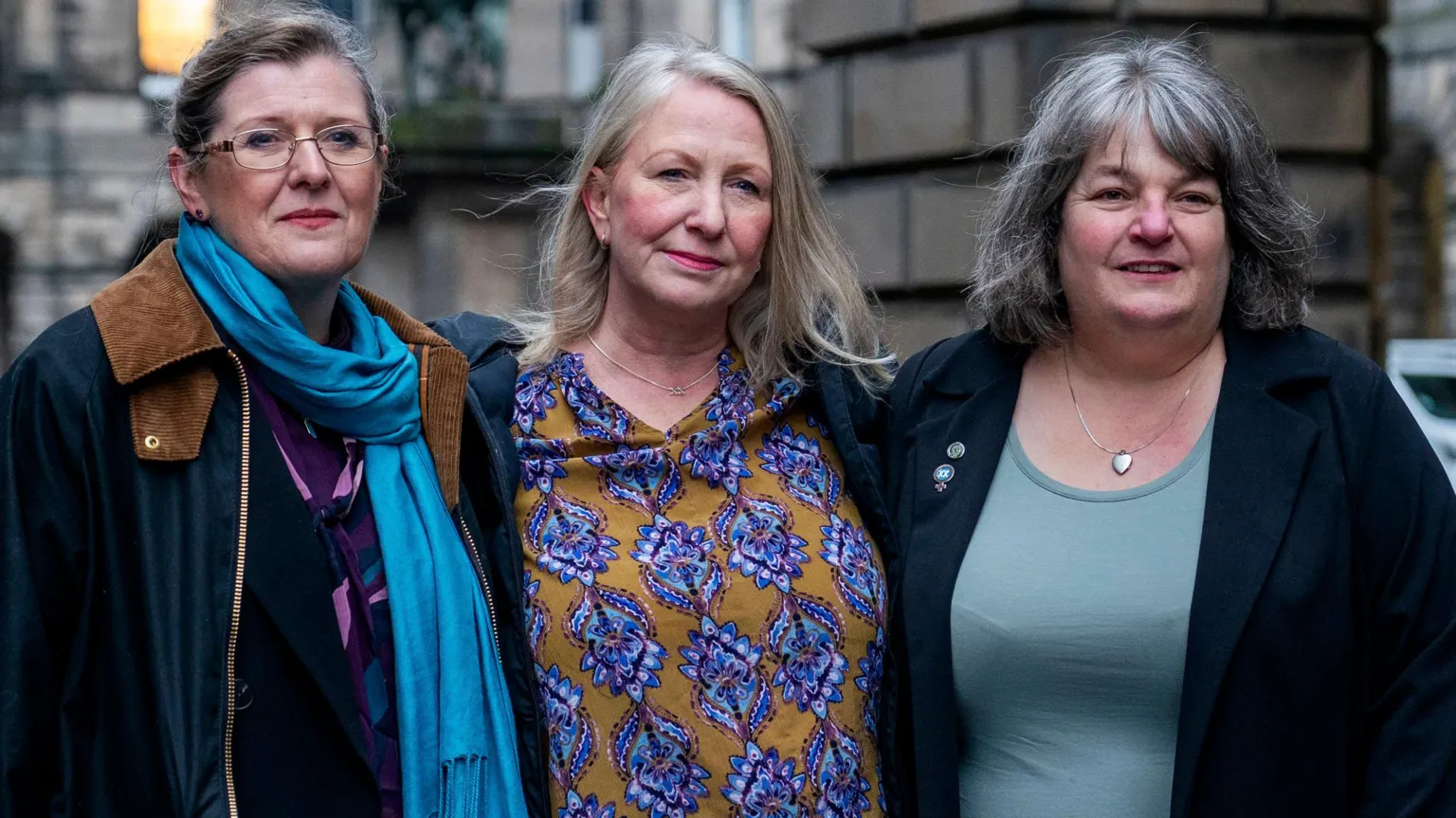
"We are delighted to have won a comprehensive victory," said Susan Smith, co-director of For Women Scotland.
"We hope that, in future, the Scottish government will start to listen to us rather than the lobby groups who drafted these policies and have so egregiously misled MSPs and MPs."
"We should never have needed to take this case and we hope this will be the last time that we are forced to go to law to defend the rights of women."
Previously, First Minister John Swinney informed MSPs that the government accepted the Supreme Court ruling but maintained that the prisons guidance "does not need to be changed."
He stated that ministers "must wrestle with complex issues and make difficult decisions which balance and reflect the interests and rights of individuals."
Scottish Conservative equalities spokesperson Meghan Gallacher criticized the SNP for "failing" to implement the Supreme Court ruling.
She called on John Swinney to rule out defending any further gender self-identification policies in court and to implement the verdict across public bodies.