

Recovery Operation Nears Completion
The operation to recover the Resolute, a ship that ran aground off the Pembrokeshire coast, is approaching its final stages.
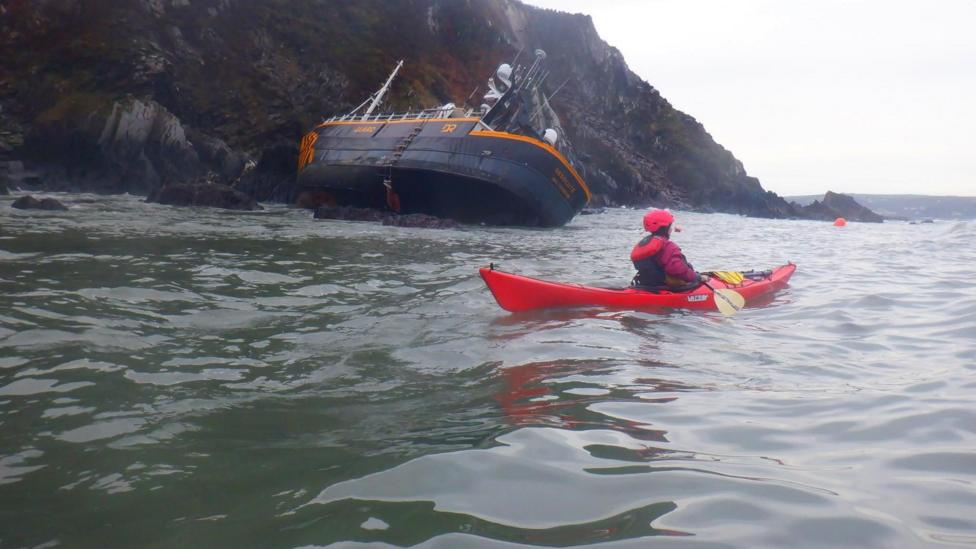
The 24m (78.7ft) guard boat, which serves an offshore wind farm near Ireland, is believed to have drifted onto rocks in west Wales during rough seas on December 11 last year.
The vessel became stranded near Fishguard, where four crew members were safely rescued by lifeboat. HM Coastguard confirmed that the vessel remained aground and under the responsibility of its owner.
Specialist marine contractors Jevington Logistics, based in Pembroke Dock, commenced recovery efforts on June 29.
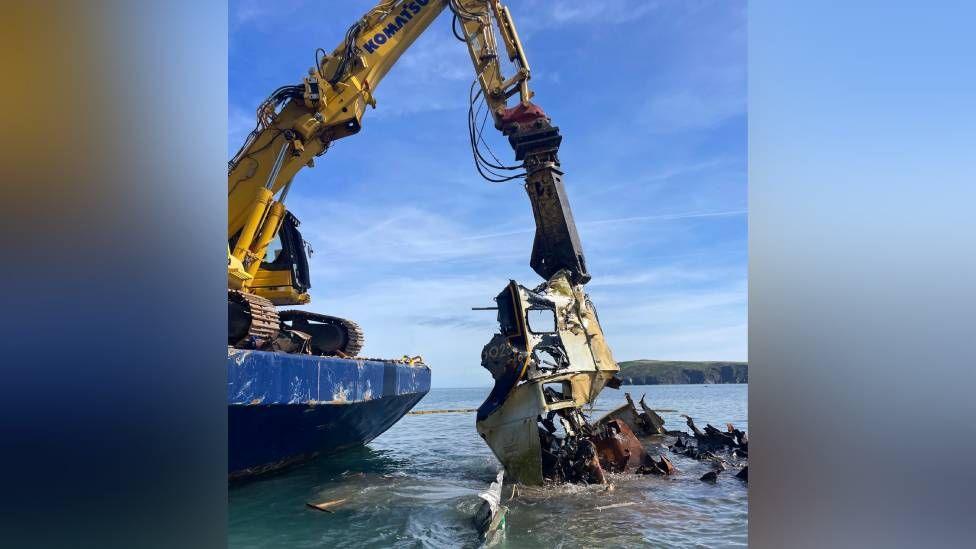
Method of Dismantling
Jevington Logistics employed an excavator equipped with shears mounted on a 36m (111.5ft) barge to cut the vessel into large sections. Subsequently, these sections were further cut into smaller pieces using oxy-propane torches by the staff before being transported to a local recycling company.
Steve Bradley, operations director at Jevington Logistics, estimated that approximately 110 tonnes of steel would be salvaged from the "well-built" ship. He provided these details while speaking from a tugboat near the dismantling site.

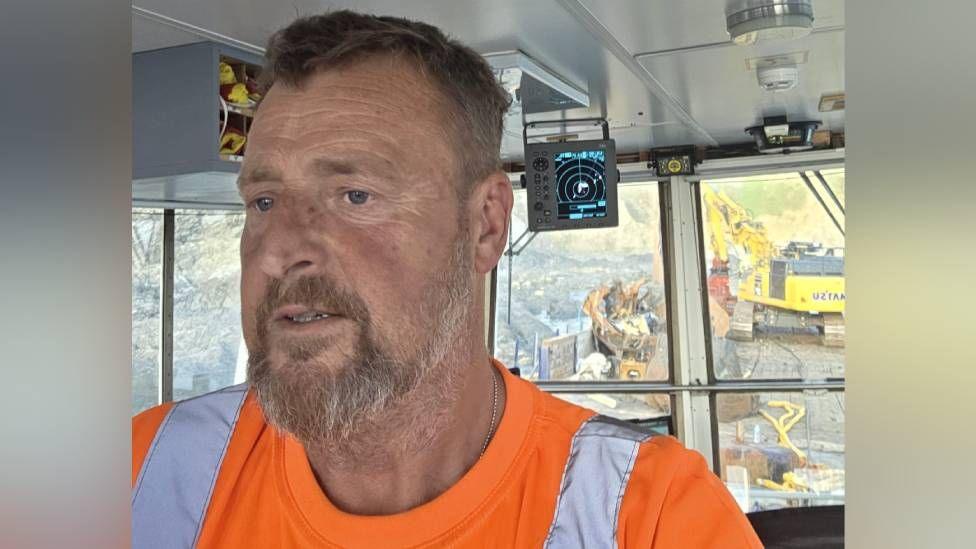
"I'm currently up on the bridge of the Forth Trojan and right in front of me is the barge where we've got the excavator working away, nibbling at the metal superstructure of the vessel right on the bow."
Bradley explained that once the main dismantling was completed, the company would conduct thorough searches of the nearby rocks and seabed to ensure no debris remained from the Resolute.
Environmental Precautions and Fuel Removal
In February, HM Coastguard reported that the majority of the Resolute's fuel had been transferred ashore. Since a small initial fuel spill was identified, there have been no further reports of pollution.
"We installed a boom around the perimeter of the wreck, and the MCA came out and were happy with all the measures in place for the environmental protection practices," Bradley said.
Challenges and Technical Details
Bradley noted that dismantling was the most effective method to clear the stranded vessel, which had sustained "some quite big holes" in its hull.
"There's a 12m-wide channel that you can use to get onto the [ship's] starboard side. So we chose... a shallow draft barge. It needed to have 'spuds' which are legs that drive into the seabed and hold it in position.
"This was the only way to do it, I believe - systematic sectioning into five sections, and then lifting onto the barge, and then dismantling those large sections on the barge itself."
One of the operational challenges was positioning the barge close to the Resolute. Additionally, adverse weather conditions caused a two-day pause in work due to high sea swell.
Local Interest and Ongoing Monitoring
The incident has attracted significant local attention in Pembrokeshire since the ship ran aground.
The Maritime and Coastguard Agency (MCA) has been actively monitoring pollution prevention efforts throughout the recovery process.


