

US-Iran deal takes immediate effect, says Pakistan
Pakistani Prime Minister Shehbaz Sharif stated earlier that the agreement between the US and Iran was taking “immediate effect” following signatures from both parties.
“As a first step, Islamic Republic of Iran will instantly reopen the Strait of Hormuz and the United States of America will immediately lift the naval blockade,”Sharif said.
Sharif, who played a role in mediating the memorandum of understanding, also mentioned that a formal signing ceremony would take place in Switzerland on Friday to
“commemorate this landmark event and commence with the technical level talks.”
Summary: Tehran says it will charge ships crossing Strait of Hormuz after 60 days
Welcome to our continuing live coverage of the crisis in the Middle East.
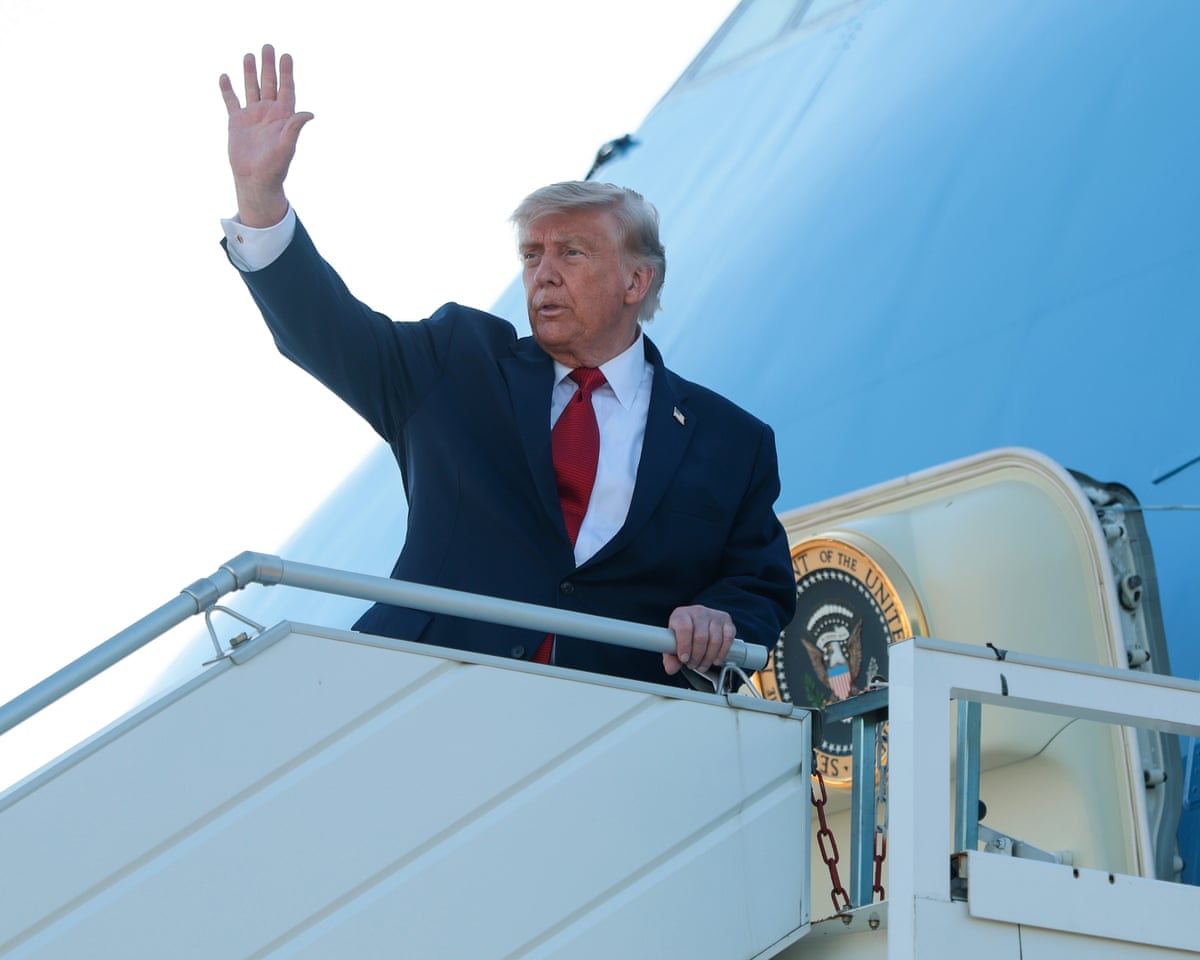
The United States and Iran have released the text of an interim agreement signed by their presidents to end hostilities. However, former US President Donald Trump has threatened to resume attacks and kill Iranian officials if Tehran fails to honor its commitments.
While attending a G7 summit in France with other leaders, Trump also withdrew at least one of his earlier justifications for initially attacking Iran, stating it would
“be unfair”for Tehran not to possess ballistic missiles, despite his previous vow to obliterate them.
“We’re going to bomb the hell out of them if they violate the agreement,”Trump said of Iran at a press conference.
“I don’t want them to. I want them to honour the agreement.”
The 14-point memorandum of understanding extends an April ceasefire by another 60 days, including in contested regions, to allow the two sides to negotiate a final truce over this period.

The agreement also includes the full resumption of maritime traffic
“with no charge”in the Strait of Hormuz, the lifting of a US blockade of Iranian ports, the waiving of US sanctions on Iran, the unfreezing of its assets, and a $300 billion investment fund dedicated to Iran’s post-war reconstruction.
However, lead Iranian negotiator Mohammad Bagher Ghalibaf stated that the Hormuz Strait
“will not return to prewar conditions”and that Iran would impose charges on ships transiting the waterway after the 60-day toll-free period stipulated in the agreement. Trump has previously indicated he will not accept tolls being imposed for crossing this vital energy route.
Iran’s leaders did not address the new threats while celebrating the deal. Ghalibaf said on state television:
“Everything we sought to achieve through military action, we obtained several times over through negotiation; it was not even comparable.”He also claimed the deal included the unfreezing of billions of dollars in Iranian assets.
Trump and Iranian President Masoud Pezeshkian both digitally signed the memorandum of understanding in English and Farsi, according to US and Iranian officials. Iran’s foreign ministry confirmed the agreement was already in effect as of Wednesday, a position also supported by mediator Pakistan.
Under the agreement, Iran also commits not to develop nuclear weapons, reaffirming a vow it has maintained for decades. It agreed to an on-site
“down-blending”of its stockpile of enriched uranium.
Trump signed the agreement just before attending a grand dinner with French President Emmanuel Macron at the Palace of Versailles, the historic site where the treaty formally ending the First World War was signed. G7 leaders praised the agreement at their summit in France. The US has announced a formal signing ceremony for the deal is scheduled in Switzerland on Friday.
Oil prices declined again on Wednesday amid prospects for the reopening of the Hormuz Strait, with Brent crude futures falling below $80 per barrel — their lowest level since the war’s onset — but later rebounding by more than 1% after Trump threatened renewed violence. Following the signing, US crude dipped 1.25% to $75.83 a barrel, while Brent crude was down 1.4% to $78.41 a barrel.
Donald Trump entered the war with maximalist goals and exits it with a pragmatic decision to end the conflict despite the political cost, according to analysts.
With news agencies


