Opening summary
Hello and welcome to ’s live coverage of the crisis in the Middle East.
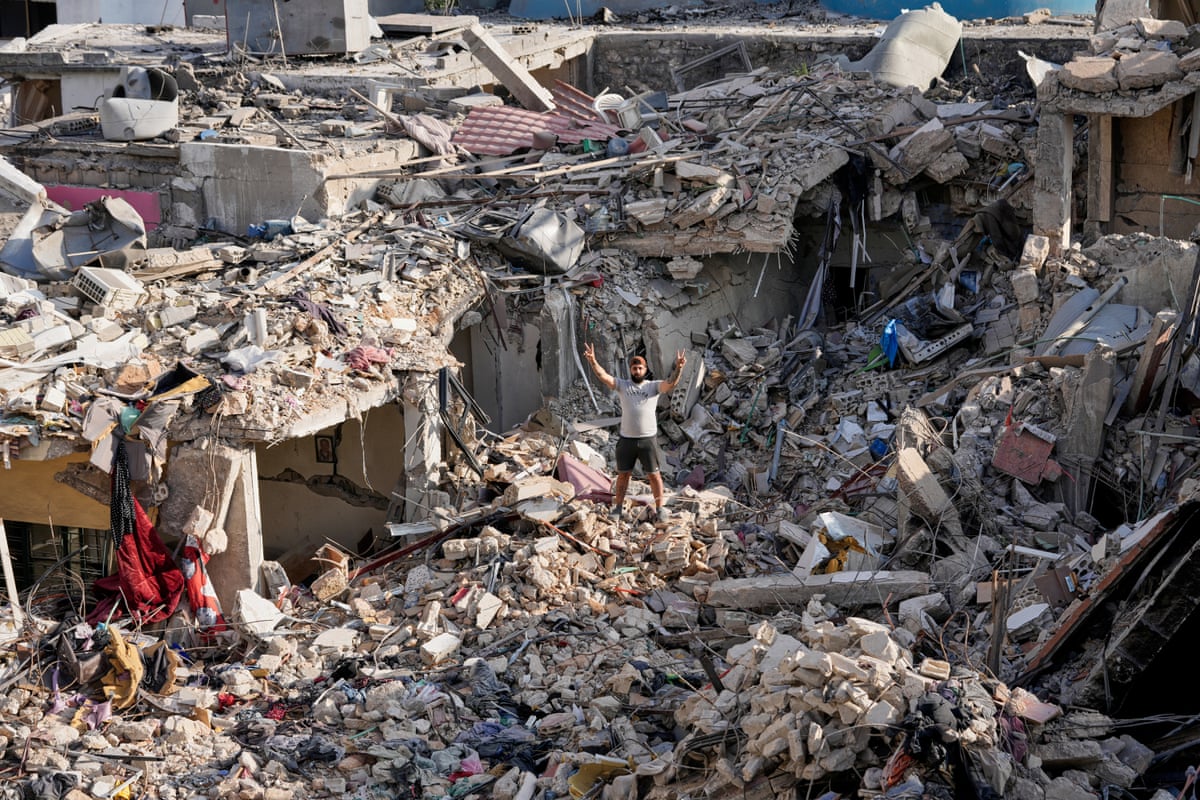
Iran’s military has issued a warning of a potential response to Israel following airstrikes in southern Lebanon that resulted in four fatalities, despite an agreement reached between Tehran and Washington aimed at ending the Middle East conflict, including hostilities in Lebanon.
Lebanon’s National News Agency reported that Israeli warplanes targeted the southern town of Nabatieh al-Fawqa and that a drone strike occurred in Ansariyeh on the coast earlier this morning. The Israel Defense Forces (IDF) have not immediately commented on these reports.
In an update provided yesterday, the IDF stated it intercepted “several rockets” launched by Hezbollah towards its forces operating in southern Lebanon and that it struck and destroyed the rocket launcher.
Hezbollah has not released any recent statements claiming responsibility for attacks on Israeli targets in southern Lebanon. The group’s deputy leader, Naim Qassem, is scheduled to deliver a televised address today, according to Hezbollah’s Al-Manar TV.
The Iranian military’s central command, Khatam al-Anbiya, declared that Israel must cease its acts of aggression in southern Lebanon or face “a harsh response” from Iranian forces. The command accused Israel of violating the ceasefire agreement in Lebanon “84 times” since the deal was announced.
Iran’s top diplomat and foreign minister, Abbas Araghchi, stated that a peace deal with the United States would be incomplete without the withdrawal of Israeli forces from territories occupied during the conflict. He said,
“Without the withdrawal of Israeli forces from the territories they occupied during this war, the war has not fully come to an end.”
Concerns have been mounting that Israel’s actions could undermine diplomatic efforts to end the Middle East war. Former US President Donald Trump criticized Israel, describing its conduct as irresponsible.
“Israel has been fighting Hezbollah for too long and too many people are being killed,” Trump said. “You don’t need to knock down an apartment house when you are looking for somebody because there are a lot of people in those apartment houses, and they are not all Hezbollah, that I can tell you.”
A US-Iran agreement intended to end the Middle East war is scheduled to be signed at Switzerland’s Burgenstock resort on Friday, the Swiss foreign ministry confirmed to AFP. The resort, located near Lucerne in central Switzerland, is noted for its difficult access and high security. The site was proposed by Pakistani and Qatari mediators, alongside the US and Iran, according to Switzerland’s foreign ministry.
Following the initial signing, two months of final negotiations will commence immediately. Officials told AFP that talks will continue for a 60-day period after the ceremony, focusing on plans for lifting economic sanctions and decisions regarding Iran’s nuclear program.
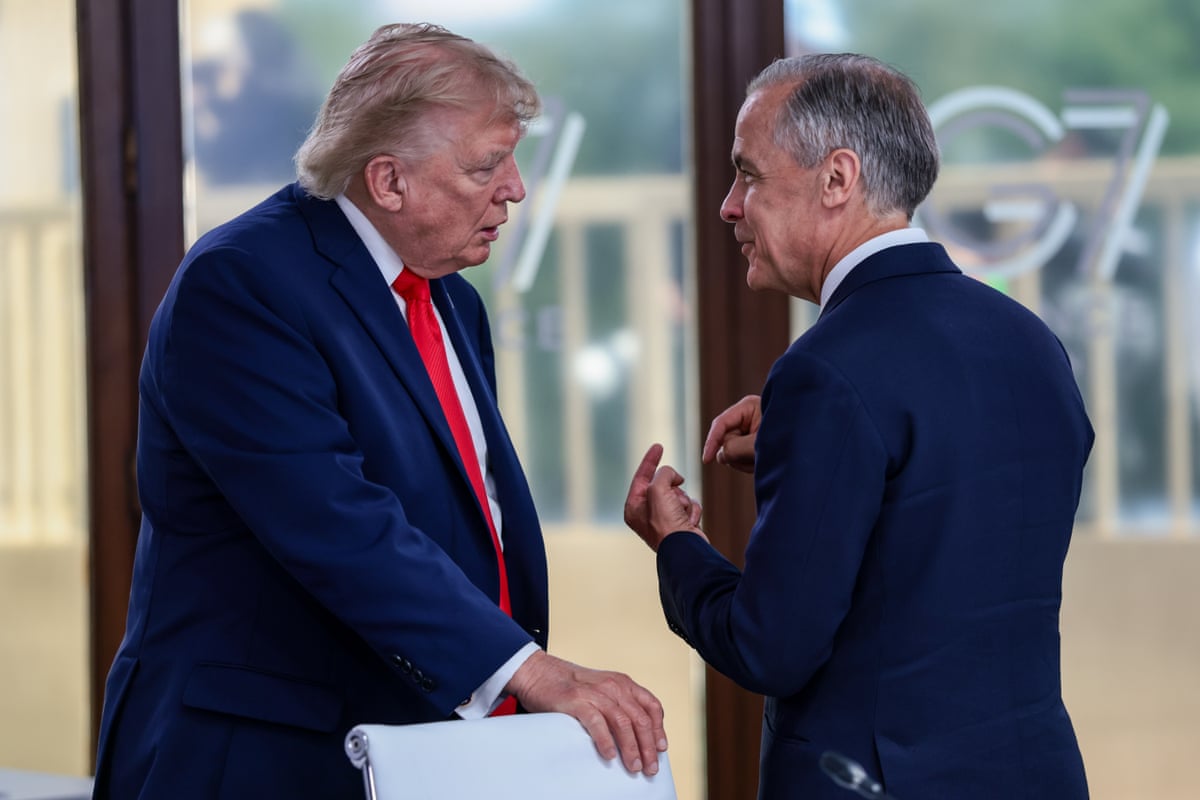
Trump stated he intends to submit the deal with Iran to the US Congress for review. At the start of a meeting with UAE President Sheikh Mohammed bin Zayed Al Nahyan on the sidelines of the G7 summit, he said,
“I like the idea, send it to Congress please. I mean who wouldn’t approve it.”
Speaking at the G7 summit, Trump also announced that the Strait of Hormuz will be open by Friday and that the full text of the peace deal will be released in a “formal setting.” He expressed expectations that the “second stage” of the deal will proceed quickly.

The Wall Street Journal reported, citing sources familiar with the matter, that the US will allow Iran to immediately resume selling oil and fuel as part of the agreement to end the war. A US official told that Iran’s ability to sell oil is contingent upon compliance with the deal’s terms, which include ensuring free navigation through the Strait of Hormuz and refraining from acquiring nuclear weapons.
Iranian Deputy Foreign Minister Majid Takht-Ravanchi announced that the two-month US naval blockade on Iranian ports has been lifted ahead of the formal signing of the peace agreement. He stated,
“The lifting of the blockade was something we had emphasised from the outset. It has now begun, and the blockade has been lifted prior to the formal signing”
scheduled for Friday, according to the Iranian government’s website.
Qatar, a key mediator between the US and Iran, expressed cautious optimism that the framework peace agreement could enhance security in the Middle East. Foreign ministry spokesperson Majed Al Ansari told reporters in Doha,
“We are cautiously optimistic that the signing of the memorandum of understanding will lead to the next phase of regional security through the talks that will take place on the nuclear programme and on other issues.”
He also praised Pakistan’s mediation efforts.
Canadian Prime Minister Mark Carney described the US-Iran memorandum of understanding to end hostilities in the Middle East as a “gamechanger.”
“Not just for this situation … it allows us – and this is what’s happened in the meeting – to step back and look anew at Ukraine,”
he told CNN on the final day of the G7 summit in France.
Carney said he has seen a copy of the tentative deal struck between Washington and Tehran, which reportedly calls for the immediate lifting of the US naval blockade on Iranian ports and the reopening of the Strait of Hormuz.
“I have to say, it’s exceeded my expectations,”
he added.
The terms of the deal have not been publicly disclosed, and Carney did not reveal how he obtained a copy, only stating,
“we have our sources.”
He said the agreement “sets the groundwork to ensure Iran doesn’t have a nuclear weapon,” adding,
“The Rubicon, if I can use that metaphor, has been crossed.”