Introduction
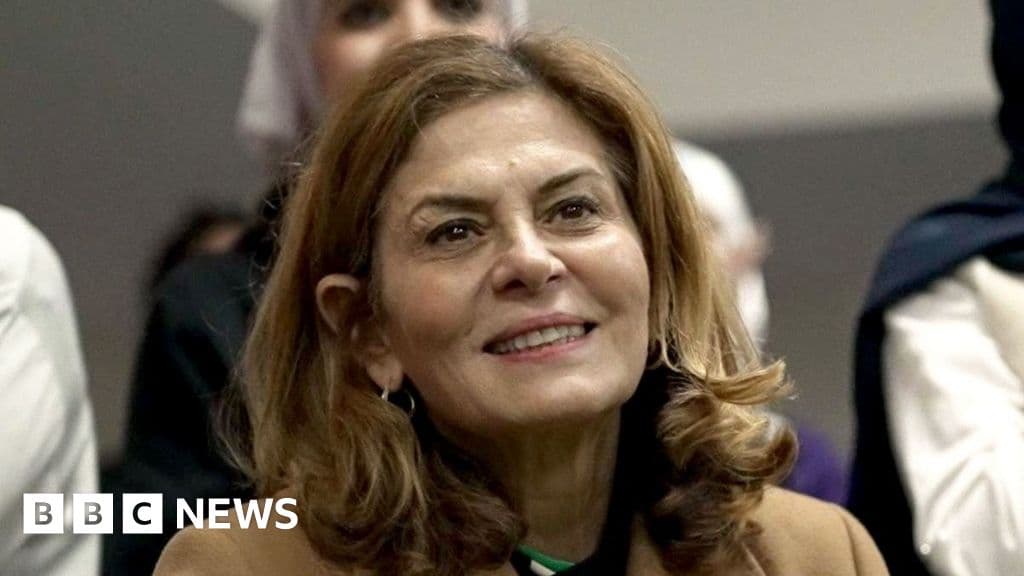
"On the first day, I asked 'why are there no more women?'"says Hind Kabawat.
Hind Kabawat serves as Syria's minister for social affairs and labour, standing as the only female minister in the transitional government responsible for guiding the country from conflict towards peace.
The initial months of this government have been marked by sectarian violence that has claimed thousands of lives, with many of Syria's minority communities attributing blame to government forces.
Kabawat, once an opposition leader in exile, acknowledges that the government has made errors since President Ahmed al-Sharaa's rebel forces entered the capital on 8 December 2024, ending decades of the Assad family's authoritarian rule.
"Mistakes happen in transition,"she asserts.
She also points out that one of the president's significant oversights was not appointing more women to his cabinet, although he has promised her that more appointments will follow.
Within a cabinet largely composed of his close allies and some former fighters, Kabawat faces a demanding balancing act.
Responsibilities and Priorities
In a special report for the BBC's Global Women, Kabawat was followed closely, revealing her extensive responsibilities covering Syria's most vulnerable populations, including orphans, widows, and families mourning the tens of thousands who disappeared during Assad's regime.
Her urgent priorities include creating employment opportunities, securing housing for millions displaced by nearly 14 years of civil war, and alleviating the suffering of those affected by recent clashes among communities.
Everything is pressing in a fractured and financially strained nation. According to the United Nations, 90% of Syrians live below the poverty line.
In early January, Kabawat visited Aleppo, a northern city, to inspect shelters housing thousands after fighting erupted between government forces and the Kurdish-led Syrian Democratic Forces (SDF), which have long controlled northeastern Syria.
Last summer, she attempted to deliver aid to a southern city predominantly inhabited by Druze, following deadly violence involving Druze, Bedouin, and Syrian government forces.
She also reached out to the family of an Alawite woman, from the same minority Shia sect as the Assad family, who accused armed men in military fatigues of rape.
Some have criticized Kabawat for not doing enough to heal divisions among Syria's diverse communities.
When asked if the government erred in its response to sectarian violence, she responds:
"Mistakes happen in transition, in post-conflict; no-one is happy about it, including the president."
She emphasizes that an inquiry was established and states:
"Many of those who committed those crimes are in prison."
Background and Approach
Building trust and peace has been central to Kabawat's career. Educated in Syria, Lebanon, Canada, and the United States, she is a lawyer and negotiator who played a prominent role in the exiled Syrian opposition during the civil war.
Her most effective tool, she believes, is dialogue.
"It's taking time for people to say 'we trust you' after 50 years of dictatorship,"she explains, underscoring that trust is necessary both "people to people" and between the government and the population.
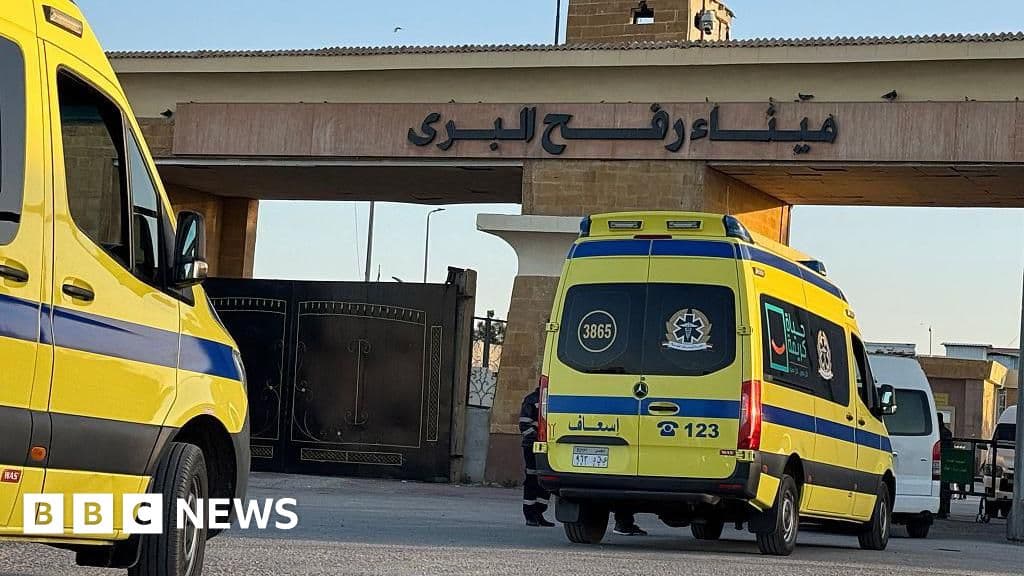
Accompanying her to Idlib, the provincial capital in the northwest and former rebel stronghold of Sharaa's Hayat Tahrir al-Sham forces, reveals her ongoing commitment. During the civil war, she worked there with Tastakel, a women-led organization she founded. The name translates roughly from Arabic as "becoming independent," reflecting her philosophy on rebuilding Syria.
Women’s Role in Syria’s Transition
In a brightly lit, crowded hall, women and some men from across Syria gathered to celebrate the end of the old regime and strategize on enhancing women's roles in decision-making.
For Kabawat, this is about assuming responsibility.
In recent indirect elections for the new transitional parliament, or People's Assembly, no women were elected from Idlib, and only 4% of seats nationwide went to female candidates.
"You should have been united and thought in a politically intelligent way to ensure we got one or two women elected,"she admonishes the women present.
The room buzzed with energy from articulate women, some wearing tightly wrapped headscarves, others in full veils, and some—including Kabawat—bare-headed.
This diversity reflects Syria's mosaic society. Initial fears that Sharaa and his supporters, who follow a strict Sunni Islamist interpretation, would impose harsher Islamist rules have largely not materialized, though concerns persist.
Sharaa, a former al-Qaeda...