

Lebanon Conditions Talks on Ceasefire
A senior official from the Lebanese president's office informed the BBC that Lebanon will only engage in direct negotiations with Israel next week if a ceasefire is established beforehand.
This announcement follows Israeli Prime Minister Benjamin Netanyahu's decision to authorize direct talks, citing "repeated requests from the Lebanese government."
A US State Department official stated that Washington will host a meeting next week "to discuss ongoing ceasefire negotiations" between Lebanon and Israel.
Continued Hostilities and Casualties
Israeli air strikes have persisted over Lebanon, with Lebanese authorities reporting 21 fatalities in the most recent attacks. Hezbollah has responded by launching additional rockets into various locations in Israel.
Lebanese officials reported that among the dead were seven members of the same family in the town of Abbassieh and 11 individuals in Zrarieh. Additionally, a medical center in Burj Qalaway was struck, resulting in two deaths, while a drone strike targeted an ambulance in Toul, though no casualties were reported in the latter incident.
The Israel Defense Forces (IDF) stated that on Thursday night, they targeted approximately 10 rocket launchers which had fired on northern Israel, and that operations to locate and destroy further launchers are ongoing.
Hezbollah continued rocket attacks overnight, triggering sirens across Israel. One rocket was fired at Ashdod, a southern coastal city and the furthest target in the current conflict, but it was intercepted by the IDF.
The group reported firing rockets at Kiryat Shmona, near the Israel-Lebanon border, at 10:00 (06:00 BST) on Friday, as well as at Misgav Am in the Upper Galilee region of northern Israel. There have been no reports of casualties from these attacks.
Hezbollah stated that its actions were in response to what it described as Israel's "violation" of the US-Iran ceasefire agreement.
Dispute Over Ceasefire Inclusion
There is significant disagreement regarding whether Lebanon was included in the US-Iran ceasefire declared by US President Donald Trump on Tuesday.
Pakistan, which mediated the truce, and Iran assert that Lebanon was included, whereas the US and Israel maintain it was not. Iran's Deputy Foreign Minister Saeed Khatibzadeh told the BBC on Thursday that Israeli strikes on Lebanon represent a "grave violation" of the ceasefire.

Conversely, speaking in Budapest on Wednesday, US Vice-President JD Vance stated,
"I think the Iranians thought that the ceasefire included Lebanon, and it just didn't."
Israeli Government's Position
In a statement addressed to residents of northern Israel on Thursday night, Benjamin Netanyahu declared that there was "no ceasefire in Lebanon."
He added,
"After repeated requests from the Lebanese government to open peace negotiations with us, I instructed the cabinet last night to open direct negotiations with Lebanon in order to achieve two goals: One - disarming Hezbollah. And the second - a historic and sustainable peace agreement between Israel and Lebanon."
Historical Context and Negotiation Efforts
Direct talks between Lebanon and Israel are highly unusual, as the two countries have historically communicated through intermediaries. Efforts to establish negotiations have been ongoing since a ceasefire agreement in November 2024, with US envoys previously mediating indirect talks between the two sides.
Impact of Air Strikes in Beirut
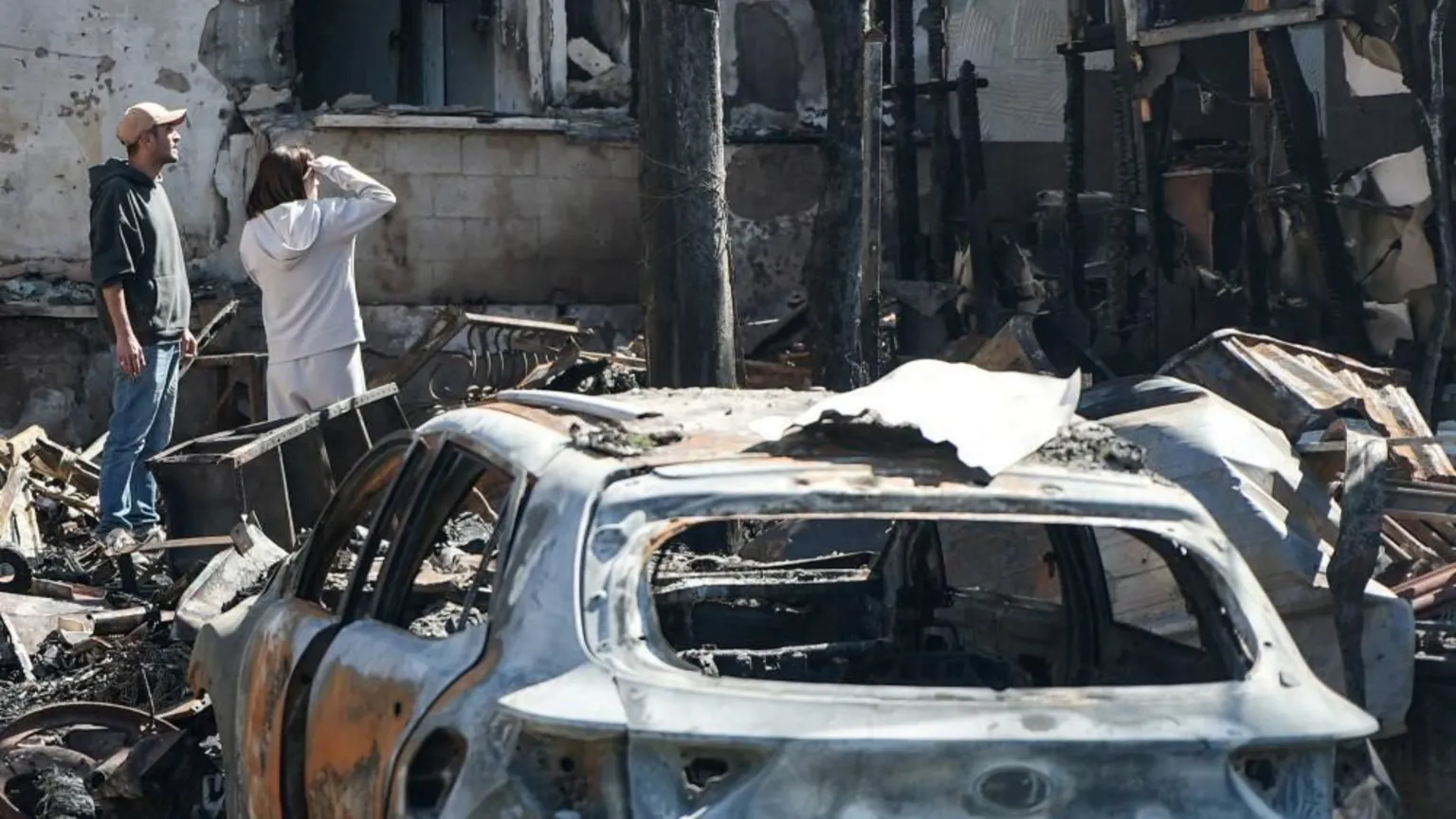
In Beirut, rescue teams continue to recover bodies following the heaviest Israeli air strikes since the onset of the latest fighting.
According to Lebanon's health ministry, more than 300 people were killed and over 1,000 wounded when Israeli jets conducted a 10-minute blitz across Lebanon on Wednesday.
Mohammad Hamoud, whose family owns a pharmacy in the Ain el Mreisseh district of Beirut, was at work in another part of the city, also under Israeli bombardment, when he learned that the pharmacy building had been hit.
"You cannot manage what happened, the number of bombs," Mohammad told the BBC. "In a very, very short period, complete damage everywhere. It was astonishing."
The IDF reported targeting "100+ Hezbollah headquarters, military arrays, & command-and-control centres."
Humanitarian Crisis and Aid Challenges
Meanwhile, UN aid agencies are warning of a growing humanitarian crisis in Lebanon, with more than a million people displaced and rising food costs.
The World Food Programme (WFP) indicated that disrupted incomes and increasing prices are causing a food security crisis.
WFP was supporting thousands of families prior to the latest conflict and now aims to expand that support. However, it noted that delivering supplies, particularly to southern Lebanon, is becoming increasingly complex, with convoys taking up to 15 hours to cover short distances.


