

Netanyahu Initiates Direct Talks with Lebanon
Israeli Prime Minister Benjamin Netanyahu has directed his government to commence direct negotiations with Lebanon, according to a statement issued on Thursday.
Netanyahu indicated that the discussions would concentrate on the disarmament of Hezbollah, the Iran-supported Lebanese political and militant organization, and the establishment of peaceful relations between the two countries.
Lebanese officials have called for a ceasefire before the commencement of talks. However, Netanyahu, in a subsequent address to residents of northern Israel, stated:
"There is no ceasefire in Lebanon."
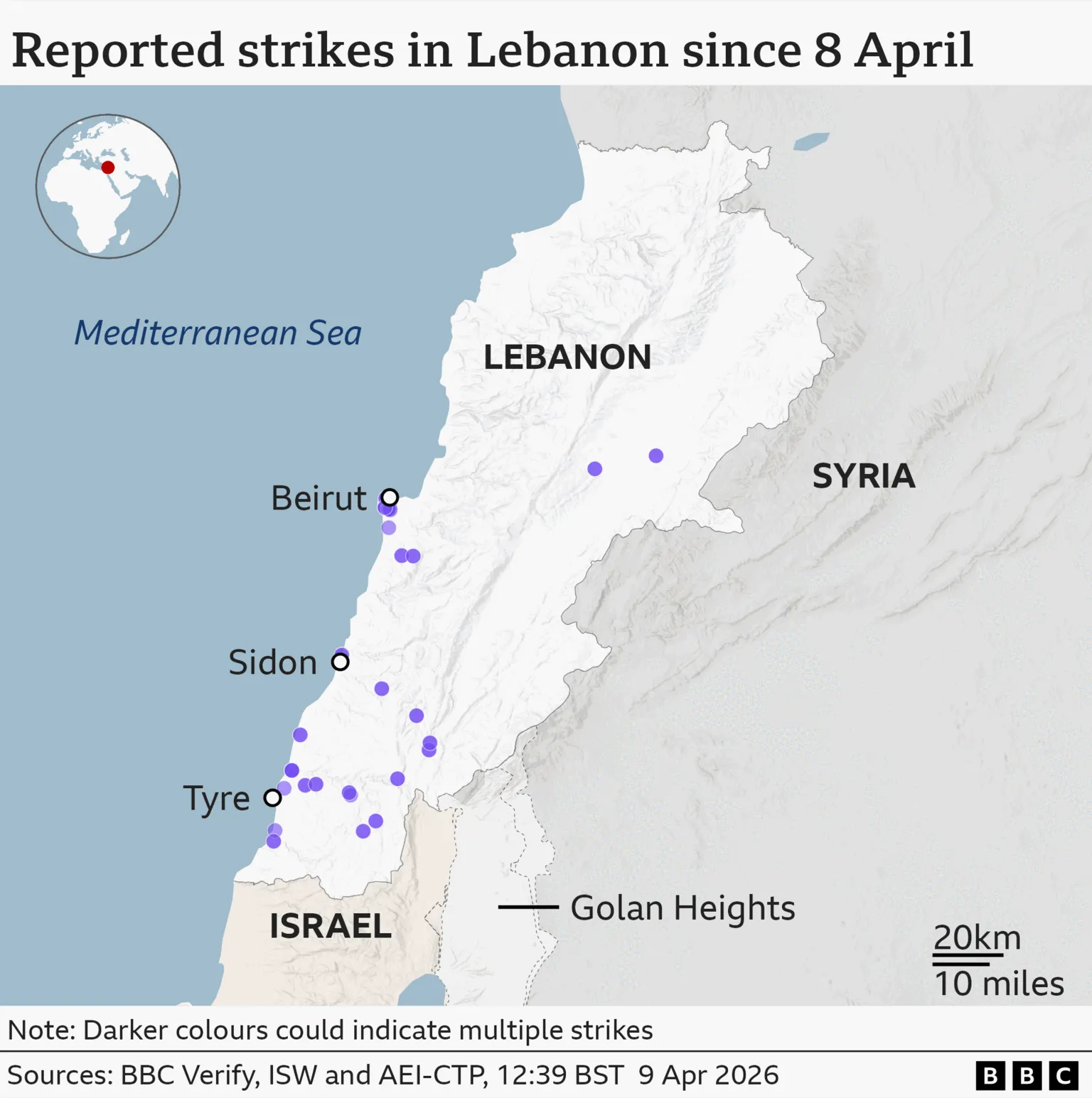
His announcement followed an extensive series of Israeli airstrikes against Lebanon on Wednesday, which resulted in 303 fatalities, as reported by Lebanon's health ministry.
The ministry also reported that 1,150 individuals were injured in the strikes, which have jeopardized the fragile ceasefire agreement involving the United States, Israel, and Iran.
That ceasefire was initially marked by ambiguity regarding whether Lebanon, considered Israel's second front, was included. Iranian officials and mediators from Pakistan asserted that Lebanon was part of the ceasefire, whereas U.S. and Israeli officials explicitly stated it was not.
Amid this uncertainty, the wave of Israeli strikes on Lebanon—the most intense since the conflict began six weeks ago—prompted Iran to declare that Israel was violating the ceasefire terms. Iran also halted shipping through the Strait of Hormuz and threatened retaliatory actions.
Ongoing Military Occupation and Challenges to Negotiations
Israel's military continues to control a significant portion of southern Lebanon, where it has demolished villages in recent days. Without at least a temporary ceasefire, the prospects for productive negotiations between the two parties remain unclear.
Furthermore, the extent of influence the Lebanese government holds over Hezbollah is uncertain. Although Hezbollah holds representation within the Lebanese government, it operates as a separate entity backed by Iran.
In early March, days after the outbreak of war with Israel, the Lebanese government prohibited Hezbollah's military activities. However, this has not prevented the group from conducting military operations.

Lebanese Government Actions and Responses
On Thursday, Lebanon's cabinet instructed government security forces to restrict weapons in Beirut exclusively to state institutions.
Prime Minister Nawaf Salam stated at the conclusion of a cabinet meeting:
"The army and security forces are requested to immediately begin reinforcing the full imposition of state authority over Beirut Governorate."
Netanyahu's office expressed appreciation for Lebanon's Prime Minister's call to demilitarize Beirut, stating that negotiations between the two nations would focus on "disarming Hezbollah and establishing peace relations between Israel and Lebanon."
International Involvement and Upcoming Negotiations
According to the U.S. news outlet Axios, Netanyahu's announcement followed phone conversations with U.S. President Donald Trump and White House envoy Steve Witkoff. Senior U.S. officials reportedly urged Netanyahu to moderate Israeli strikes and initiate negotiations.
The publication cited a senior Israeli official who indicated that direct negotiations are scheduled to begin next week in Washington.
Lebanese Leadership's Position
Earlier, Lebanese President Joseph Aoun declared that a ceasefire was "the only solution" to the ongoing situation in Lebanon.
Aoun had proposed direct negotiations with Israel a month prior as part of an effort to resolve the escalating conflict with Hezbollah, while strongly criticizing the Iran-backed group.
Background of the Conflict and Current Impact
The recent escalation in the long-standing conflict between Hezbollah and Israel began when Hezbollah fired rockets into Israel in retaliation for the killing of Iran's supreme leader Ayatollah Ali Khamenei during the early stages of the war. This was also in response to near-daily Israeli attacks on Lebanon that have persisted despite a ceasefire agreement reached in November 2024.
According to the Lebanese health ministry, more than 1,800 people have been killed so far, including at least 130 children. The ministry does not distinguish between combatants and civilians in these figures.
Israel reports having killed approximately 1,100 Hezbollah fighters.
The conflict has displaced over 1.2 million people, representing one in five of Lebanon's population, predominantly from Shia Muslim communities.


