

Funeral Postponed Amid Continued Strikes
Authorities in Iran have postponed the funeral ceremony for the late Supreme Leader, Ayatollah Ali Khamenei, as US and Israeli forces continue intense strikes across the country.
An official stated that numerous requests had been received from people wishing to attend the three-day event at a Tehran prayer complex and that necessary infrastructure preparations were required. The funeral had been scheduled to begin on Wednesday night.
Succession Process Underway
A member of the Assembly of Experts indicated that the clerical body was "close" to selecting a successor to Khamenei, who was killed in a strike at the onset of the US and Israeli assault on Saturday.
Iran has responded by launching missiles and drones at Israel and Gulf states hosting US bases.
Kuwait's health ministry reported overnight that a girl was killed by shrapnel falling on a residential area during an Iranian attack.
US Submarine Sinks Iranian Frigate
US Secretary of Defence Pete Hegseth announced that a US submarine sank an Iranian navy frigate in the Indian Ocean near Sri Lanka.
"[The warship] thought it was safe in international waters. Instead, it was sunk by a torpedo. Quiet death," he told reporters.
Sri Lanka's Defence Secretary Air Vice Marshal Sampath Thuyyakontha confirmed that the bodies of 80 people aboard the Iris Dena had been recovered, with 32 survivors rescued and dozens still missing.
Hegseth further stated that US and Israeli forces would achieve total aerial superiority over Iran within days and would "soon" control the country.
"This was never meant to be a fair fight, and it is not a fair fight. We are punching them while they're down," he declared.
Ali Larijani, secretary of Iran's Supreme National Security Council, criticized US President Donald Trump for "dragging the American people into an unjust war."
Khamenei's Death and Funeral Plans
Khamenei, Iran's spiritual leader and highest authority, was killed at his compound in Tehran during the initial wave of US and Israeli strikes, along with his wife, one of their adult sons, and several senior officials.
The three-day funeral ceremony for the 86-year-old cleric was scheduled to start at 22:00 local time (18:30 GMT) on Wednesday, with mourners invited to pay respects as he lay in state at the Grand Mosalla prayer complex in Tehran.
However, on Wednesday morning, the head of the Islamic Propaganda Co-ordination Council of Tehran province informed the hardline Tasnim news agency that the ceremony had been postponed until "a more appropriate time."
Seyyed Mohsen Mahmoudi explained the decision was due to "the high volume of requests to attend this ceremony and the need to provide appropriate facilities to host the people."
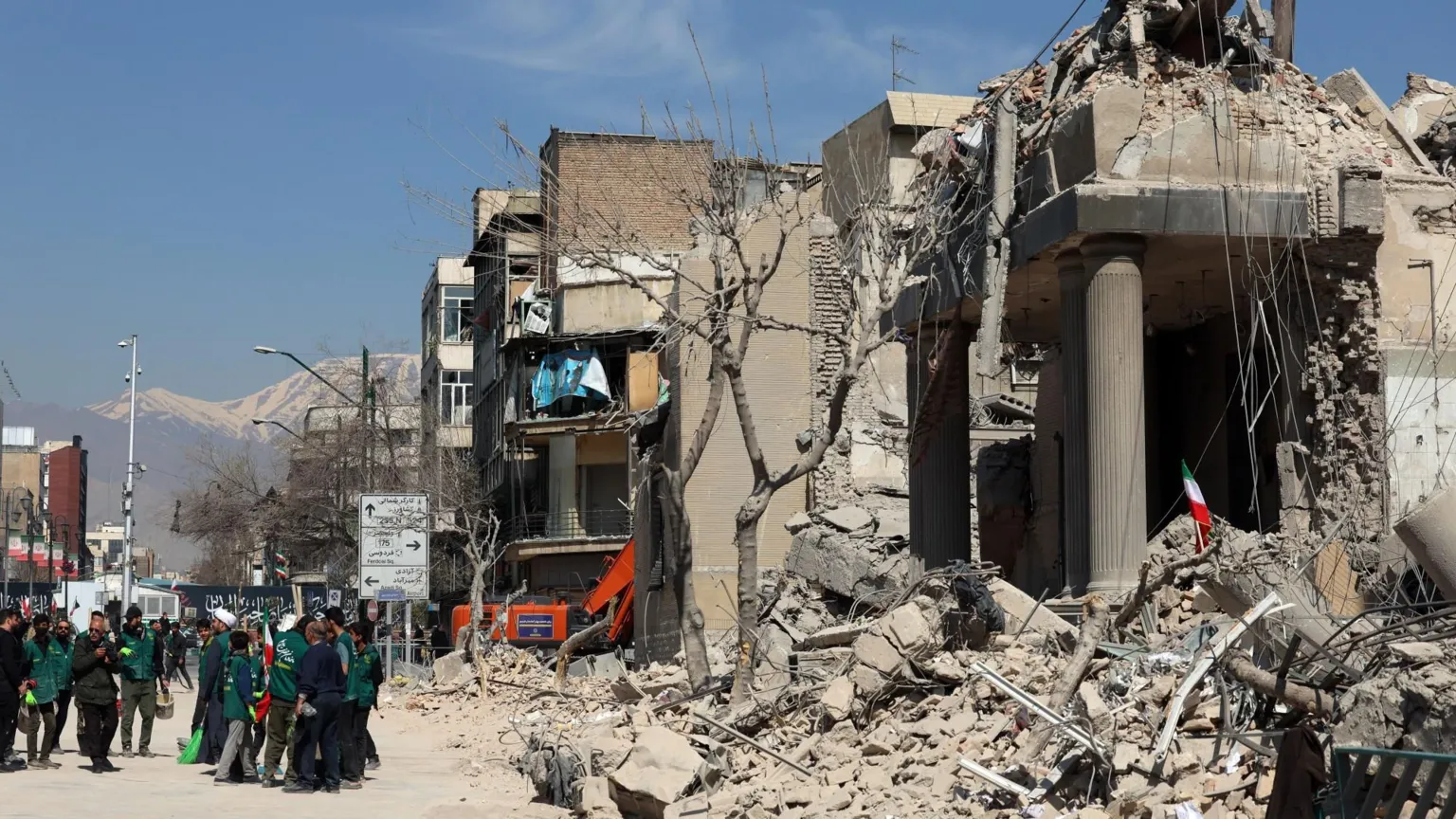
Public Reactions and Protests
Following Khamenei's assassination, state media broadcast footage of crowds supporting the Islamic Republic protesting in Tehran against the US and Israeli attacks. Conversely, social media videos showed opponents celebrating in the capital and other cities.
Khamenei's Legacy and Control
Khamenei became supreme leader in 1989 after the death of the Islamic Republic's founder, Ayatollah Ruhollah Khomeini. He maintained strict control over Iran's politics and armed forces, suppressing challenges to the regime, sometimes with violence.
During nationwide protests in late December and early January, many called for his overthrow or death. Security forces under his command crushed the uprising with unprecedented force, resulting in at least 6,480 deaths, according to human rights groups.
Assembly of Experts and Succession Candidates
The Assembly of Experts, comprising 88 members elected every eight years, is responsible for choosing Iran's new supreme leader. Khamenei ensured the body was dominated by conservatives aligned with his views on succession.
Ayatollah Ahmad Khatami, a member of the Assembly, told state TV that candidates had been identified but did not disclose names.
"The supreme leader will be identified in the closest opportunity, we are close to a conclusion. However, the situation in the country is a war situation," he said.
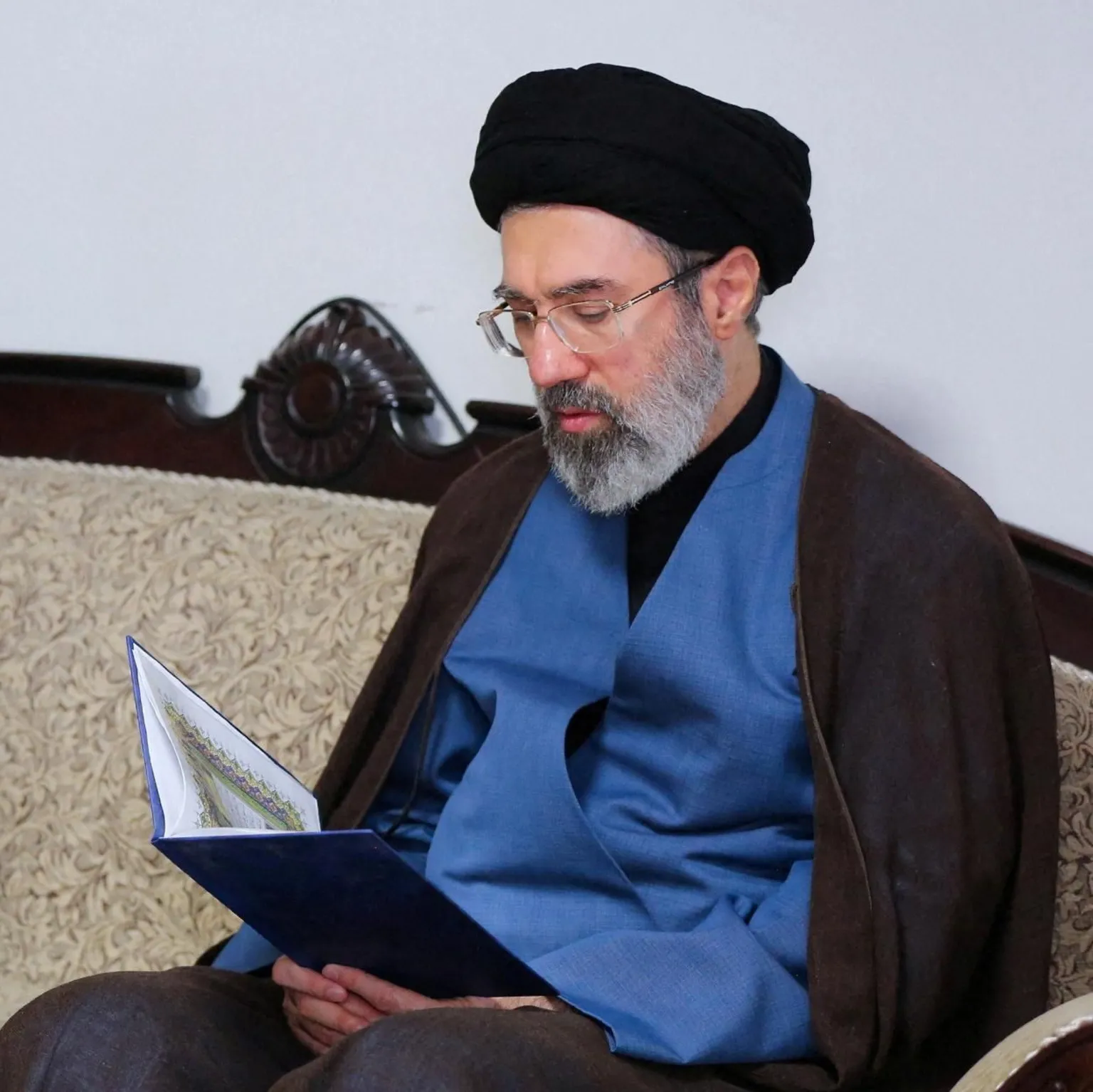
Two Iranian sources told that Mojtaba Khamenei, another of Khamenei's sons, was considered the front-runner to succeed him.

Mojtaba, a 56-year-old cleric, is a shadowy figure who reportedly amassed significant power and wealth during his father's rule. He is closely connected to conservatives and the Islamic Revolutionary Guard Corps (IRGC), which defends the country's Islamic system.
Israeli and US Military Actions
Israel's defence minister stated that any successor who continued to threaten Israel and the US would be "an unequivocal target for elimination."
The Israel Defense Forces (IDF) announced several waves of strikes across Iran on Wednesday.
A military official reported that over 100 Israeli fighter jets dropped approximately 250 munitions on a military compound housing multiple command centres in eastern Tehran.
The IDF also targeted ballistic missile arrays, air defence systems, a missile storage and production facility, and "defence and detection systems" at Tehran's Mehrabad airport.
Additionally, an Israeli F-35 fighter jet shot down an Iranian Yak-130 over Tehran, described as "the first shootdown in history of a manned fighter aircraft by an F-35." There was no immediate comment from Iranian authorities.
US Military Assessment
On Tuesday night, Adm Brad Cooper, head of the US military's Central Command, stated the US-Israeli campaign was "ahead of our game plan."
"In simple terms, we're focused on shooting things that can shoot us," he added.
Casualty Reports
Iran's state news agency Irna reported on Wednesday that US and Israeli strikes had killed 1,045 military personnel and civilians since the conflict began.
While these figures could not be independently verified, the US-based Human Rights Activists News Agency (HRNA) reported that civilian deaths had reached 1,097, including 181 children under age 10.
Iranian Retaliation
Iran's armed forces have launched hundreds of missiles and drones at Israel and neighboring Arab states hosting US military installations.
Iranian President Masoud Pezeshkian told neighboring countries that the US-Israeli attack had "left us no choice but to defend ourselves" after diplomatic efforts failed.
"We respect your sovereignty and believe the region's security and stability has to be achieved through the collective efforts of its states."
Regional Responses
Qatar's Prime Minister, Sheikh Mohammed bin Abdul Rahman Al Thani, told Iranian Foreign Minister Abbas Araghchi in a phone call that Iran was attempting to harm its neighbors and draw them into a war "that is not theirs," according to the Qatari government.
Thani also "categorically rejected" Araghchi's claim that missiles targeted only US interests, citing strikes on civilian infrastructure and residential areas.
Early Wednesday, Kuwait's health ministry reported that an 11-year-old girl, a resident of Kuwait, died after being hit by falling shrapnel.
Since the conflict began, nine others have been killed in Kuwait, including six US service personnel, two Kuwaiti army soldiers, and one civilian.
Saudi Arabian authorities reported an attempted drone attack on its largest oil refinery, Ras Tanura, on the Gulf coast. No damage or disruption was reported. The refinery had halted some operations on Monday following a previous drone attack that caused a fire.
Turkey's defence ministry stated that an Iranian missile heading toward its airspace was intercepted by NATO air and missile defence systems in the Eastern Mediterranean.
In Qatar, the State Security Service announced the arrest of 10 members of two cells allegedly linked to the IRGC, tasked with spying on infrastructure and conducting "sabotage operations."
Israeli Defence and Casualties
The IDF reported that its defence systems intercepted additional Iranian missile salvos. There were no immediate reports of casualties.
Over the past five days, missile strikes in Israel have resulted in 10 deaths.


