

US to Assist Stranded Vessels in Strait of Hormuz
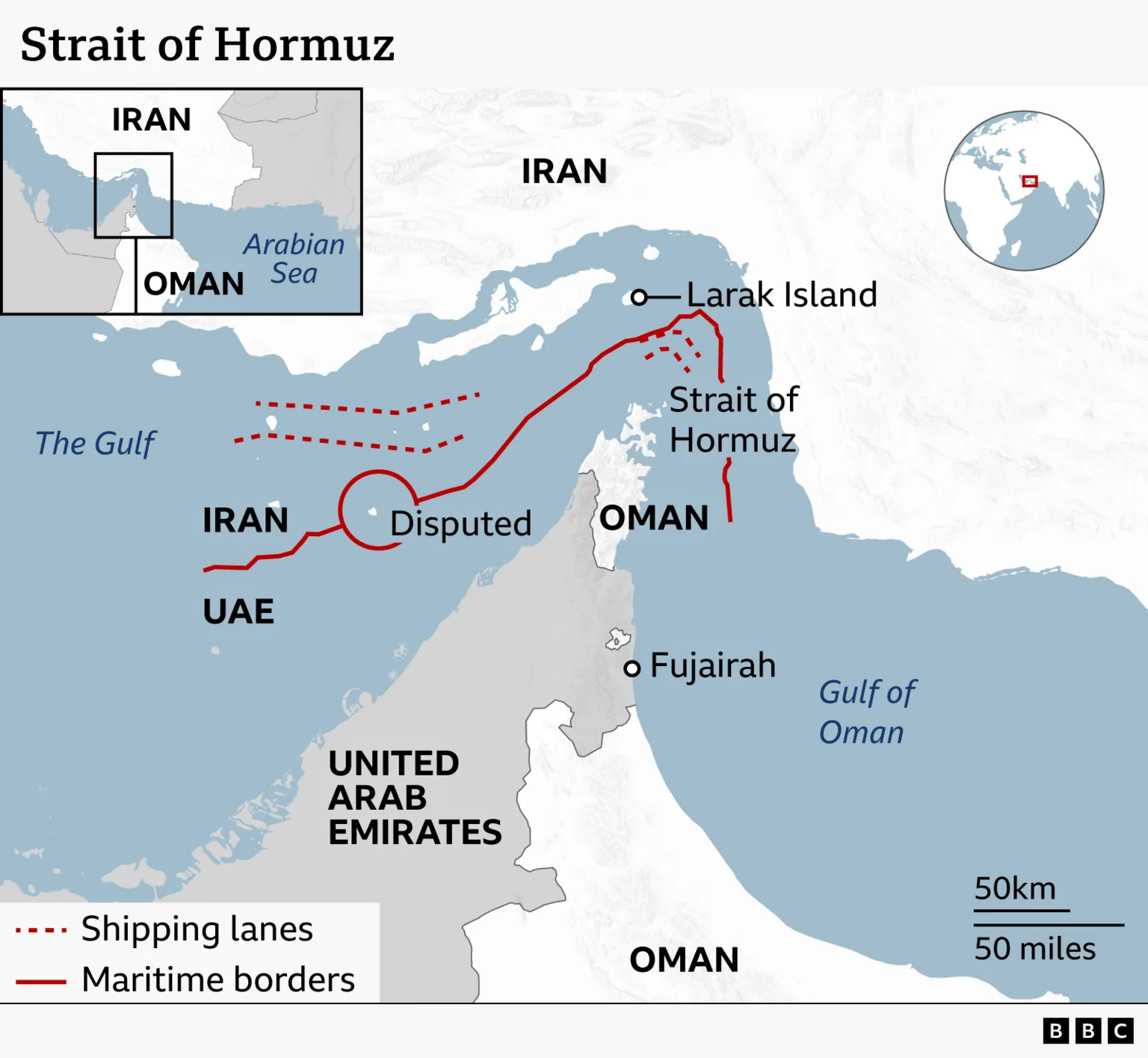
President Donald Trump announced that starting Monday, the United States will assist in guiding stranded vessels safely through the Strait of Hormuz.
"For the good of Iran, the Middle East, and the United States, we have told these Countries that we will guide their Ships safely out of these restricted Waterways, so that they can freely and ably get on with their business," Trump stated in a social media post, without specifying which countries were involved.
He further warned that any interference with this initiative, which he referred to as "Project Freedom," would be met with forceful responses.
Since the outbreak of war in February, Iran has significantly restricted traffic through this critical shipping corridor. Concurrently, the US has imposed a naval blockade on Iranian ports.
Trump also mentioned ongoing discussions with Iran, describing them as "very positive" and expressing optimism that they "could lead to something very positive for all." He characterized the operation as a "humanitarian gesture" on behalf of the US, Iran, and other Middle Eastern nations, though he did not specify which countries or elaborate on the nature of cooperation with Tehran.
"In all cases, they said they will not be returning until the area becomes safe for navigation, and everything else... The Ship movement is merely meant to free up people, companies, and Countries that have done absolutely nothing wrong," Trump added.
US Central Command detailed that "Project Freedom" would involve 15,000 personnel, guided-missile destroyers, and over 100 aircraft.
An estimated 20,000 sailors have been trapped in the Gulf since the conflict began, raising concerns about dwindling supplies and the impact on their physical and mental well-being.
Approximately 20% of the world's oil and liquefied natural gas (LNG) typically transit the strait, and the ongoing conflict has contributed to a surge in global energy prices.
Recent Incident and Diplomatic Developments
Late Sunday, the United Kingdom Maritime Transportation Operation (UKMTO) reported that a tanker in the strait was struck by an "unknown projectile," though the crew remained safe.
Trump's announcement followed reports from Iranian state-linked media that Tehran had received a US response to its latest peace proposal. According to Iran's semi-official Tasnim news agency, the response was delivered via Pakistan and was under review.

The US has not formally confirmed receipt of the proposal. However, Trump reportedly told Israel's Kan News on Sunday that he found the proposal unacceptable.
Iranian state media described Tehran's 14-point peace plan as demanding the withdrawal of US forces from areas near Iran's borders, an end to the naval blockade of Iranian ports, and cessation of all hostilities, including Israel's offensive in Lebanon. The plan also called for a bilateral agreement within 30 days.
The proposal emphasized prioritizing "ending the war" over extending the current ceasefire.
Iranian foreign ministry spokesman Esmaeil Baghaei, quoted by state media, stated, "at this stage, we do not have nuclear negotiations," a key condition sought by Washington.
Iran has consistently denied pursuing nuclear weapons, asserting its nuclear program is for peaceful purposes. Nonetheless, it remains the only non-nuclear-armed state to have enriched uranium to near weapons-grade levels.
US Response and Ongoing Conflict
On Saturday, Trump confirmed receipt of Iran's latest peace proposal. In a post on Truth Social, he wrote that he would review the plan but expressed skepticism about its acceptability, stating it did not impose a sufficient price on Iran for its actions over the past 47 years.
"I can't imagine that it would be acceptable in that they have not yet paid a big enough price for what they have done to Humanity, and the World, over the last 47 years," Trump wrote.
Speaking to reporters later that day, Trump said he had been briefed on the concept of the deal and was awaiting the exact wording.
When asked by the BBC about the possibility of renewed military strikes inside Iran, Trump replied, "It was a possibility. If they misbehave. If they do something bad. But right now we'll see." He also indicated that the US would maintain its presence, stating, "we're not leaving" and "we're going to do it, so nobody has to go back in two years or five years."
Iranian state-linked agencies reported that Tehran's latest proposal was a response to a nine-point US plan that included a two-month ceasefire.


