

US to Assist Ships Stranded in Strait of Hormuz
President Donald Trump has declared that the United States will assist in "guiding" ships stranded due to Iran's closure of the Strait of Hormuz.
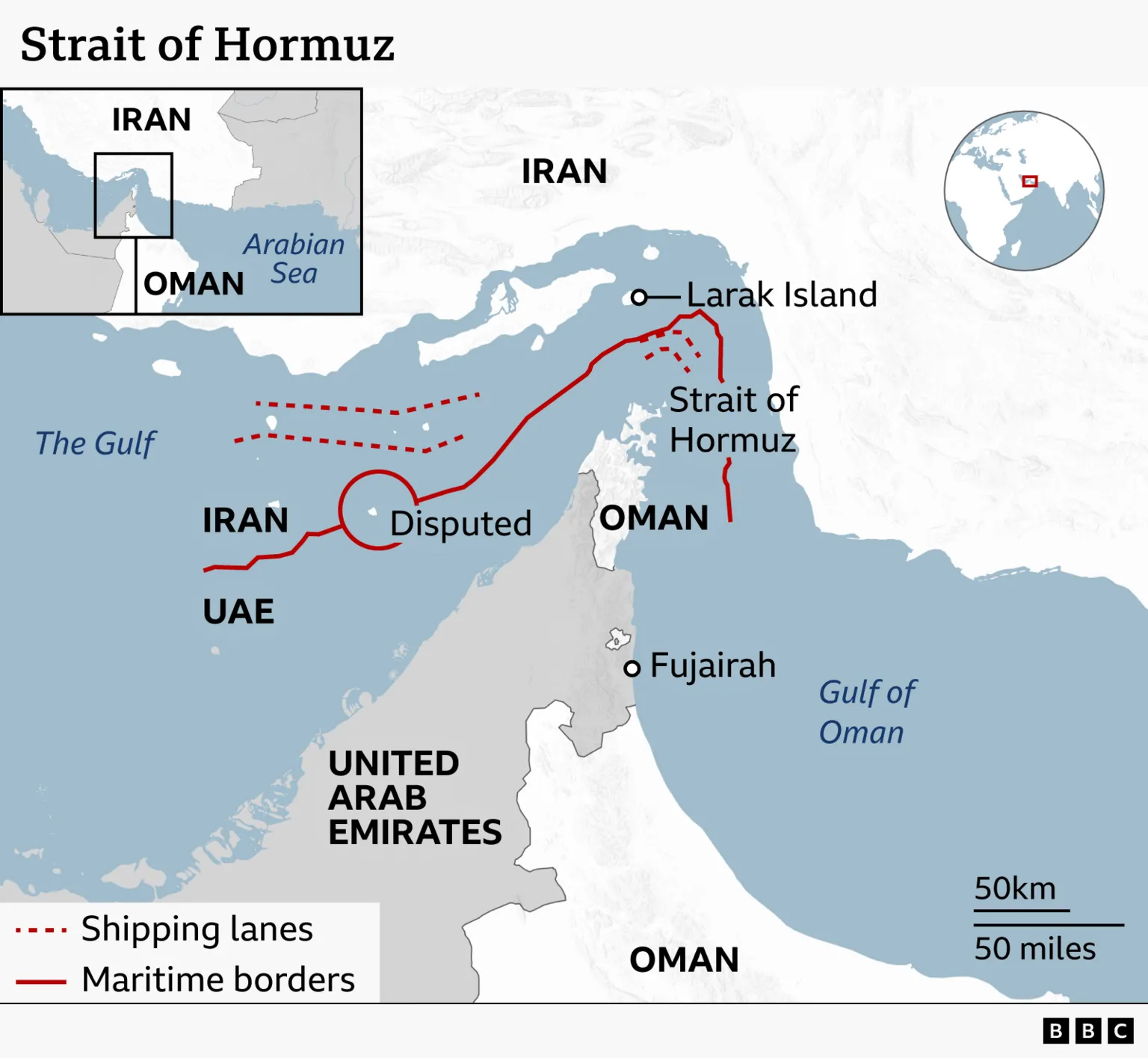
The Strait has been largely blocked following US and Israeli air strikes on Iran, with Tehran responding by restricting access to this vital waterway. Approximately 20% of the world's oil and liquefied natural gas transit freely through this route under normal conditions.
Trump's Announcement on "Project Freedom"
The president stated that countries "from all over the World" had requested US assistance to free their ships, which were "locked up in the Strait of Hormuz" and described these vessels as "merely neutral and innocent bystanders!"
"And so, in response, the US would 'guide their Ships safely out of these restricted Waterways'."
Trump emphasized that the ship movements aimed to liberate people, companies, and countries that had "done absolutely nothing wrong — They are victims of circumstance."
"The Ship movement is merely meant to free up people, companies, and Countries that have done absolutely nothing wrong — They are victims of circumstance," Trump said in a post on his Truth Social platform.
He further described the initiative as "a Humanitarian gesture on behalf of the United States, Middle Eastern Countries but, in particular, the Country of Iran," noting that many vessels were "running low on food, and everything else necessary for largescale crews to stay on board in a healthy and sanitary manner."
Iran's Reaction to US Plans
Trump's statement appeared comparatively moderate relative to prior rhetoric against Iran, even suggesting Iran was a participant in the operation. He claimed "Project Freedom" was being undertaken on Iran's behalf as well.
However, Iran's perspective differs significantly.
A statement from the head of Iran's central command warned it would attack "any foreign armed force" attempting to enter or approach the Strait, specifically targeting the "aggressive US army."
Maj Gen Ali Abdollahi said that Iran had "repeatedly" stated that the Hormuz Strait "is under the control" of Iranian armed forces, and safe passage must be coordinated with them "under all circumstances."
Implementation Status of Trump's Plan
According to the International Maritime Organisation, a UN agency overseeing shipping, approximately 20,000 sailors and 2,000 ships have been trapped in the Gulf since the onset of conflict with Iran.
There is increasing concern about diminishing supplies and the impact on sailors' physical and mental well-being.
Trump did not specify the method by which ships would be freed, only warning of potential force "if, in any way, this Humanitarian process is interfered with."
Subsequently, US Central Command (Centcom) announced deployment of "guided-missile destroyers, over 100 land and sea-based aircraft, multi-domain unmanned platforms, and 15,000 service members" to support the operation.
The statement did not clarify how these assets would assist the vessels.
If US guidance is limited to providing information and advice, it may offer limited protection given Iran's threats to attack.
Conversely, if the US provides military escorts, this could escalate into direct military confrontation with Iran.

Hours after the operation's intended commencement, the Iranian military declared: "With a firm and swift warning from the Islamic Republic Navy, the entry of American and Zionist enemy destroyers into the Strait of Hormuz was prevented."
Shortly thereafter, Centcom denied Iranian claims that one of its warships was struck by two missiles.
The United Arab Emirates, a US Gulf ally frequently targeted by Iran during the conflict, reported that a tanker affiliated with Adnoc, its state-owned oil company, was attacked by two drones while transiting the Strait.
No injuries were reported, according to the UAE foreign ministry.
It remains unclear if the tanker's transit was facilitated by the US under "Project Freedom."
On Monday afternoon, Centcom confirmed that US Navy guided-missile destroyers were operating in the Gulf "after transiting the Strait of Hormuz in support of Project Freedom."
The statement added that American forces were "actively assisting efforts to restore transit for commercial shipping" but did not provide further details.
"As a first step, 2 U.S.-flagged merchant vessels have successfully transited through the Strait of Hormuz and are safely headed on their journey," Centcom said, without disclosing the vessels' identities.
Since the conflict began, Iran has severely restricted traffic through the Strait, permitting passage primarily to vessels from Tehran's allies.
Current Situation in the Strait of Hormuz
A ceasefire is currently in effect, intended to facilitate negotiations to end hostilities; however, progress has been minimal.
Iran has strongly opposed US enforcement of a naval blockade on its ports.
The BBC interviewed oil tanker captain Ramoon Kapoor, one of the sailors trapped in the Gulf, who described witnessing "various attacks, various missiles, explosions" and characterized the situation as "pretty tense."
He also noted that his crew had experienced significant stress and anxiety.
The UK Maritime Trade Operations Centre has issued warnings to ships attempting to transit the Strait of Hormuz, citing "critical" security threats due to "ongoing regional military operations" and the "proximity and dangers of any reported mines or threats along intended transit routes."
Trump's announcements during the conflict have frequently influenced markets, particularly oil prices.
However, the announcement of "Project Freedom" did not provoke an immediate market reaction.
There was a brief spike following Iran's claim of striking a US warship and the subsequent US denial, but overall, Brent crude prices have remained above $100 (£74) per barrel—more than 50% higher than pre-conflict levels.


