Heat and Drought Stress Western and Central Europe Waterways
Above-average temperatures combined with below-average rainfall across much of western and central Europe during June and the first half of July have increased pressure on rivers, ecosystems, and energy infrastructure. Persistent high-pressure systems brought extended sunshine, suppressed rainfall, and enhanced evaporation, causing river levels to decline and water temperatures to rise.
These unusually warm rivers are affecting electricity generation in France, where several nuclear power stations depend on river water for cooling. French environmental regulations require operators to limit the heat discharged back into rivers, which may necessitate reducing electricity output when water temperatures exceed certain thresholds.
Earlier this month, EDF temporarily shut down a reactor at the Golfech nuclear power station after the Garonne River approached its environmental discharge temperature limit. Additionally, production restrictions are anticipated at the Nogent nuclear power station from 14 July if the river reaches its forecasted temperature. The prolonged heatwave has also driven up electricity demand due to increased air-conditioning use across much of Europe.

Wildfires Ravage Iberian Peninsula Amid Prolonged Heat
The same persistent weather pattern has led to dangerous wildfires across the Iberian Peninsula. Spain experienced several significant wildfires last week as prolonged heat, exceptionally dry vegetation, limited rainfall, low relative humidity, and gusty winds combined to create conditions conducive to rapid fire spread. One of the largest fires occurred in the Almería province, prompting evacuations and extensive firefighting efforts.
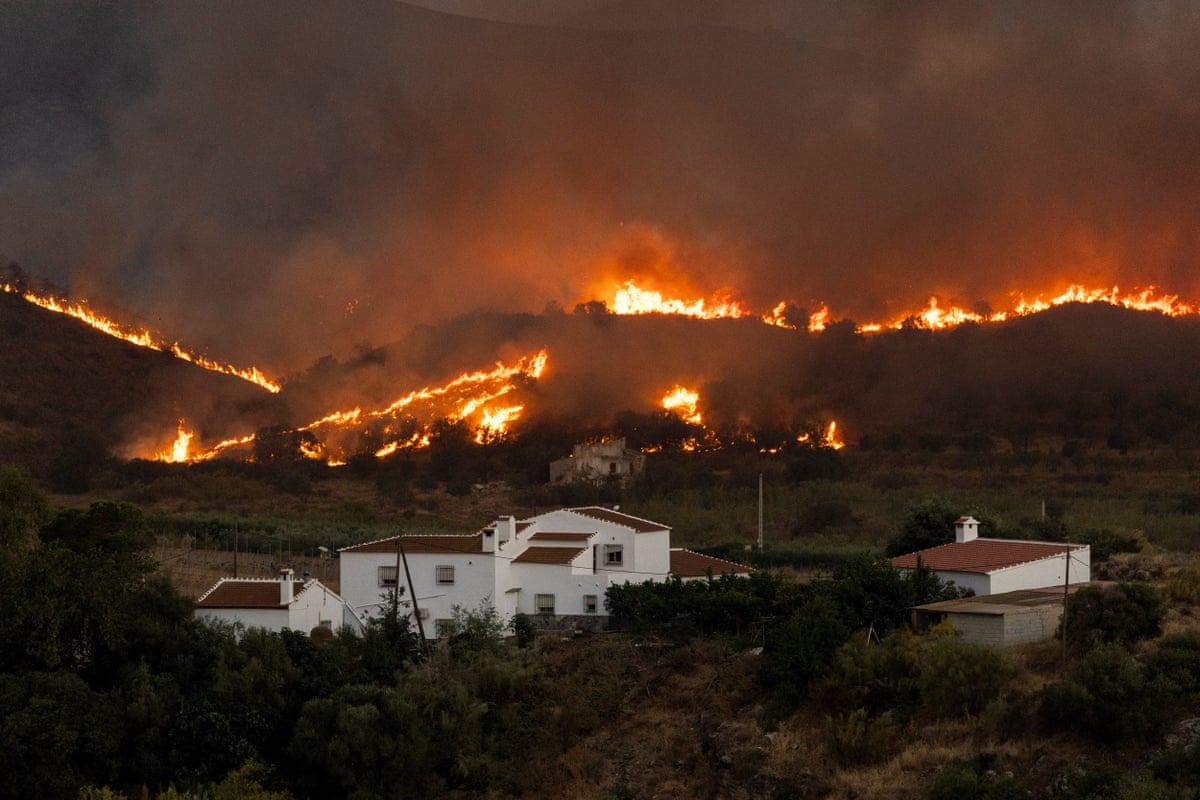
Although temperatures are forecasted to ease slightly in some regions, weather models continue to predict generally warmer-than-average conditions across much of southern Europe during the coming week. With little widespread rainfall expected, vegetation is likely to remain dry, maintaining an elevated wildfire risk across much of Europe. Rivers across western Europe will also continue to experience unusually warm conditions.
Typhoon Bavi Weakens but Remains a Flooding Threat in China
In Asia, Typhoon Bavi has weakened to a severe tropical storm after making two landfalls along China’s eastern coast. Despite the reduction in wind strength, it continues to pose a significant flooding threat as it moves inland. Prior to reaching China, Bavi rapidly intensified over exceptionally warm waters in the western Pacific, attaining Category 5 strength and becoming one of the strongest tropical cyclones of the 2026 north-west Pacific season. More than 2 million residents were evacuated before the storm reached China, and hundreds of flights, rail services, and ferry operations were suspended.
Earlier in its track, Bavi brushed the northern tip of Taiwan and passed through Japan’s Sakishima Islands, bringing damaging winds, torrential rainfall, and widespread transport disruption. Although wind speeds have diminished since landfall, the storm retains a vast reservoir of tropical moisture. Its slow inland progression is expected to prolong heavy rainfall across eastern China during the coming week, increasing the risk of flash flooding, river flooding, and landslides.