US Defense Secretary Criticizes NATO Allies and Announces Review
US Defense Secretary Pete Hegseth has sharply criticized certain NATO allies while announcing a six-month review of the US military presence in Europe.
"It's a review that some countries will fail, and others will pass with flying colours,"
he stated during a meeting of NATO defense ministers in Brussels, highlighting allies he suggested had been "free-riding." Hegseth also expressed strong disapproval of NATO member states that imposed restrictions on assistance to US forces during the conflict with Iran.
The review, which Hegseth referred to as NATO 3.0, aims to "ensure that NATO is moving fast and irreversibly toward Europe leading" on continental security. A US official told the BBC that no decisions have yet been finalized.
The United States is urging NATO members to increase defense spending in Europe, noting that some countries have not demonstrated how they will meet the agreed target of 5% of national economic output (GDP), which includes 3.5% on core defense and 1.5% on related infrastructure.
Defense Spending and NATO Contributions
NATO Secretary-General Mark Rutte noted that defense spending rose by €90 billion (£78 billion; $103 billion) last year, an increase of nearly 20%, and that European countries were "already backfilling" resources as the US reduces its commitments.
Hegseth's announcement follows the US decision to scale back its commitments to a high readiness force within the alliance known as the NATO Force Model (NFM). Although details have not been publicly disclosed, reductions are expected to include air and naval capabilities.
Hegseth indicated that NATO's annual dues would be "contingent on other countries meeting their defense spending targets; where other allies do not spend with urgency, our dues contributions will go down."

"Some of NATO's largest economies, some of our richest countries, allies that are happiest to go on about the rules-based international order and middle powers banding together, still seem to think the era of free-riding is here,"
he added, without specifying which countries he referred to.
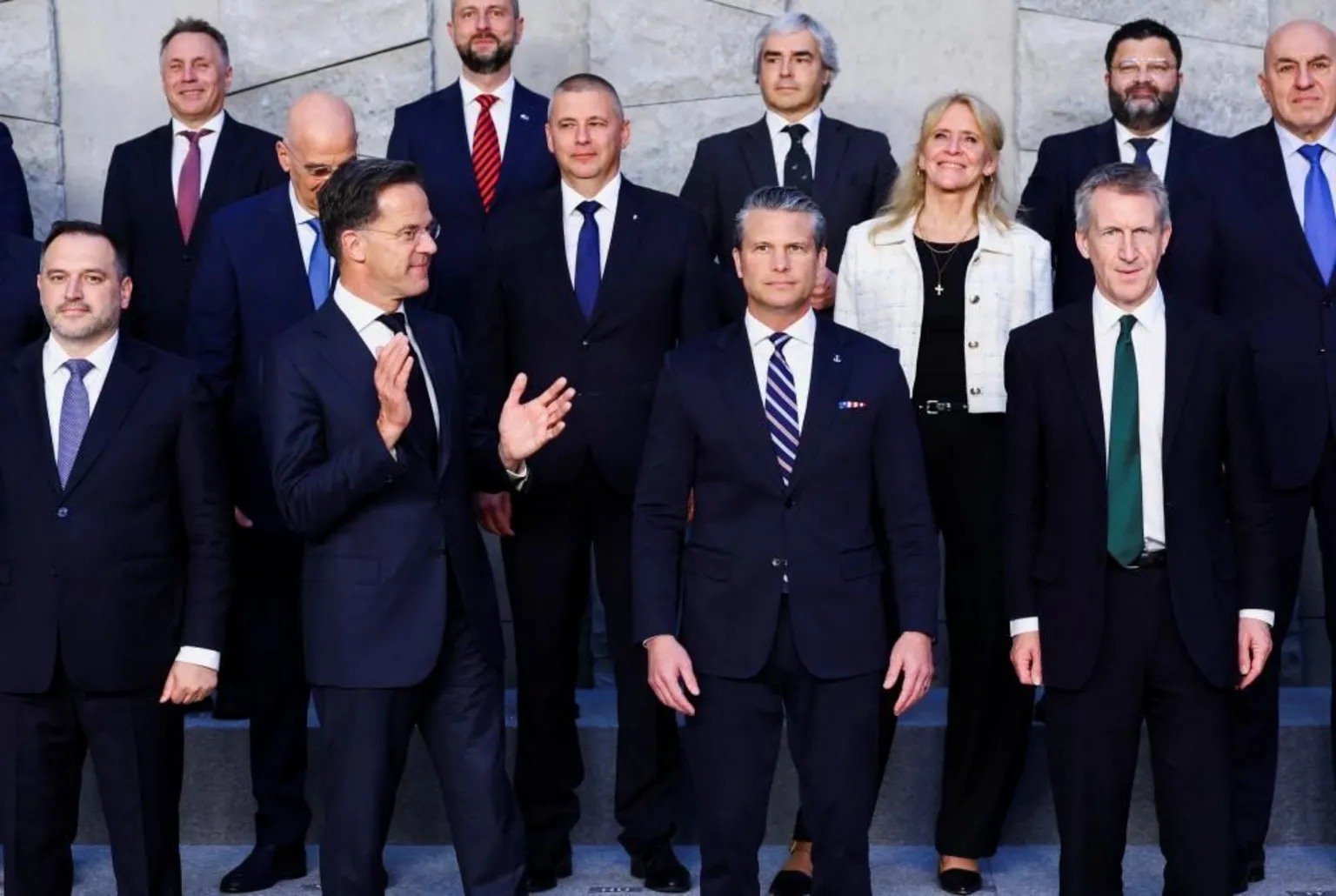
UK Defense Investment and NATO Force Model Adjustments
UK Defence Secretary Dan Jarvis attended the summit without a UK defense investment plan after his predecessor, John Healey, resigned, citing that the plan fell "well short" of what was necessary to protect the UK.
A senior NATO official acknowledged that "not everything" the US is withdrawing "can be absolutely replaced," but Rutte stated that some measures have already been implemented and further efforts are ongoing. He also confirmed that the changes are effective immediately.
The NATO Force Model comprises forces that the alliance's Supreme Allied Commander in Europe (SACEUR) can rely on at short notice, the NATO official explained.
US Troop Movements and Base Negotiations
In May, the US announced plans to withdraw 5,000 troops from Germany following a dispute between President Donald Trump and German Chancellor Friedrich Merz regarding the war with Iran. The same month, Poland was informed that 4,000 troops would be withdrawn, though Trump later reversed this decision, pledging to deploy 5,000 troops instead.
Poland currently hosts up to 10,000 US troops on a rotational basis. Defence Minister Władysław Kosiniak-Kamysz stated on Thursday that the US is open to Poland's offer to establish a permanent base for US troops, with a final decision dependent on the agreement's specifics.
Earlier, Trump threatened to halt all trade with Spain after the Madrid government refused to permit the use of air bases on its territory for attacks on Iran. The US maintains two military bases in Spain: Naval Station Rota and Morón Air Base.
Expectations for Defense Spending Commitments
Rutte expressed on Wednesday his expectation that NATO members would demonstrate how they plan to meet the 5% GDP defense spending target.
"Ahead of the summit in Ankara [on 7-8 July], allies will highlight how they're delivering on commitments made in The Hague last year. Investing 5% of GDP in defence by 2035. That's what we agreed.
I expect nations to present clear, concrete and credible plans to reach that goal. Ideally, well ahead of the agreed timeline. Many are already showing that they are doing exactly that."