

Quad countries announce new surveillance deal
The Quad group of countries—Australia, the United States, India, and Japan—have unveiled a new initiative to enhance surveillance capabilities and cooperate on critical minerals, according to Agence France Presse.
US Secretary of State Marco Rubio participated in the meeting held in New Delhi, describing the Quad as comprising nations “who share strong values – strong, vibrant democracies” with “many aligned interests.”
In a joint statement, the Quad members committed to mobilising US$20 billion in government and private sector funding to reinforce critical mineral supply chains, including identifying projects within the four countries.
Additionally, the group will collaborate on two maritime initiatives: one to integrate their surveillance capabilities and another to provide enhanced real-time information to commercial maritime traffic.
Australia’s Foreign Minister, Penny Wong, stated that the Quad is cooperating on port development assistance in Fiji, a strategically important island nation in the South Pacific where China has intensified efforts to expand its influence.
“We recognise our obligation – our responsibility – to provide real choices, particularly as strategic circumstances in our region are deteriorating,” Wong said.
The Quad also set a target to connect South Pacific islands via undersea cables by the end of the year, aiming to economically integrate these islands with the four democracies rather than with China.
‘Tough but necessary’ housing measures, O’Neil says
The government faces challenges in promoting its ambitious budget, with Housing Minister Clare O’Neil acknowledging that some tax changes will not be universally welcomed.
Speaking on Sunrise alongside Liberal frontbencher Michaelia Cash, O’Neil defended the measures as appropriate, echoing sentiments expressed by the Prime Minister and Treasurer. She addressed recent polling from the Australian Financial Review indicating that changes to capital gains tax had a net approval rating of zero, with 36% approval and 36% opposition.
“What they show is that lots of people are supportive of what the government is doing. And then some people don’t support what the government’s doing. That is what you’d expect to see in a budget that does some tough but necessary things for the country.
In politics, you don’t do the popular thing. You do the right thing.”
New polling published by Australia this morning shows that only about one-third of Australians support changes to negative gearing and capital gains tax.
Good morning
Krishani Dhanji here, with thanks to Martin Farrer for the introduction.
Following a dramatic night of Senate estimates (see earlier posts), today will feature further intense scrutiny of public servants and parliamentary sessions.
It promises to be a busy day, so let’s begin.
Nacc boss subject of second complaint investigation
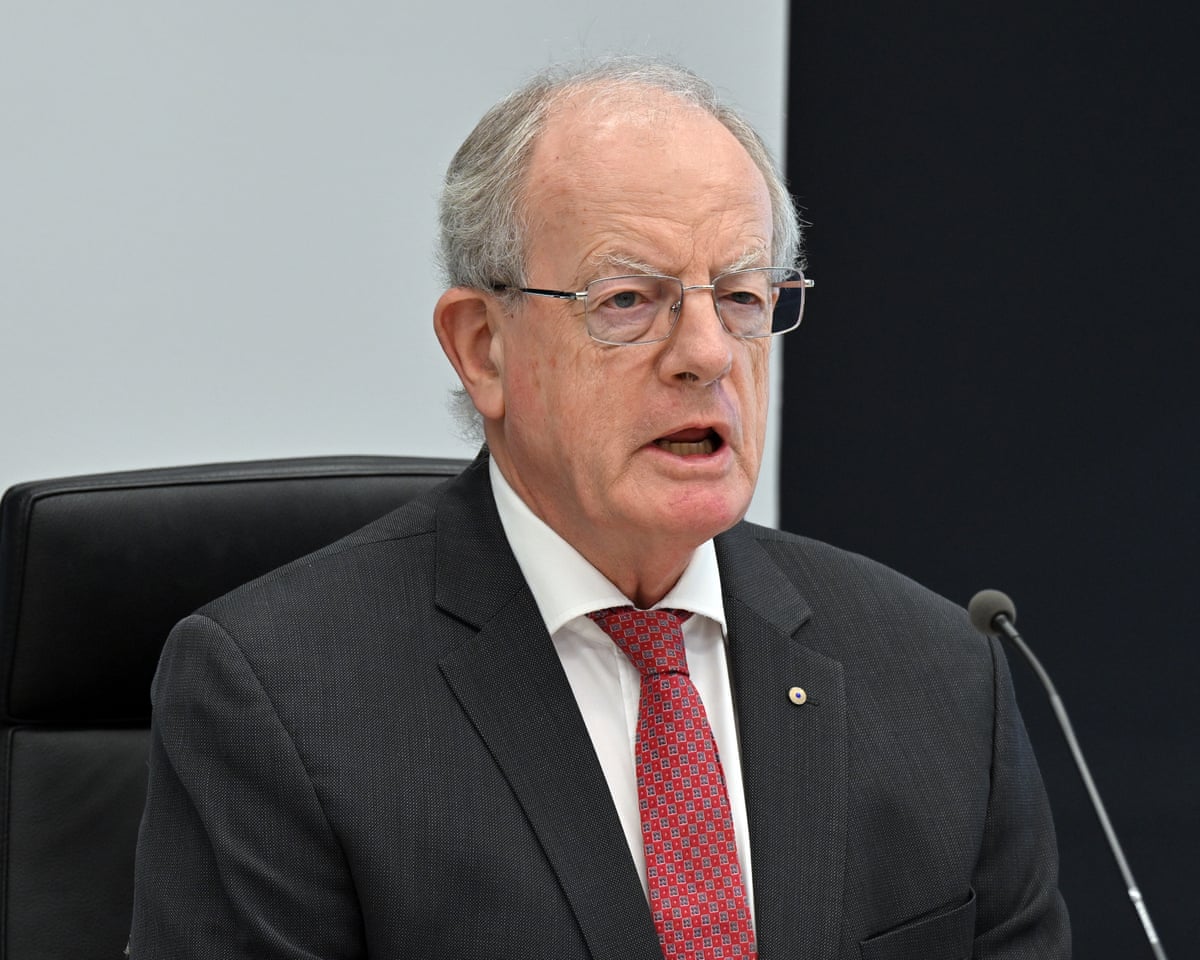
Outgoing National Anti-corruption Commission (Nacc) chief Paul Brereton is currently the subject of a second investigation by the organisation’s inspector.
At Senate estimates hearings last night, Inspector Gail Furness disclosed she had initiated a second investigation into Brereton, who is scheduled to retire on 6 July.

“On 14 April 2026 I commenced a complaint investigation into a complaint I had received about the conduct of the commissioner,” Furness said.
“I commenced that investigation after I had received the commissioner’s response to the complaint. On 28 April 2026 I provided the commissioner with a copy of my draft complaint investigation report.
“I’m currently awaiting the commissioner’s submissions in response to my draft complaint investigation report.”
Furness had announced in February that she would investigate the watchdog again for maladministration.
Brereton, author of the Afghanistan war crimes inquiry, continued consulting for the Inspector-General of the Defence Force after assuming the Nacc role in 2023 without the federal government’s knowledge.
Furness noted that the complaint was lodged several months earlier and is unrelated to the first investigation.
Universities grappling with ‘class size explosion’, new report suggests
University class sizes have significantly increased since before the pandemic, with student learning outcomes reportedly declining, according to a new report.
The National Tertiary Education Union (NTEU) released the report today, which surveyed over 4,000 university staff nationwide.
The findings indicate that the proportion of tutorials with 30 or more students has more than doubled since 2019, rising from 12% to 27%. The optimal tutorial size is considered to be between 10 and 19 students, yet only 9% of tutorials meet this standard.
More than 80% of staff surveyed reported that their ability to provide individual support to students has been compromised, with only 1.7% noting improvements in student outcomes since 2019.
NTEU President Dr Alison Barnes commented on the widespread impact of increased class sizes across campuses.
“The real-life consequences are unmanageable workloads with students ultimately paying the price. Students aren’t getting the attention they need and their education suffers. This could have a dangerous ripple effect that we feel for generations.”
Australia generally performs poorly in international rankings for faculty-to-student ratios, with no Australian university placing in the top 300 according to QS rankings. Australian universities scored an average of 12.5 out of 100 on QS’s ‘learning experience’ indicator, well below the global average of 28.1.
In response to the Quad meeting, Chinese Foreign Ministry spokeswoman Mao Ning stated that such cooperation “should not be directed against any third party,” as reported by AFP.
“We also do not support exclusive cliques or bloc confrontations,” she told reporters.
The Quad ministers expressed in their joint statement that they are “seriously concerned” about tensions in the South China Sea and East China Sea and oppose “destabilising or unilateral actions,” a clear reference to China.
Good morning and welcome
Welcome to our live politics blog. I’m Martin Farrer with the top overnight stories, followed by Krishani Dhanji with the main coverage.
Last night was eventful at Senate estimates, with the National Anti-corruption Commission inspector announcing a second investigation into outgoing boss Paul Brereton. Gail Furness’s announcement followed Brereton’s rebuttal of claims that he contributed to the significant suffering of robodebt victims. More details will follow.
Additionally, it was revealed during estimates that the Australian Federal Police and the federal government’s special investigator for war crimes allegations have requested the Nacc to investigate media leaks concerning the arrest of Ben Roberts-Smith. Further information will be provided.
Internationally, the Quad countries met in New Delhi, with Australia’s Foreign Affairs Minister Penny Wong attending. They announced a new cooperation deal on surveillance and a new port project in Fiji, aiming to counter China’s expanding influence, which Beijing has opposed. More on this is forthcoming.


