US Policy Shift Towards West African Military Governments
The United States has announced a significant change in its approach to three West African nations facing Islamist insurgencies, whose military regimes have severed defense ties with France and aligned with Russia.
The State Department revealed that Nick Checker, head of the Bureau of African Affairs, will visit Bamako, Mali's capital, to express the US's "respect for Mali's sovereignty" and to outline a "new course" in bilateral relations, moving beyond previous "policy missteps."
The statement also indicates the US's intention to collaborate with Mali's regional partners, Burkina Faso and Niger, focusing on "shared security and economic interests."
Notably absent from the agenda is the traditional American emphasis on democracy and human rights. The Biden administration had suspended military cooperation following coups that ousted elected civilian leaders in all three countries between 2020 and 2023, with Niger's former president Mohamed Bazoum still confined to his residence.
The US declaration explicitly signals a radical policy change that has become increasingly apparent over the past year since Donald Trump resumed the presidency.
This shift began with the closure of USAID, a key development agency in the region, shortly after Trump's inauguration for a new term. Subsequently, the US signaled a narrower focus on security and mineral resources, sidelining development and governance concerns.
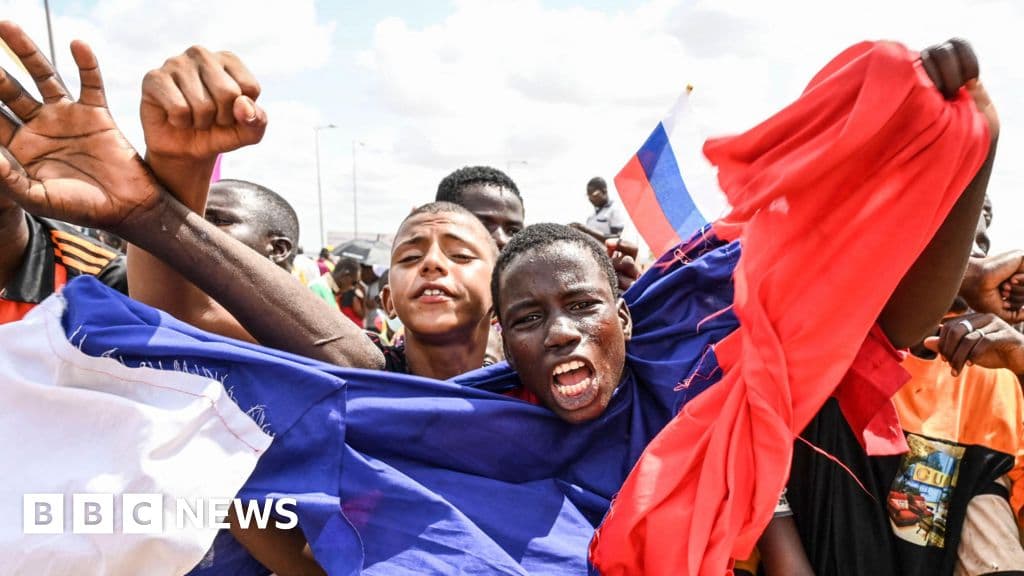
Checker's upcoming visit further emphasizes respect for Mali's sovereignty, a message likely to resonate in Bamako and allied capitals where military leaders have gained support by promoting pan-Africanist ideals and rejecting France's former colonial influence.
Burkina Faso's military leader, Captain Ibrahim Traoré, positions himself as a defender against "imperialism" and "neo-colonialism." Through active social media engagement, he has garnered substantial support and popularity among youth across Africa and beyond.
The Trump administration has made clear its indifference to these regimes' rejection of European-style constitutional governance.
Massad Boulos, senior adviser for Africa at the State Department and a Trump confidant, told Le Monde last year: "Democracy is always appreciated, but our policy is not to interfere in the internal affairs of other countries. People are free to choose whatever system is appropriate for them."
This stance marks a stark departure from previous US policy.
During the Biden administration, General Michael Langley, head of US Africa Command (Africom) from 2022 to 2025, emphasized the importance of good governance and environmental issues alongside military support.
However, following Trump's return to the presidency last year, Langley stated that combating terrorism had become the primary focus.
This priority is evident in West Africa, as reiterated by Rudolph Attalah, a senior counter-terrorism official, during his visit to Bamako last year.
Last month, Africom's deputy commander, General John Brennan, confirmed ongoing US support for the three military-led countries in their fight against jihadist groups, particularly Islamic State.
Security Threats and Strategic Interests in the Sahel
The rationale behind Trump's policy shift appears threefold.
Firstly, the US, like Europe, remains deeply concerned about the persistent security threat posed by jihadist groups operating across the Sahel—a semi-arid region south of the Sahara Desert. Some definitions attribute half of the world's terrorism-related deaths to this area.
Although most casualties are local, US officials worry that the governments' loss of territorial control could enable jihadist groups to establish safe havens, facilitating their growth and expansion.
Diplomats and analysts frequently describe the Sahel as the "epicentre of global terrorism," posing a potential long-term international threat.
In the "tri-border region" where Mali, Burkina Faso, and Niger meet, the West African faction of Islamic State, known as Islamic State in the Greater Sahara (ISGS), is particularly active.
A recent illustration of this threat was an attack last week on the airport in Niamey, the capital of Niger.
Jihadist activity also jeopardizes the Sahel's export of valuable and strategic minerals. The region is a significant gold producer; Mali additionally produces lithium, essential for rechargeable batteries and some medications; Niger holds substantial uranium reserves.
Niger's military government has taken control of the country's main uranium mine from the French operator Orano and is seeking Russia as a new partner in the sector.
Secondly, the Trump administration appears intent on preventing Russia from becoming the sole external defense partner for these countries.
Unlike the West African r...