Introducing Digital Richard: An AI Twin
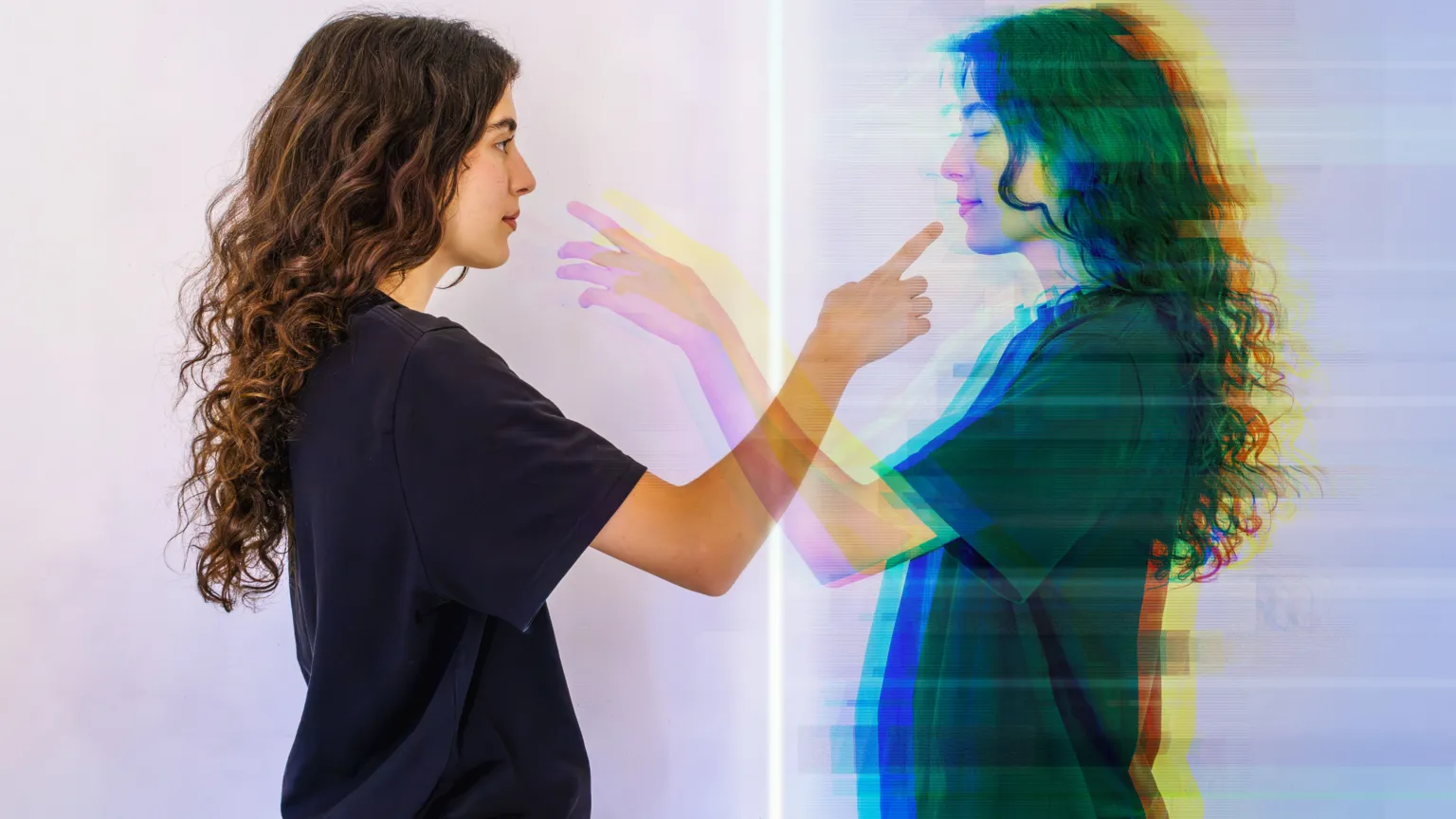
"Digital Richard" is the AI twin that Richard Skellett has been developing over the past three years. Although confined to a screen and appearing largely two-dimensional, Digital Richard is far more than a typical chatbot.
Digital Richard possesses all the knowledge that Skellett has accumulated. It was created as a small language model that employed ChatGPT to process all of Richard's meetings, calls, documents, presentations, and more. Subsequently, it was refined to emulate Skellett's unique approach to thinking and problem-solving.
The final product is a text-based interface that Skellett consults to assist in making business decisions and preparing presentations for clients. This tool supports his role as chief analyst for research and design at technology consultancy Bloor Research.
Beyond professional use, Digital Richard also aids Skellett in managing his personal life, featuring tabs labeled "family" and "admin" that are restricted from work colleagues. Meanwhile, colleagues can access Digital Richard for business-related inquiries.
Digital Richard has served as a prototype for creating digital twins for Bloor Research's 50-person team spread across the UK, Europe, the US, and India.
For instance, an analyst planning retirement was able to transition gradually by delegating some workload to their digital twin.
Similarly, the company utilized a marketing team member's digital twin during their maternity leave, avoiding the need to hire a temporary replacement.
Bloor Research now offers a "Digital Me" to every new employee as a standard practice.
Other companies are also exploring this technology; around 20 firms have been testing it, with plans to make it widely available later this year. Skellett emphasizes,
"In this environment, having a Digital Me is not optional if you want to operate effectively. It becomes part of how you work."
Industry Predictions and Emerging Trends
Technology analysts at Gartner support Skellett's perspective, forecasting that digital replicas of knowledge workers will enter mainstream use this year. This trend follows the broader AI movement of training models to mimic the style and tone of recording artists.
Interest in digital twins is also stimulated by reports that Meta is developing an AI version of its CEO, Mark Zuckerberg.
Challenges and Ethical Questions
While digital twins present a promising scenario for companies seeking enhanced employee output, numerous questions remain unresolved.
Key concerns include ownership of AI digital twins—whether they belong to the employer or the employee—compensation for users who can accomplish more work, access controls within an individual's digital twin, and accountability for errors made by the AI.
Kaelyn Lowmaster, research director in Gartner's HR practice focusing on AI's impact on work and workforce, comments,
"There are real potential benefits for sure, but it depends on getting the governance right, the direction of free time right, the autonomy of these agents right, and making sure that my name, image and likeness still stays mine, even if my employer is benefiting from it."
"I think we will probably see the negative side of this coin before we see the positive side."
Bloor Research's Approach to Ownership and Compensation
Skellett outlines Bloor Research's clear stance on ownership and pay: individuals should own their AI digital twin to benefit from any value it generates, and companies should pay to access it.
At Bloor, employees are compensated based on outcomes rather than hours worked, allowing them to earn more as their digital twin enhances productivity.

Skellett explains,
"That is why compensation now reflects outcomes, measurable commercial impact, and value creation, rather than simply salary plus bonus. AI changes time and speed, so there's little future in the hourly rate."
Josh Bersin and the Rise of the 'Superworker'
Josh Bersin, founder and CEO of The Josh Bersin Company, a consultancy for HR leaders, began creating digital twins for himself and approximately 50 employees about a year ago. This initiative uses technology developed by San Francisco-based startup Viven.
Now, obtaining updates on projects or client accounts can be done by querying the relevant person's digital twin, reducing the need for meetings, calls, or emails.
Bersin has coined the term "superworker" to describe how AI amplifies individual work capacity.
He remarks,
"People don't have the energy to have another conference call to talk about this and that. But you can wake the digital twin up in the middle of the night and talk to it for an hour - it doesn't care. It's incredibly valuable."
Bersin's company is growing at approximately 30% annually, yet he only needs to hire up to two new employees per year due to the productivity gains from digital twins. Consequently, he has been able to increase staff bonuses each year.
He adds,
"The economic value of each person increases. If you're a valuable digital part of the company, why wouldn't the company pay you more?"
Differences in Views on Ownership
However, Bersin and Skellett differ on ownership perspectives.
Bersin notes,
"I'm pretty sure the way employment contracts work in most countries is that the IP or the information that you're creating is the property of the business, not yours personally."
He also observes,
"But if you think about it logically, if somebody leaves a company, their twin's going to decay in value over time, because the things going on keep changing and they don't. So after a while, I don't know if the twin would be that useful."
Legal Considerations and Employment Law
Legal experts have yet to reach consensus on how employment law will evolve to govern digital twins consistently.
Anjali Malik, an associate at Bellevue Law specializing in employment law and commercial disputes, states,
"The moment an AI tool is trained on an individual's emails, meetings and work product, you're dealing with issues that sit right at the heart of the employment relationship: consent, control of personal data, performance, substitution of labour, and what happens when someone leaves."
Chloe Themistocleous, partner in employment law at Eversheds Sutherland, emphasizes the need for clear statutory guidance to mitigate legal risks for employers and employees using digital twins.
She concludes,
"There are so many other changes in employment law at the moment, it is unlikely that changes to cater for AI will be any time soon, and it is likely to be left to the tribunals to grapple with in the meantime."
Jean-Pierre van Zyl, partner and head of employment at Square One Law, agrees that tribunals will play a significant role in shaping legal precedent.
He explains,
"The law will likely develop if there are cases in the future where an employee is disciplined or dismissed because of something their AI twin did. The tribunal will be asked to make a determination on whether the employer acted fairly or not."