Inside a Paris Quantum Computing Lab
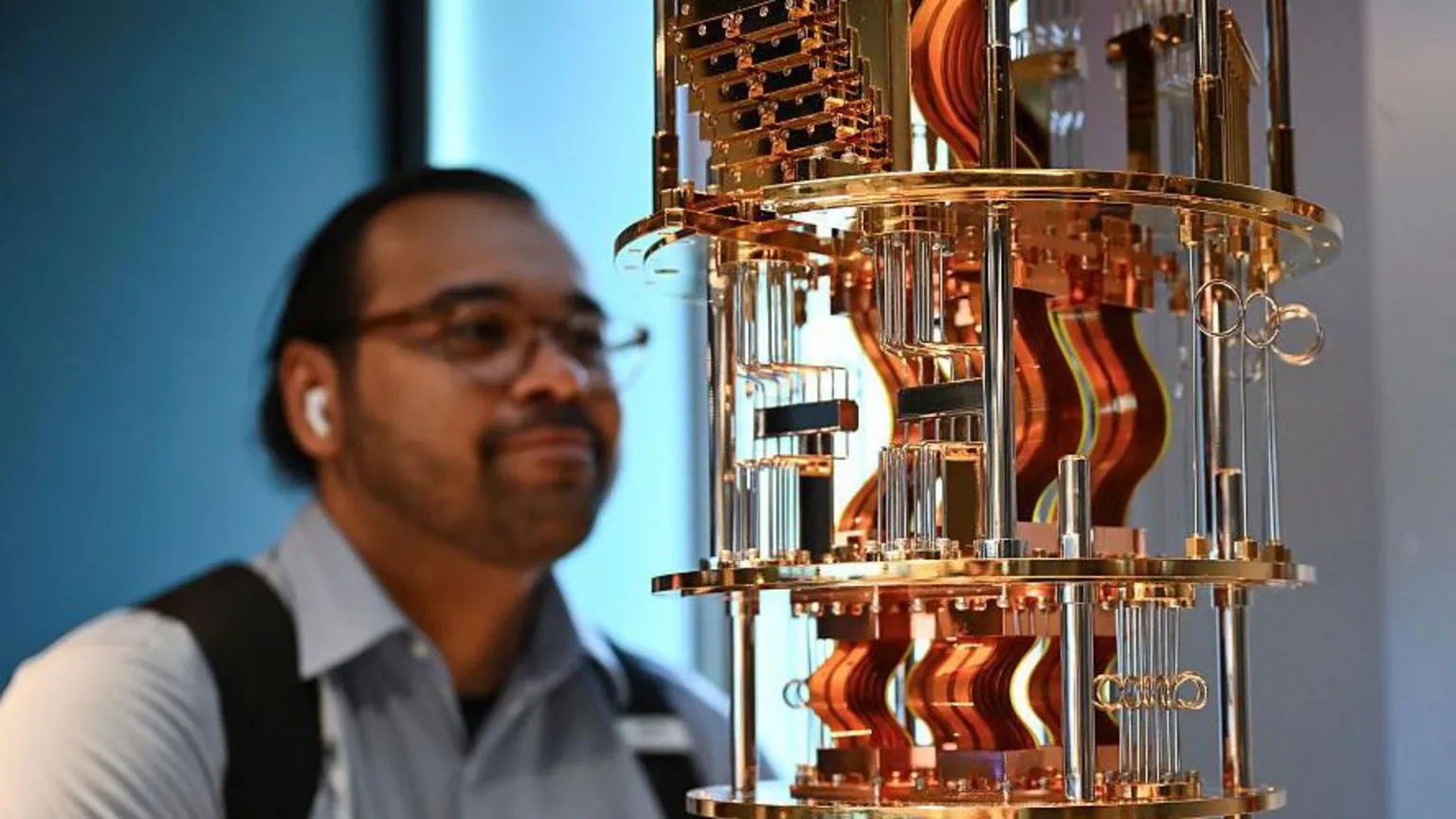
On the western edge of Paris, near the wide flow of the River Seine, a technician named Rémi adjusts a complex device with a spanner. This machine, a cascade of gold and silver-coloured cylinders entwined with wires, is a cryostat—a device designed to cool materials to temperatures so low that molecular activity nearly ceases.
At the bottom of the cylinder, temperatures reach minus 273 degrees Celsius, where even the smallest particles become still, completely isolated from external interference.
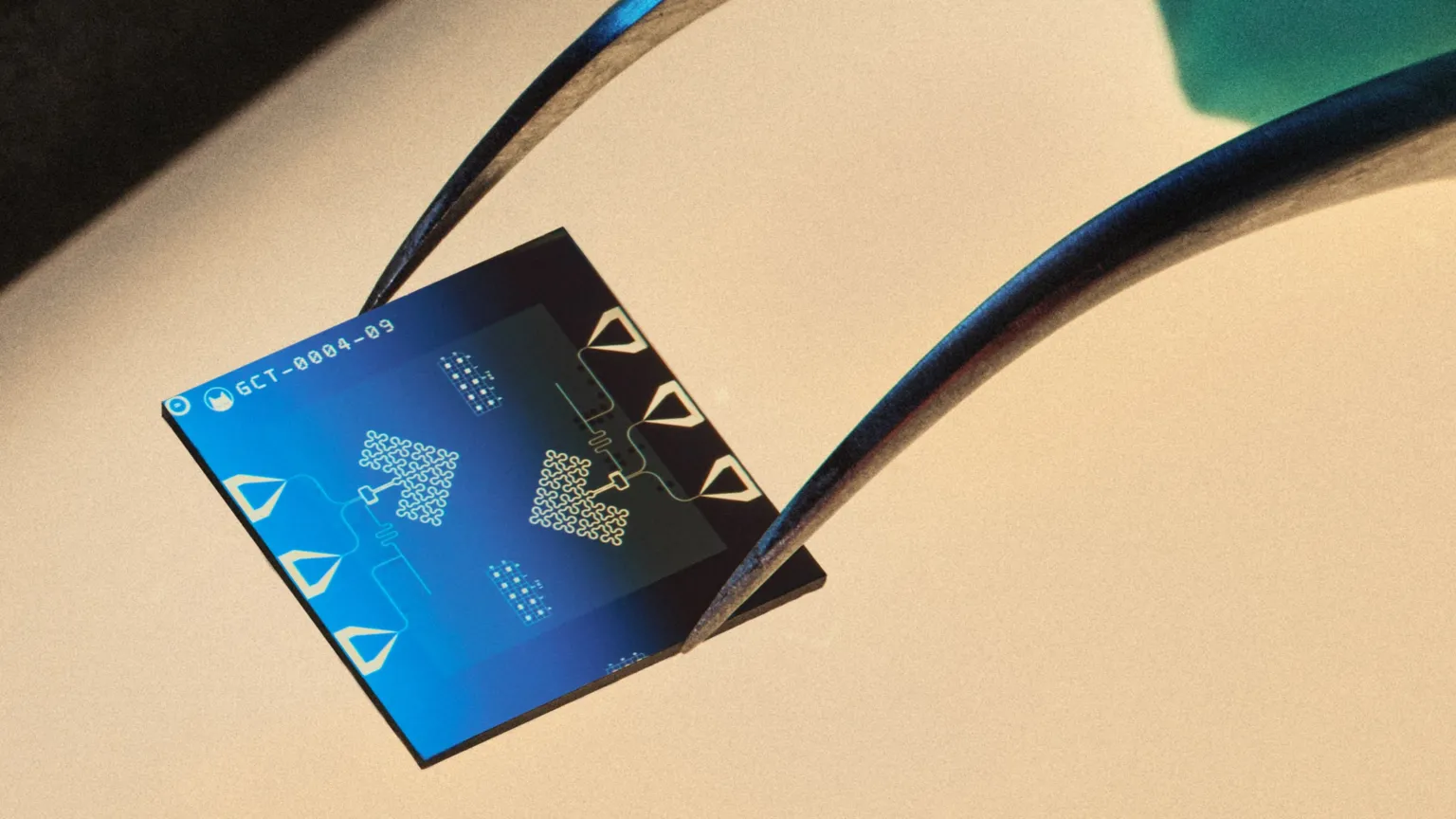
Within this cryostat sits a small gold and silver case containing a chip. This chip hosts a remarkable phenomenon first explored by Albert Einstein and other physicists: the quantum leap, where particles transition between energy levels in ways that are predictable, reproducible, and seemingly defy classical mechanics.
Surrounding this setup are several vertical cylinders resembling water heaters of various sizes, each containing similar cryostats. These machines are quantum computers.
This laboratory belongs to Alice & Bob, a French quantum computing company. In the upcoming months, they plan to inaugurate a larger facility north of Paris, an investment of $50 million (£37 million). This new site will feature a test and run facility to develop increasingly larger quantum machines and a clean room dedicated to chip fabrication.
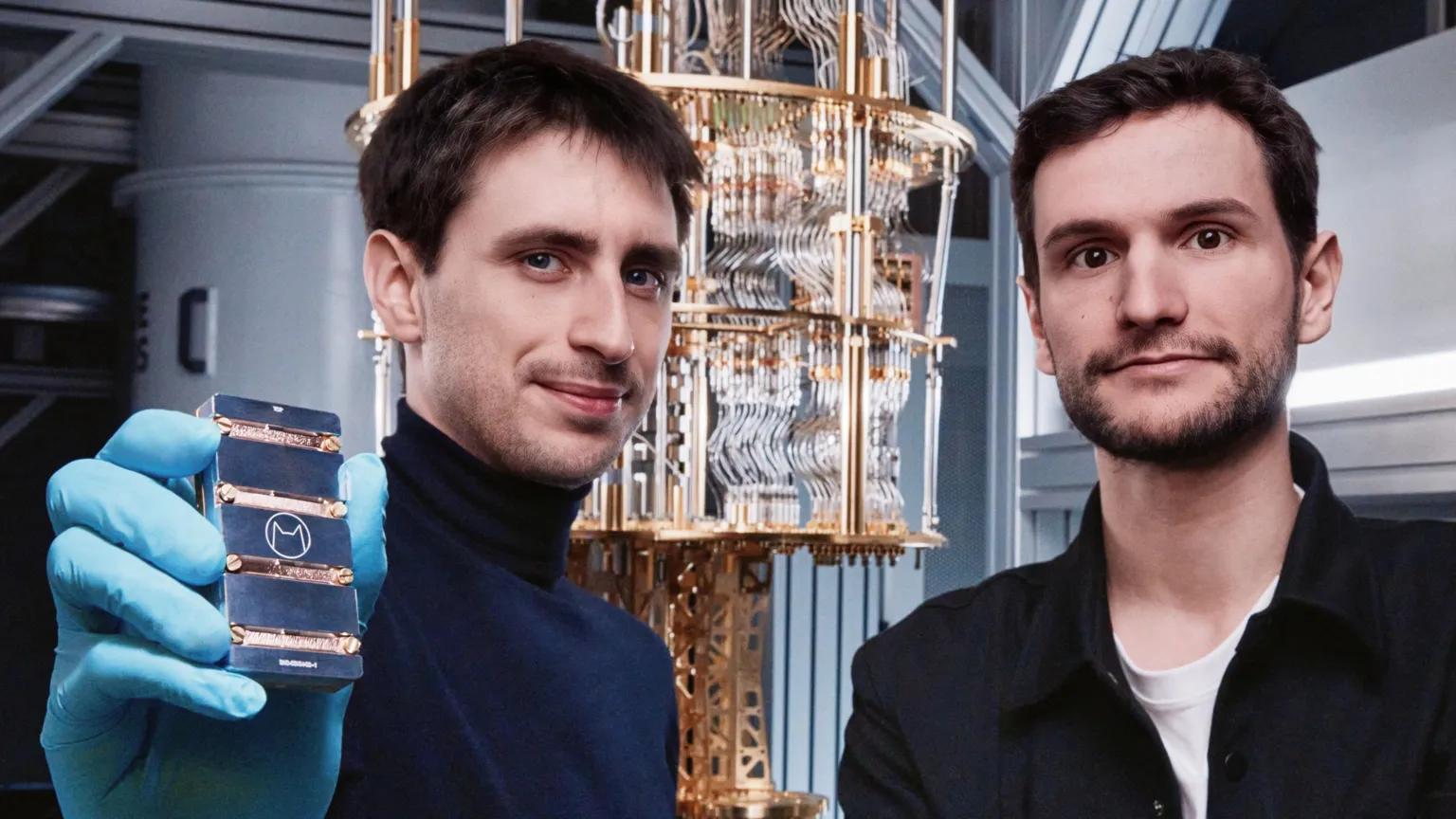
Despite its playful name, Alice & Bob is a serious scientific enterprise. The company employs around 200 individuals, mostly in their twenties and thirties, working diligently on advancing quantum technology. Co-founder and CEO Théau Peronnin emphasizes their ambition:
"Physicists used to doubt it was possible to leverage the weird behaviour of particles in the quantum. They don't anymore. Now we know they work, and in a few years we will have reliable quantum computers that we can hook up to High Performance Computers (HPCs) in data centres to exponentially increase their computing power,"
"It's not about being faster. It's about being so dramatically faster that you change what is feasible. We will be able to solve problems that are absolutely intractable with classical computers,"
Peronnin highlights the transformative potential of quantum computing, particularly in medicine.
"It will make medicine an exact science."
He explains that current drug development largely depends on trial and error, but quantum computers will enable massive computational simulations to analyze molecular interactions, predicting efficacy and side effects more precisely.
The stakes for the first company to build a scalable, reliable quantum computer are immense. Peronnin predicts a "winner-takes-all" scenario similar to the classical computing era dominated by IBM. He believes French companies, including Alice & Bob, have a strong chance to be that winner.
Technical Challenges and Innovations
The primary challenge in quantum computing is the fragility of qubits, which leads to errors. Unlike classical computers that use electrical signals in silicon chips, quantum computers manipulate qubits—quantum properties of electrons or photons.
Qubits are highly sensitive and tend to lose their quantum states (a process called decoherence) due to environmental noise.
Most quantum computing approaches address this by employing massive redundancy—using thousands of physical qubits to represent a single logical qubit and applying majority voting to correct errors. This method, however, results in large-scale, costly systems.
Alice & Bob has developed an alternative approach with their "cat qubits," named after Schrödinger's cat thought experiment. These qubits are designed to autonomously correct certain errors.
"It's built-in by design," Peronnin says. "We cracked a way to compensate for losses continuously."
This innovation could drastically reduce the complexity and cost of quantum processors compared to redundancy-heavy competitors.

Peronnin notes that major players are moving towards similar concepts. For example, Google acquired Atlantic Quantum, and others are developing variants of cat qubits. Alice & Bob now competes "shoulder to shoulder" with US companies.
They are recognized as one of France's "national champions" under the PROQCIMA program, a government initiative aimed at developing practical quantum computers.
France’s Quantum Computing Ecosystem
France’s quantum computing landscape extends beyond Alice & Bob. The country hosts companies representing the full spectrum of qubit technologies, reflecting the diverse approaches physicists believe could lead to the first reliable, ultra-powerful quantum computer.
Olivier Ezratty, an academic and author of the comprehensive 1500-page compendium Understanding Quantum Technologies, identifies six existing French quantum computing companies, with two more emerging.
Besides Alice & Bob, Ezratty highlights four other significant firms: Pasqal, Quandela, Quobly, and C12.
He points out a shared advantage among these companies:
"Most of them are in a very favourable position in the cost of the machine and the energetic cost,"
Elsewhere in Europe, Finland’s IQM stands out as a major player, having announced in February its intention to become the first publicly listed European quantum company.
The UK also contributes with Oxford Quantum Circuits (OQC) and Riverlane, the latter specializing in quantum operating systems.
IQM and Pasqal have already integrated quantum computers into high-performance computing (HPC) infrastructures across Europe.
Several French firms have placed quantum computers within industrial companies such as Air Liquide, and Alice & Bob plans to do the same soon.
Current Limitations and Future Prospects
Although these quantum machines are not yet capable of fulfilling the full promise of quantum computing, deploying them in real-world environments helps cultivate a community of specialists prepared for future advancements.
"At the moment, the machine we have is no more powerful than your telephone," says Peronnin. "We're on the flat part of the exponential curve."
France possesses notable strengths in this race, including world-class physics education at institutions like École Polytechnique and École Normale Supérieure.
"In the past few years three Nobel Prizes have gone to French physicists alone!" Peronnin notes. This is crucial because, he explains, quantum computing is fundamentally a mathematical challenge without unfair advantages from legacy technologies like classical computing.
"At the end of the day, it's a math challenge. There is no unfair advantage from legacy technology like classical computing or something like that, so there is no reason to be shy."
The primary hurdle remains securing sufficient capital.
"But Europe is definitely not poor and this is a technological opportunity for Europe to reshuffle a bit the cards in terms of autonomous strategy and our ability to have economic leading players,"
There is a prevailing sentiment that, although Europe has missed previous technology waves, particularly in transitioning from research to industrial application, this time the outcome could differ.
"We have what it takes to win it. It's about believing in ourselves. We're always, as French, a bit mocking the overconfidence of Americans, but here we need to be a bit bullish. Otherwise, nothing is going to happen, and that would be really a shame because at the moment, we're in a far better position than anyone could have thought."