Introduction to Heat Pumps and New Regulations
Under new building regulations in England, developers will be required to install heat pumps and solar panels in all new homes. This initiative is part of the government's Warm Homes Plan, which allocates £15bn to assist UK households in adopting green technologies. The plan aims to reduce fossil fuel consumption and lower energy bills.
Heating homes contributes approximately one-fifth of the UK's greenhouse gas emissions. Transitioning from gas and oil heating systems to heat pumps is considered a crucial strategy to achieve net zero emissions targets.
How do heat pumps work?
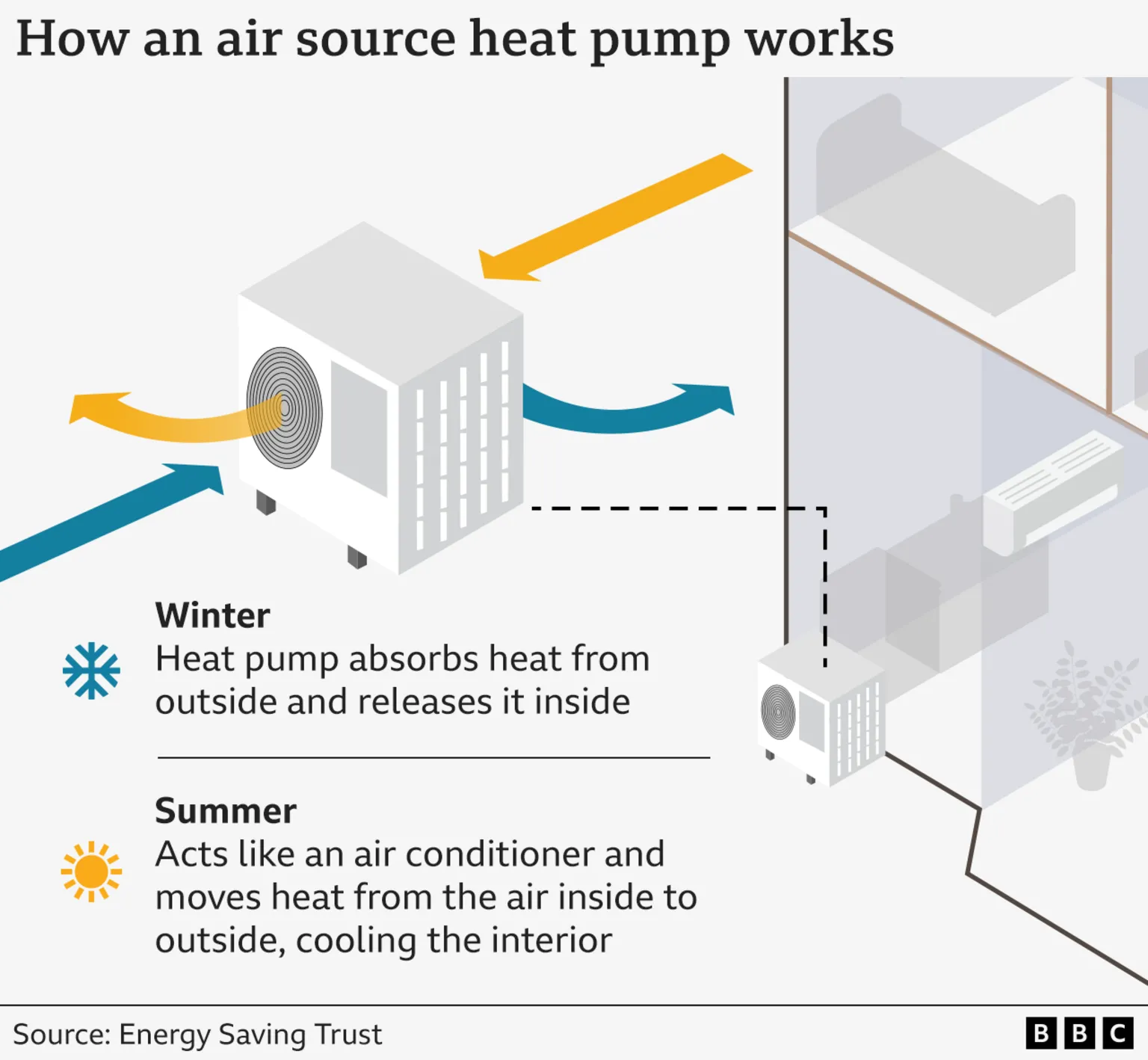
Heat pumps operate using electricity rather than gas and are more efficient than conventional boilers. They heat buildings by extracting and amplifying heat from external sources such as air, ground, or water.
Air source heat pumps, the most prevalent type, draw in outdoor air and pass it over tubes containing refrigerant fluids. The heat from the air causes the refrigerants to evaporate into gas form. Compressing this gas raises its temperature, and the generated heat is circulated throughout the home.
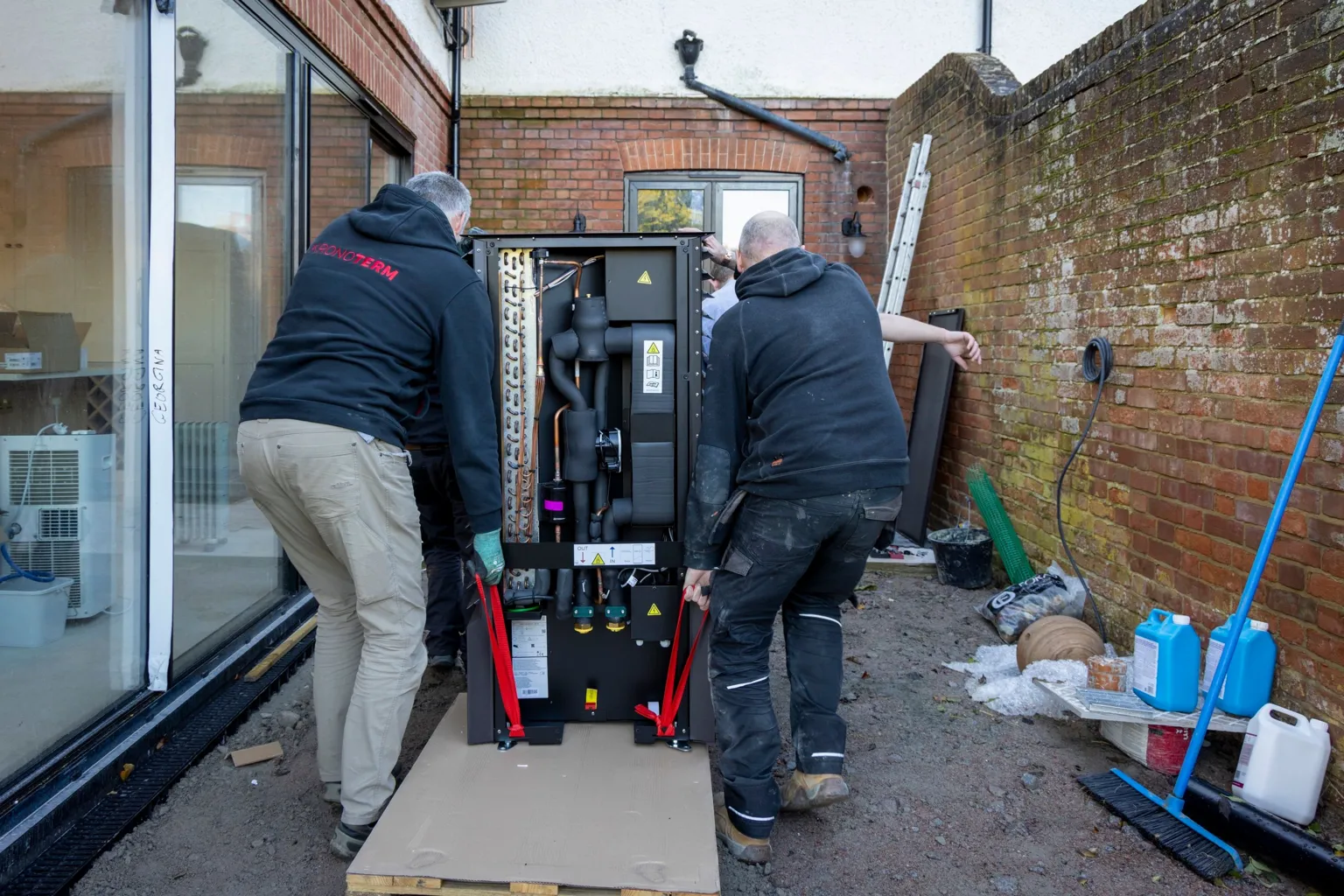
The system includes an external unit approximately 1m x 1m x 0.4m (3ft x 3ft x 1.3ft) in size, positioned outside the property, along with an indoor heat pump unit and a hot water cylinder. The indoor unit is roughly the size of a gas boiler, while the cylinder size varies depending on the property.
Ground source heat pumps offer higher efficiency compared to air source models. However, they tend to be more expensive and less commonly installed because they require either a deep borehole or an extensive horizontal system to be installed underground.
Costs and Available Funding for Heat Pumps
The Boiler Upgrade Scheme provides a £7,500 grant toward the purchase of an air source or ground source heat pump for homeowners in England and Wales. This scheme has been extended through to 2029/30.
Typically, households incur an additional £5,000 in costs beyond the grant amount. The UK's spending watchdog has expressed concern that these costs remain prohibitively high for many families.
The grant applies to existing homes and non-domestic buildings, provided the property has a valid Energy Performance Certificate (EPC) issued within the last 10 years. Properties no longer need to have existing loft or cavity wall insulation to qualify, which can reduce upfront expenses by approximately £2,500.
The Home Builders Federation estimates that the new planning regulations will increase the cost of new properties in England by about £10,000.
For low-income households and social housing tenants, the government has allocated an additional £5bn for the Social Housing Fund and the Warm Homes Local Grant. The Warm Homes Local Grant supports insulation, solar panels, and air source heat pumps for some private owners or renters through local authorities in England. Eligible properties must have an EPC rating between D and G.
Separate schemes exist in Scotland and Northern Ireland to promote home energy efficiency.

Potential for Heat Pumps to Reduce Energy Bills
Although initial installation costs are significant, heat pumps may become less expensive to operate than gas boilers, according to the Climate Change Committee (CCC), which advises the UK government on emissions reduction.
Cost savings depend on energy prices and the efficiency of the heat pump system. Electric heat pumps consume substantially less energy than gas boilers, but electricity prices are generally higher than gas.
Currently, electricity costs in the UK are largely influenced by global gas prices. However, the government anticipates a shift as renewable energy sources expand.
Households that install solar panels alongside heat pumps can potentially increase savings by generating their own electricity rather than relying solely on the grid.
The innovation charity Nesta estimates that an average home equipped with both a heat pump and solar panels could reduce its annual energy bill by nearly £1,000.
Noise Concerns and Regulations
Previously, planning permission was required to install a heat pump within 1m (3ft) of a neighbour’s property due to noise concerns. This restriction has been removed to encourage greater adoption.
Modern heat pump models are quieter and must operate below 42 decibels, comparable to the noise level of a refrigerator.
Regulations regarding the size and number of heat pumps that households can install have also been relaxed.
Heat Pump Installation Rates in the UK
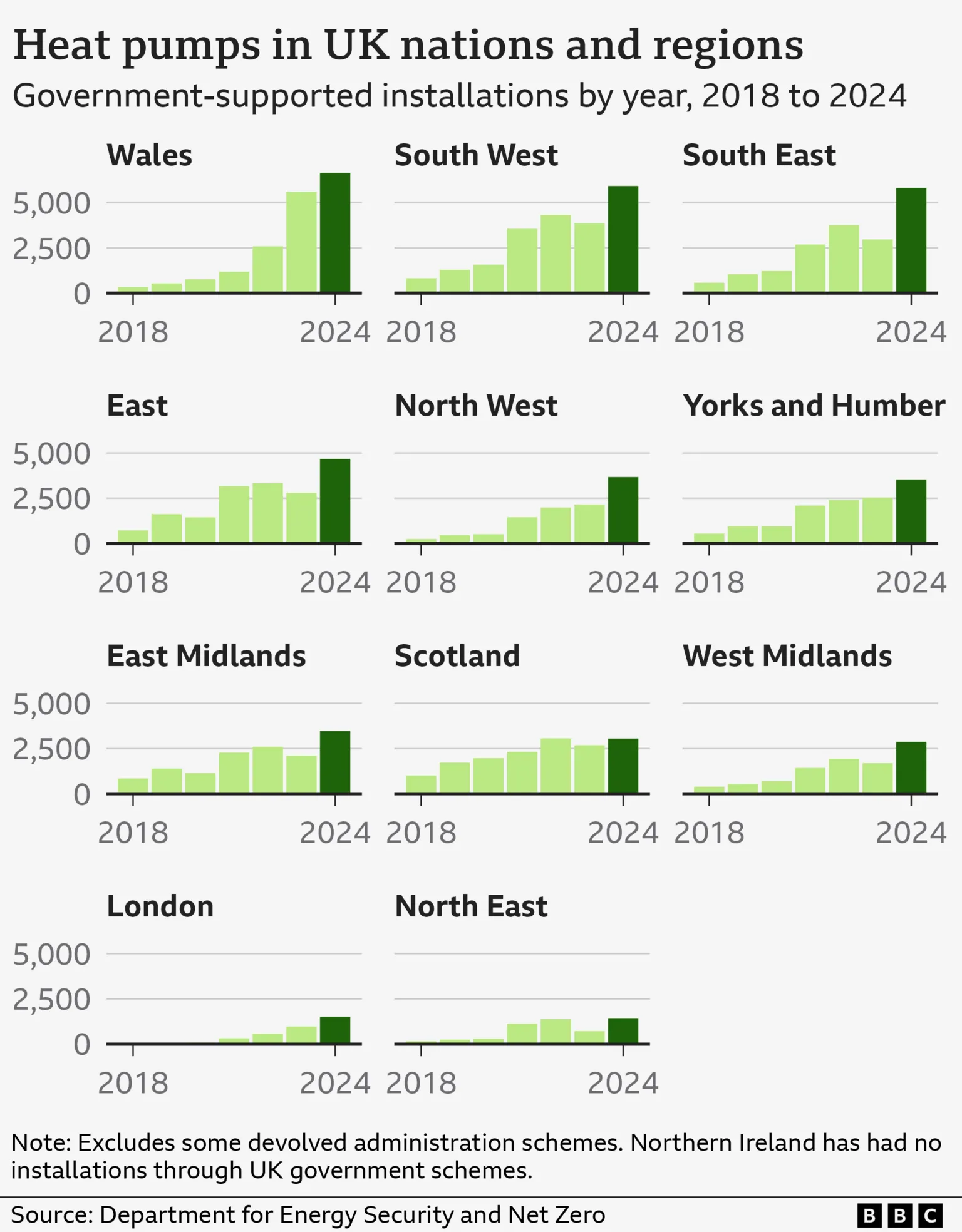
The number of heat pumps installed in the UK remains lower than that of gas boilers. Installation rates also lag behind other major European countries such as France, Germany, and Italy.
However, sales are increasing rapidly. Nearly 125,000 heat pumps were sold in 2025, more than double the figure from 2023, according to the Heat Pump Association.
The CCC states that installation rates need to reach nearly 450,000 units annually by 2030 and 1.5 million by 2035 to meet climate targets. It estimates that about half of UK homes will need heat pumps by 2040.
Achieving these targets will require a significant increase in the number of trained heat pump installers.
Stay Informed
for the Future Earth newsletter to receive the latest climate and environmental news from the BBC's Justin Rowlatt. For readers outside the UK, an international newsletter is also available.