New Requirements for Heat Pumps and Solar Panels in England
Developers in England will be mandated to install solar panels and heat pumps on all new homes under updated planning regulations released by the government. These measures aim to advance green technology adoption and reduce reliance on fossil fuels.
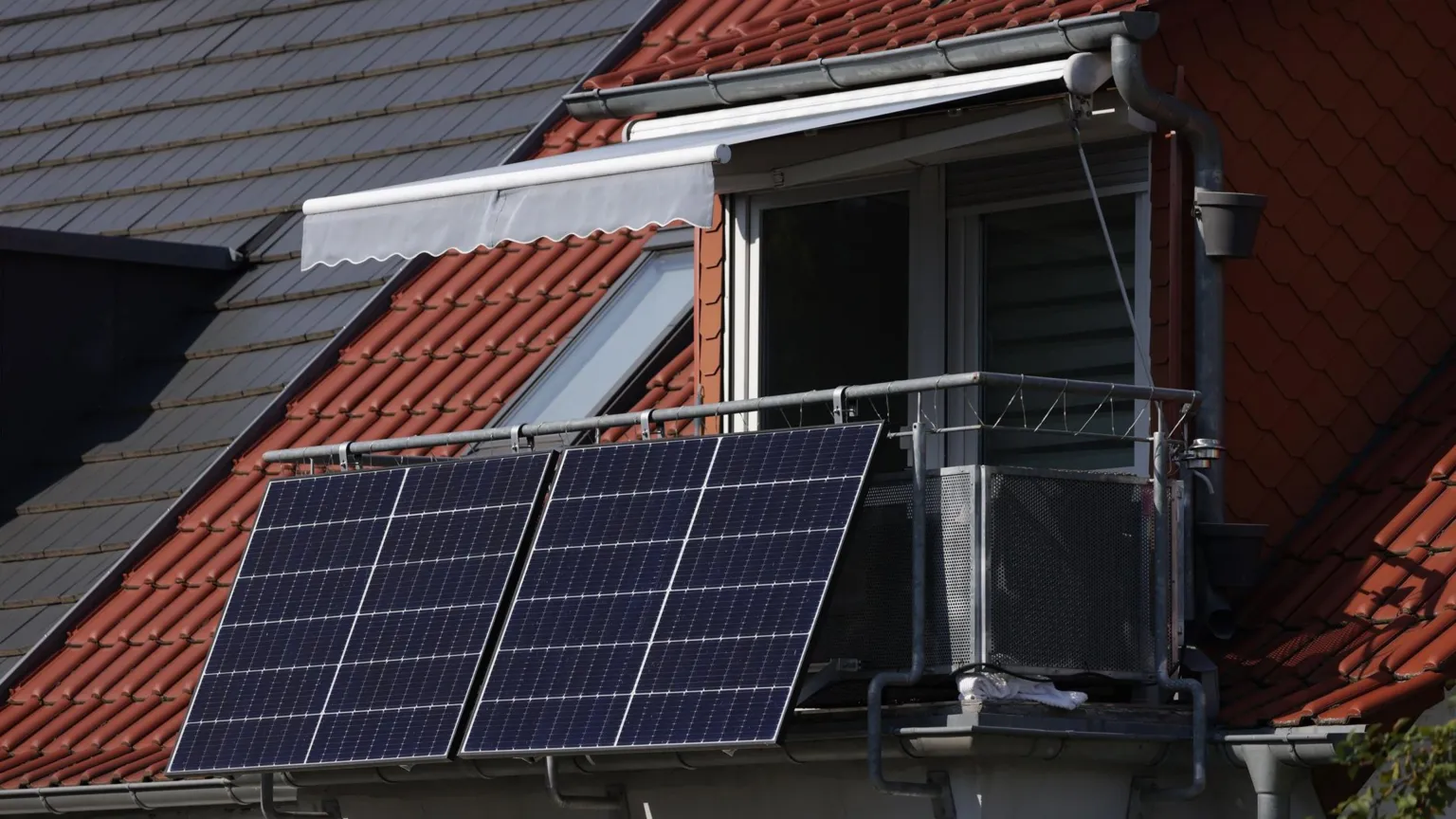
The government also announced that plug-in solar panels, which homeowners can self-install on balconies, will soon be available in supermarkets. These compact solar units are already in use across Europe but have not been sold in the UK due to existing safety regulations.
Government's Rationale and Industry Reactions
Energy Secretary Ed Miliband emphasized the importance of clean energy, citing the Iran war as a demonstration of the necessity for energy security independent of volatile fossil fuel markets.
"The Iran war has once again shown our drive for clean power is essential for our energy security so we can escape the grip of fossil fuel markets we don't control," said Energy Secretary Ed Miliband.
The energy sector and green technology advocates have welcomed the clarity these changes provide, encouraging investment in heat pumps and solar panels.
"It's going to give clarity to the UK market, installers, builders, manufacturers, that there's a significant market that's there," said Garry Felgate, CEO of MCS Foundation, which certifies installers of low carbon heating systems.
Details of the Future Homes Standard
The updated guidance, published on Tuesday, stipulates that from 2028, all new homes in England must be disconnected from the gas network and equipped with solar panels covering at least 40% of the ground floor area.
These building requirements are expected to increase development costs by approximately £10,000 per home. However, over time, the measures are projected to reduce energy bills for homeowners.
The government considered but ultimately decided against mandating home batteries, which could further enhance energy savings.

Hannah McCarthy, head of partnerships for new homes at Octopus Energy, told the BBC: "Decarbonising the new housing stock is a fantastic step - batteries would take that a step further."
Industry Concerns and Exemptions
The Home Builders Federation (HBF) expressed reservations about the additional costs but acknowledged the industry had ample notice of the changes.
"The additional cost that developers now face from the changes was not welcome at any time," said Neil Jefferson, CEO of HBF, "but the industry had been given a lot of forewarning."
Jefferson also highlighted concerns regarding the mandated size of solar panels, stating that the government’s requirement pushes the limit, with an estimated 60% of homes unable to meet the standard.
"The government has really pushed the number of solar panels that are required on rooftops right to the limit, we think 60% of homes can't actually reach that standard," he said.
Exemptions exist for homes where design constraints prevent adequate solar panel installation. However, Jefferson noted the need for individual assessments to avoid procedural bottlenecks.
"Each home will have to be looked at individually. There are some challenges within the process [and] we don't want bottlenecks," he added.
Housing Targets and Solar Access for Existing Homes
The government aims to construct 1.5 million homes by 2029. However, in December, Housing Secretary Steve Reed indicated that building rates would need to increase following a recent slowdown.
In addition to new-build requirements, the government plans to facilitate access to solar energy for occupants of existing homes, particularly those living in flats.
Efforts include collaboration with major retailers such as Lidl and Amazon to introduce plug-in solar panels to the high street. These do-it-yourself solar panels require no upfront installation costs and are designed for balconies and small garden spaces.
These panels have been successful in Germany, where over 1.5 million homes reportedly use them. Currently, they are not sold in the UK due to safety regulations concerning electrical installations, but the government is working to review and update these rules in the coming months.
Newsletter Subscription
for our Future Earth newsletter to receive exclusive insights on the latest climate and environment news from the BBC's Climate Editor Justin Rowlatt, delivered weekly to your inbox. For readers outside the UK, an international newsletter is also available.