

Cold Weather Health Alert Issued Across Several UK Regions
A yellow cold health alert has been issued for the East Midlands, North East, North West, West Midlands, and Yorkshire and The Humber.
This alert indicates that the UK Health Security Agency (UKHSA) considers the weather conditions to pose a risk to vulnerable groups, including the elderly and individuals with pre-existing health conditions.
The alert is effective from 0800 on Friday 13 February until 0800 on Monday 16 February.
How Does the Weather Health Alert System Operate?
The weather alert service operates across England and is jointly managed by the UKHSA and the Met Office.
Cold health alerts are issued annually between 1 November and 30 March, while heat health alerts are published between 1 June and 30 September.
The primary objective of the system is to reduce illness and mortality during periods of extreme temperature fluctuations.
Beyond public warnings, the system also provides guidance directly to NHS England, government bodies, and healthcare professionals during adverse weather conditions.

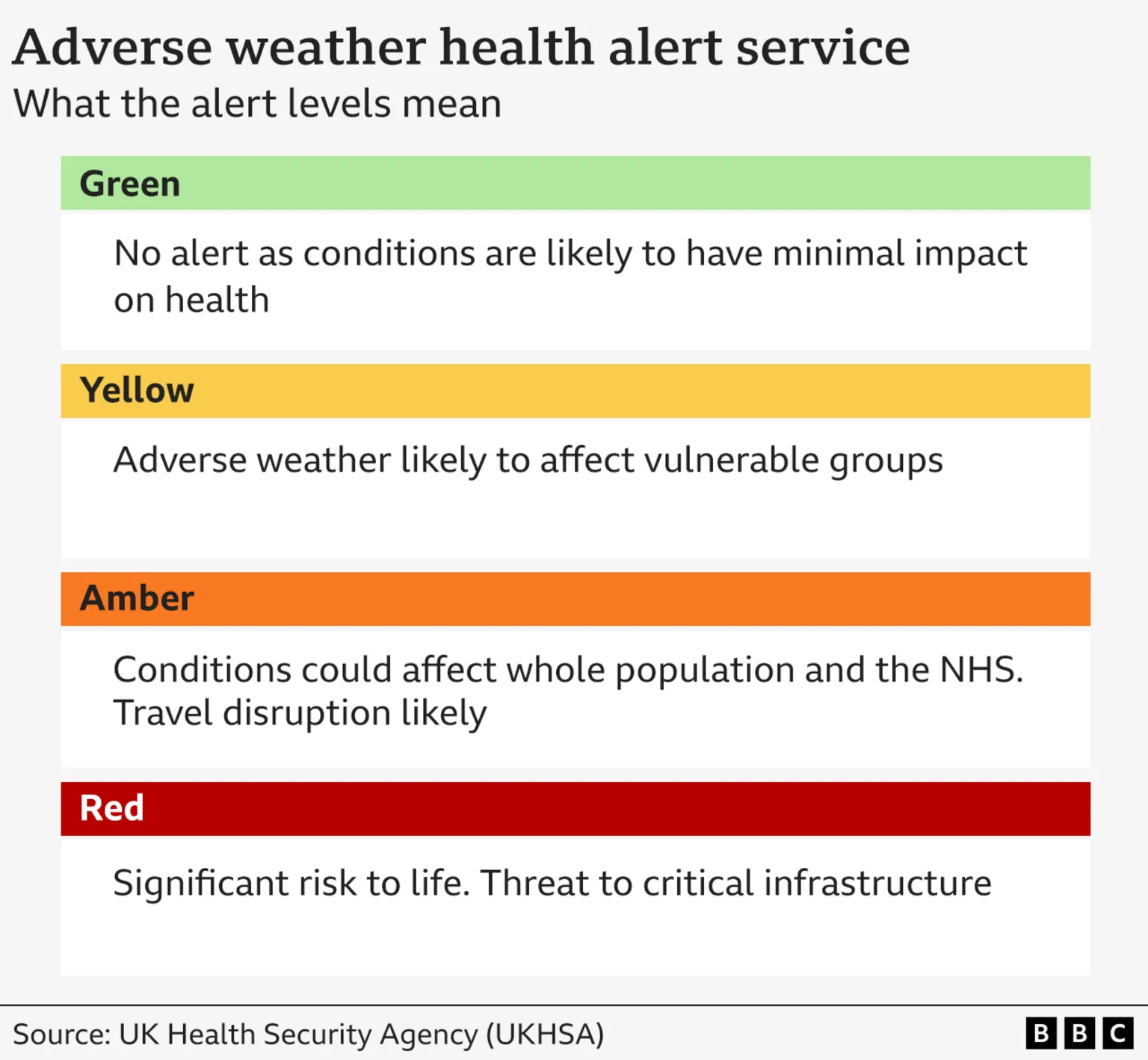
Alert Levels and Their Significance
The alert levels are determined based on Met Office forecasts and associated data.
There are four levels of alerts, ranging from green (least severe) to red (most severe):
- Green represents the normal level, where advice is provided on how individuals should prepare for potential temperature changes.
- Yellow alerts are issued during hot or cold weather episodes likely to affect primarily vulnerable populations, such as the elderly or those with existing health issues.
- Amber alerts indicate conditions that could pose risks to the entire population. During these times, the NHS may experience increased demand on general practitioners and ambulance services. Travel disruptions are also probable.
- Red alerts are the most severe, issued when extreme temperatures present significant life risks even to healthy individuals and may cause failures in critical national infrastructure, including power outages and closures of roads and rail lines.
Physiological Effects of Cold Weather
During winter months, illnesses such as flu and other respiratory infections that cause colds and sore throats sp readily. Pneumonia, characterized by lung inflammation due to infection, is also more prevalent following cold weather.
Additionally, cases of norovirus, commonly known as the winter vomiting bug, tend to increase during this season.
Professor Damian Bailey from the University of South Wales produced a programme for BBC Radio 4's Inside Health focusing on the effects of cold on the human body.
In an experiment, presenter James Gallagher spent 30 minutes in a room where the air temperature was lowered from 21°C to 10°C.
During this exposure, several physiological changes were observed: blood flow to his brain decreased, blood pressure and heart rate increased, the temperature of his extremities (arms, legs, and head) dropped, and he required significantly more time to complete a series of puzzles.
"18°C is the body's tipping point - below that and the body has to work hard to maintain its core temperature," said Prof Bailey. "That is one reason why heart attacks and strokes are more common in the winter months."
When it is not feasible to maintain indoor temperatures at or above 18°C, Prof Bailey recommends wearing gloves, warm socks, and a woolly hat, consuming a higher carbohydrate diet, and increasing physical activity to generate body heat.


